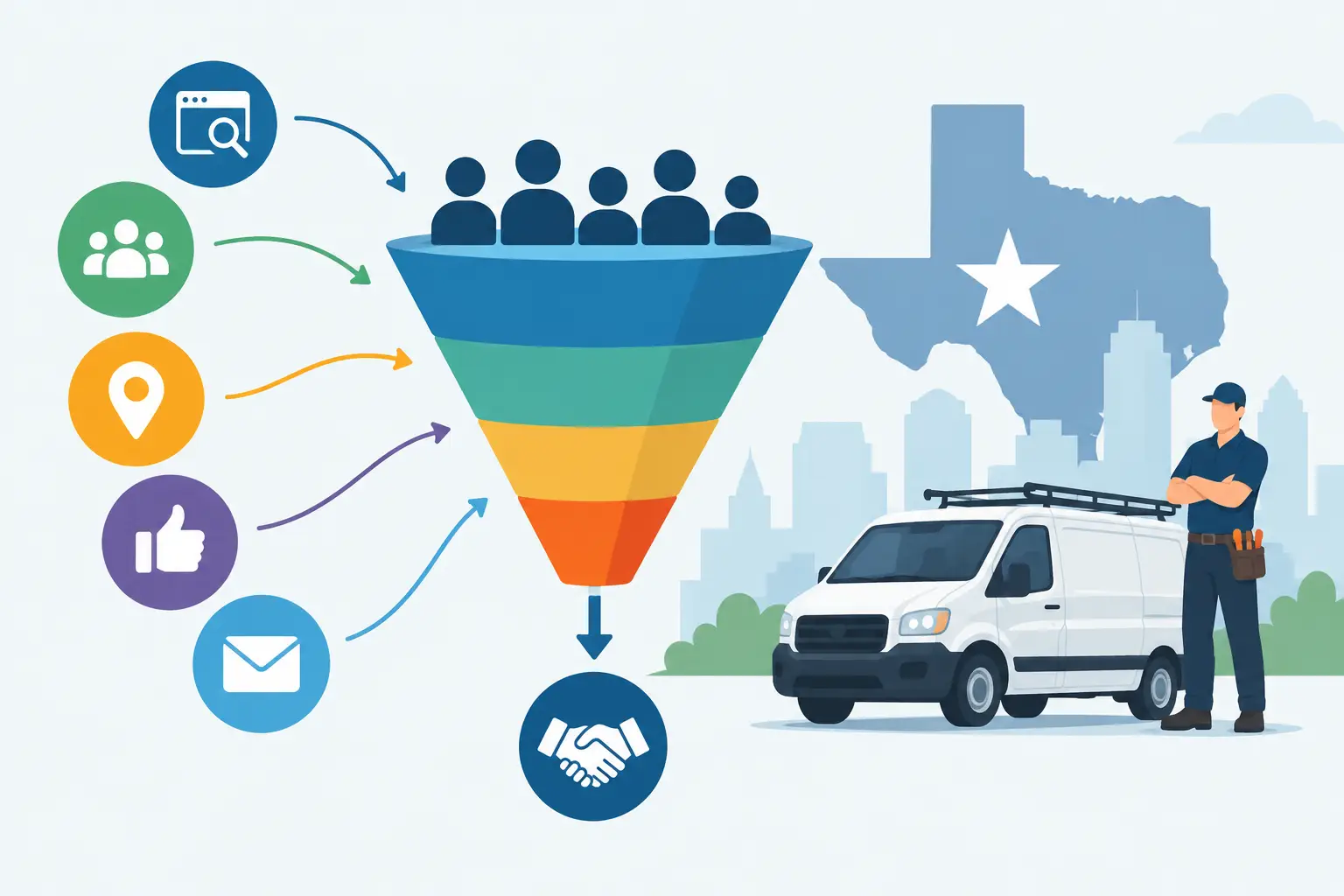
A homeowner searches for an AC repair company at 9 p.m., finds your website, and leaves without calling. That visit is not necessarily lost business. With the right next step, it can become a conversation, a scheduled appointment, and a repeat customer. This sales funnel example shows how a small Texas service business can create that path without building an overly complicated marketing operation.
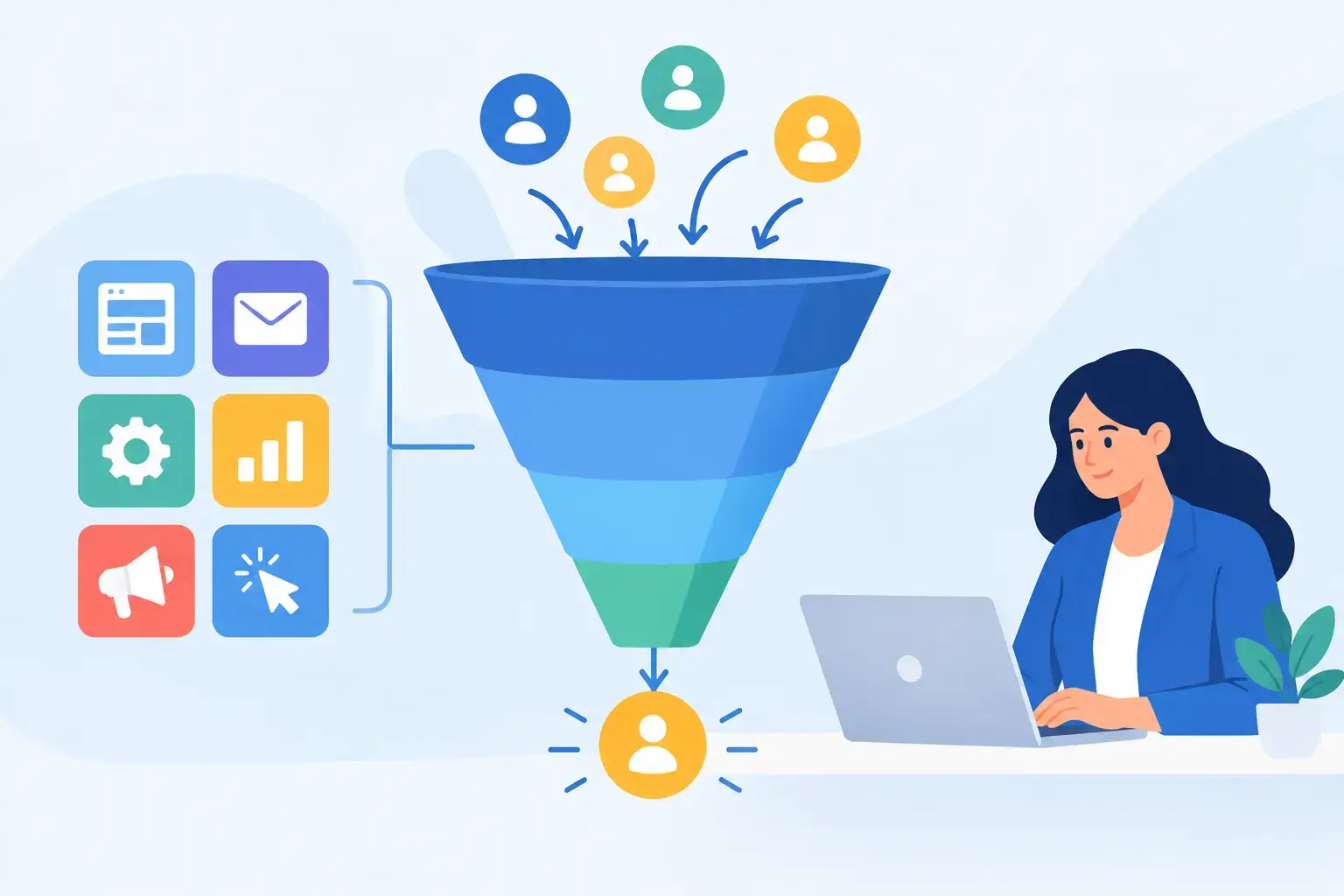
The point of a sales funnel is not to force every prospect through the same script. It is to give interested people a clear, useful next action at each stage, while giving your team enough information to follow up at the right time. For a small business owner, that usually means fewer missed leads, less manual chasing, and a more reliable view of where revenue is coming from.
A sales funnel example from first visit to repeat customer
Imagine a locally owned HVAC company serving Houston-area homeowners and small commercial properties. The business gets leads from Google searches, referrals, neighborhood social media groups, and seasonal promotions. Its owner wants more booked estimates without hiring a full-time marketing coordinator.
Here is a practical funnel:
A prospect sees a spring tune-up offer, clicks to a focused landing page, and submits a short form requesting availability. The business immediately confirms the request, then follows up by text or email. Once an appointment is scheduled, the lead becomes an opportunity in the company’s CRM. After the job is complete, the customer receives a review request and a reminder about future maintenance. Customers who return or refer someone else receive a relevant loyalty incentive.
That is the whole funnel in plain English. Each stage has a job to do, and each handoff should be easy for the customer and visible to the business.
Stage 1: Attract people with a specific offer
Top-of-funnel marketing works best when it matches a real customer need. “We provide great HVAC service” is broad. “Book a 20-point spring AC tune-up before the first heat wave” gives a homeowner a reason to act now.
For this example, the HVAC company runs a local search ad and posts the same seasonal offer on its social channels. The ad sends people to a page focused on one service, one service area, and one action: request an appointment.
A landing-page and email platform such as Systeme.io can make sense for businesses that need simple campaign pages and automated follow-up in one place. It is generally a better fit when your offer can be explained clearly online, such as a service special, consultation, downloadable checklist, or limited-time promotion. It may be less suitable if you need a deep field-service scheduling system or highly customized customer records.
The first conversion is not the sale. It is the lead. Keep the form short enough that a busy homeowner will finish it: name, phone number, ZIP code, service needed, and preferred contact method are often enough to begin.
Stage 2: Respond while the need is still active
Speed matters most when a prospect is comparing several local providers. A form confirmation should tell the person what happens next and when. For example: “Thanks. Our team will contact you during business hours to confirm availability.” Do not promise an immediate response unless someone is actually available to provide one.
LiveChat can be useful on a service website when visitors commonly have basic questions before they are ready to call. A chat widget can help answer questions about service areas, financing availability, appointment windows, or emergency-service policies. It is not a replacement for trained staff. If no one can monitor chat, set realistic expectations and collect the visitor’s details for follow-up instead.
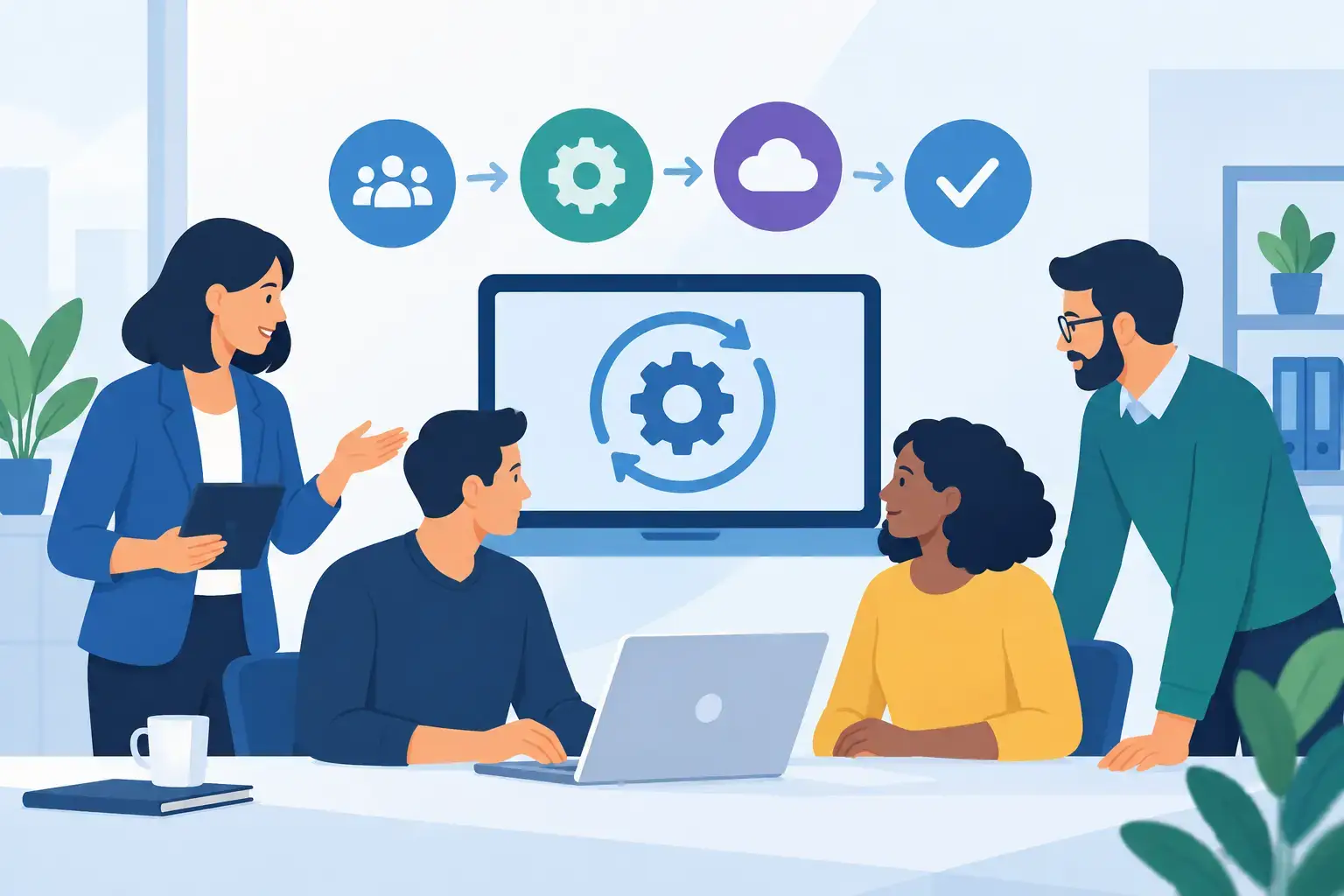
For a company with several people handling inquiries, the lead should enter one shared record rather than remain in an employee’s inbox or text thread. That prevents the familiar problem of two people calling the same prospect, or worse, nobody calling at all.
Where CRM software fits in this sales funnel example
A CRM is where the business keeps the funnel from becoming a pile of disconnected messages. In this example, the owner can see whether a lead is new, contacted, scheduled, quoted, won, or lost. That visibility is valuable even for a small team because it identifies bottlenecks quickly.
EngageBay is worth considering for a business that wants CRM, email marketing, forms, and basic automation under one umbrella. It can suit owners who are ready to replace spreadsheets and separate contact lists with a more organized process. A key tradeoff is setup time: automations, pipeline stages, and templates need to reflect how your team actually sells. Buying software without assigning ownership to those tasks often creates more confusion, not less.
For the HVAC company, a simple pipeline might include New Inquiry, Contacted, Appointment Scheduled, Estimate Sent, Approved, Completed, and Follow-Up Due. Avoid creating 15 stages just because the software allows it. A stage should indicate a meaningful business action or decision.
The team can then use basic automations to send an appointment confirmation, a reminder before the visit, and an estimate follow-up if the customer has not responded. Automation should support a real conversation, not imitate one poorly. A high-value commercial estimate may deserve a personal call from the owner, while a routine tune-up reminder can be automated.
Stage 3: Turn an estimate into a clear decision
Many funnels fail after the first conversation because the estimate is late, vague, or never revisited. When a technician identifies a repair need, the customer should understand the scope of work, expected timing, price, and next step. The software record should show when the estimate was sent and whether a follow-up is due.
This stage is where measurement becomes useful. If 100 leads become 40 booked appointments, 25 estimates, and 15 approved jobs, you have a starting point for improvement. If appointments are plentiful but approvals are weak, the issue may be pricing, estimate presentation, qualification, or competition. More advertising will not automatically fix it.
Track a few numbers consistently: lead source, contact rate, appointment rate, estimate approval rate, average sale, and repeat-customer rate. For a Texas service business, also compare results by season. July leads may behave differently from October leads, and a campaign that works during a heat emergency is not necessarily a good model for year-round marketing.
Build repeat business into the funnel
The funnel should not end when payment clears. Repeat business is often less expensive to earn than a brand-new lead, especially for services customers need regularly.
After a completed tune-up or repair, the HVAC company can send a thank-you message, a review request, and a maintenance reminder timed to the customer’s equipment and season. If the business has a referral or loyalty strategy, BoomerangMe may be relevant. Its digital loyalty and rewards capabilities can be useful for businesses that want to encourage repeat visits, referrals, or promotional return offers without relying on paper punch cards.
That does not mean every service company needs a loyalty program. A one-time roofing contractor may get more value from review requests and referral follow-up than points-based rewards. A salon, restaurant, car wash, or recurring home-service business may have a stronger reason to build a return-visit incentive.
If you explore any software discussed here through MBH Web Services, the site may earn a commission from qualifying purchases. That does not change the practical question: choose the tool that matches your selling process, available time, and budget.
When this funnel needs a different approach
This sales funnel example is designed for a business that receives inbound interest from consumers or local decision-makers. A B2B company selling higher-ticket services may need a longer funnel, more education, and more direct outreach.
For example, a Texas commercial cleaning company trying to reach office managers may use targeted cold email alongside its website. Smartlead can be a relevant option for businesses managing outbound email campaigns at scale, particularly when they need sending infrastructure and campaign controls. It is not a shortcut around relevance or consent. Prospect lists, messaging, and follow-up must be handled carefully, with messages that are specific enough to earn attention rather than create complaints.
The bigger lesson is that the funnel should reflect how customers buy. An emergency plumber needs fast response and easy scheduling. A marketing agency may need case studies, discovery calls, and several decision-makers. A restaurant may focus on repeat visits and rewards. The software should follow the process, not dictate it.
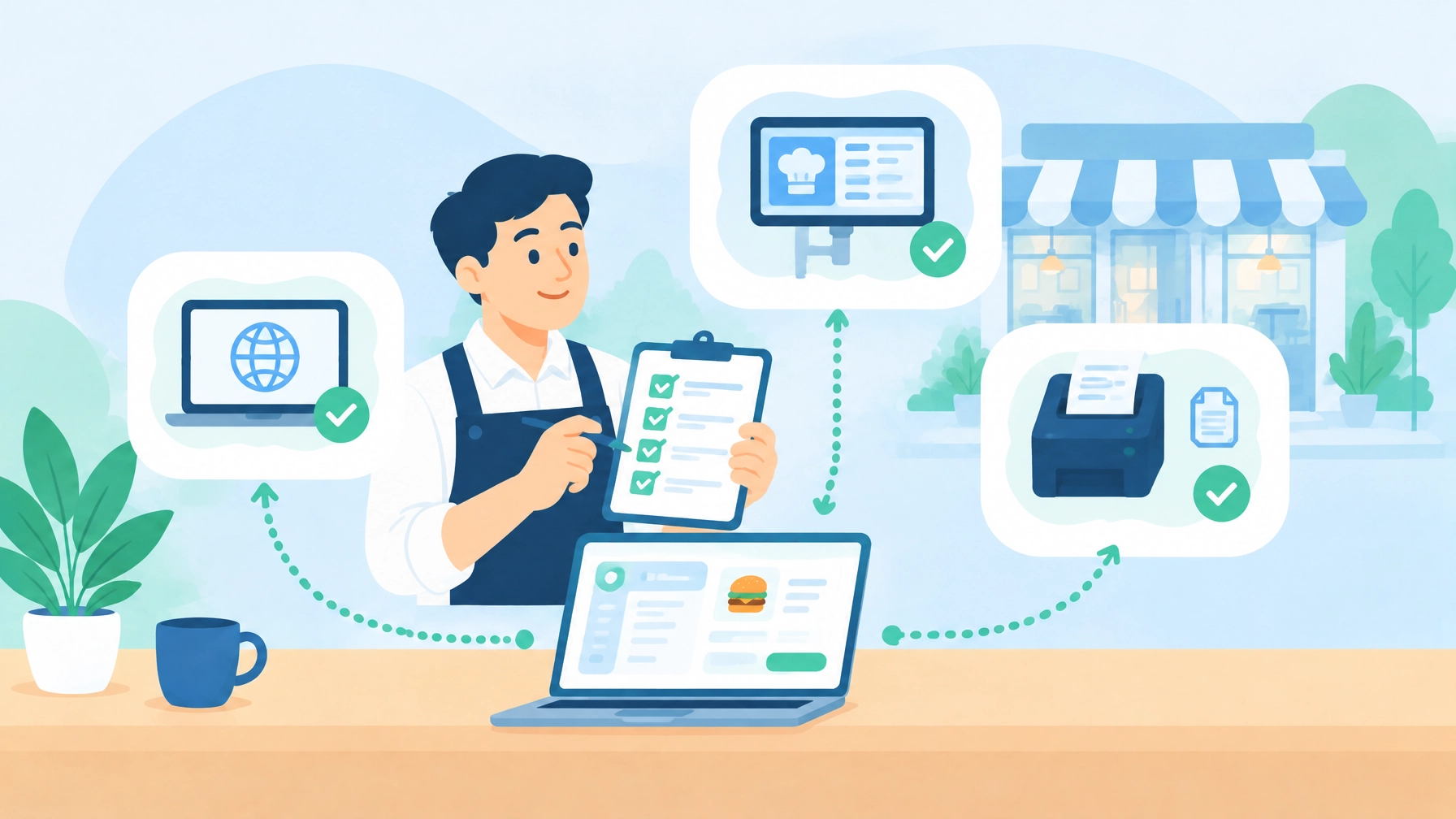
Start with one offer, one lead source, and a small set of pipeline stages. Once your team can consistently see where inquiries go and what happens next, you can add automation with confidence. A useful funnel is not the one with the most software. It is the one that helps a real customer take the next sensible step.