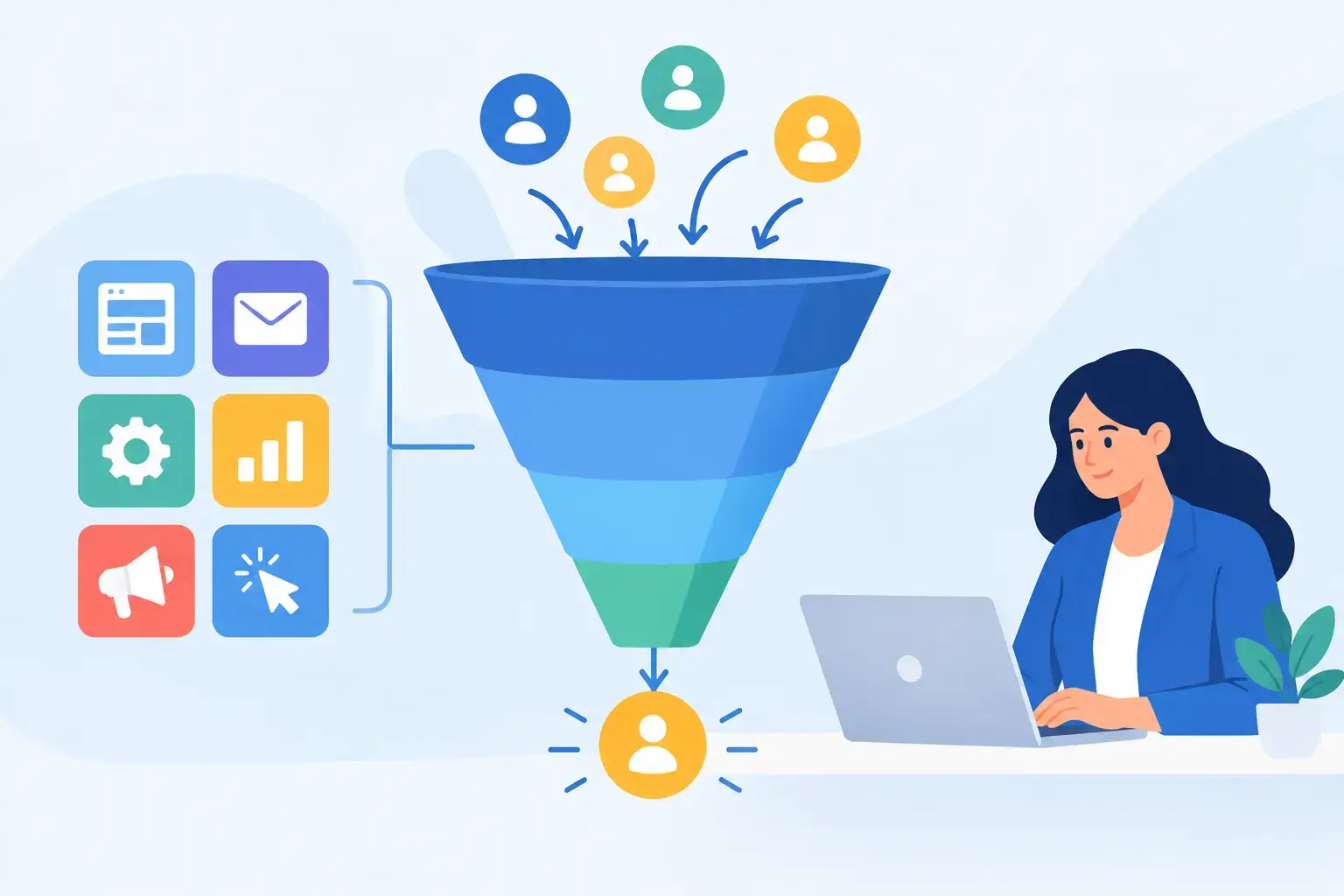
A funnel builder should do more than produce a polished landing page. For a Texas contractor following up on estimate requests, an online coach selling a program, or a local retailer trying to bring customers back, it needs to move a prospect to a clear next step. The best sales funnel builders make that process easier without forcing a small business to buy several disconnected tools.
The right choice depends on how you acquire customers. Some businesses need an all-in-one platform for pages, emails, checkout, and automation. Others already have a website and primarily need a CRM, outbound prospecting system, live chat, or loyalty program. Buying more funnel software than you can realistically manage is an expensive way to create complexity.
MBH Web Services may earn a commission when readers purchase through qualifying software links. That does not change the basic question behind every recommendation: does the tool fit the way your business sells?
What the Best Sales Funnel Builders Need to Do
A sales funnel is the path from first contact to purchase, and sometimes to repeat business. A simple service-business funnel might begin with a Google ad or referral, lead to a quote-request page, trigger an email or text follow-up, and end with a booked job. An ecommerce funnel may need product pages, checkout recovery, post-purchase offers, and loyalty incentives instead.
Before comparing features, define the conversion you need most: collecting leads, booking appointments, closing online sales, or improving repeat purchases. Then look for a tool that handles the steps immediately around that conversion. A platform with 200 features is not automatically better if your team will only use landing pages and two emails.
For most small businesses, the practical requirements are straightforward: page or form creation, contact capture, automated follow-up, reporting, and integrations with the rest of the business. Checkout tools, CRM pipelines, chat, and loyalty features matter when they support your particular sales process.
1. Systeme.io: Best All-in-One Funnel Builder on a Budget
Systeme.io is a strong starting point for entrepreneurs and smaller businesses that want landing pages, email marketing, sales funnels, automations, online course delivery, and affiliate management in one place. It is especially relevant when a business sells digital products, memberships, coaching, training, or a straightforward service offer.
Its main advantage is consolidation. Instead of connecting a page builder, email system, course platform, and automation tool, you can build the core journey in one account. That can reduce setup decisions and monthly software costs for a lean operation.
The tradeoff is that a broad all-in-one platform may not offer the same depth as a specialized CRM, advanced email platform, or ecommerce system. Businesses with complex sales teams, detailed forecasting needs, or heavily customized web experiences may outgrow it. Still, for an owner who needs to launch a functional lead-to-sale funnel without assembling a large tech stack, Systeme.io is one of the most practical options to explore. Review current pricing and available plan limits before committing.
2. EngageBay: Best for CRM-Centered Sales and Marketing
EngageBay fits businesses that need the funnel to continue after a lead submits a form. Its combination of CRM, marketing automation, email campaigns, landing pages, deal pipelines, and customer support features makes sense for companies managing ongoing sales conversations.
Think of a Houston-area commercial cleaning company tracking property managers, proposal stages, and follow-up dates. A landing page may generate the lead, but the CRM process determines whether anyone follows up, how quickly they respond, and whether the opportunity is eventually won or lost. EngageBay brings those activities closer together.
This is a better fit than a page-only funnel builder when several people touch the sale or when leads take weeks rather than minutes to convert. The limitation is that configuration takes thought. You need clear pipeline stages, lead fields, and follow-up rules before automation is useful. Start with one sales process rather than attempting to automate every customer interaction on day one. Explore EngageBay’s features if your biggest gap is organized lead management, not just page creation.
3. Smartlead: Best for B2B Outbound Lead Generation
Smartlead is not a traditional drag-and-drop funnel builder, and that distinction matters. It is designed for businesses that generate opportunities through cold email outreach and multi-inbox sending rather than relying solely on inbound website traffic.
For a B2B agency, IT provider, commercial supplier, or recruiting firm, the funnel may start with a targeted prospect list and an email sequence. Smartlead can support inbox rotation, campaign management, and automated follow-ups, helping teams run outreach at a more organized scale.
Outbound email comes with responsibilities. A tool cannot fix a weak offer, poorly targeted list, or messages that ignore consent and deliverability practices. It also does not replace a CRM for managing a full sales operation. Smartlead is worth considering when outbound prospecting is a deliberate part of your acquisition strategy and someone on the team can own list quality, messaging, and replies. Review its current plans if that is the front end of your funnel.
4. BoomerangMe: Best for Loyalty and Repeat-Purchase Funnels
Many local businesses focus so heavily on getting the first sale that they overlook the less expensive opportunity: encouraging the next one. BoomerangMe is built around digital loyalty cards and customer retention campaigns, making it a useful funnel tool for restaurants, salons, fitness studios, auto shops, and other businesses with repeat visits.
It is not the right platform for building a long-form sales page or a complicated B2B lead nurture sequence. Its value begins after a customer has already engaged. A digital stamp card, reward, or targeted promotion can give customers a reason to return instead of choosing a competitor.
This makes BoomerangMe a particularly sensible addition for customer-facing Texas businesses competing in crowded local markets. The key is keeping the offer simple enough for staff and customers to understand. Explore current BoomerangMe options if retention and repeat transactions matter more than lead-form design.
5. LiveChat: Best for Converting High-Intent Website Visitors
LiveChat addresses a point in the funnel that many businesses ignore: the visitor who has a question right before they leave. For higher-consideration services, software, professional firms, and ecommerce stores, a timely conversation can help clarify pricing, availability, fit, or next steps.
Live chat works best when there is a realistic plan to respond. Adding a chat widget without assigning coverage can create frustration rather than trust. Small teams should set clear hours, saved responses for common questions, and a process for routing sales-ready conversations into their CRM or inbox.
It is not a complete funnel builder by itself. However, it can strengthen a website funnel by reducing hesitation at the decision point. Consider LiveChat when your site already receives relevant traffic but too many visitors leave before submitting a form or buying.
6. ClickFunnels: Best for Businesses Focused on Direct Response
ClickFunnels remains a recognizable option for businesses that sell through focused offer pages, order forms, upsells, and webinar-style funnels. It can be a good fit for marketers with a proven direct-response offer and a desire to build campaigns quickly without relying on a separate website team.
The tradeoff is cost and discipline. Its templates and funnel-first approach can be useful, but a business still needs strong messaging, credible offers, and traffic sources. It may be more platform than a local service provider needs if the primary goal is simply collecting quote requests. Compare its pricing and workflow against Systeme.io before choosing an all-in-one funnel platform.
7. Leadpages: Best for Straightforward Landing Pages
Leadpages is a sensible option for businesses that already use an email platform or CRM and only need attractive, conversion-focused landing pages. It can suit a seasonal promotion, lead magnet, event registration, or dedicated campaign page without asking the business to replace its existing systems.
Its narrower focus is the benefit and the limitation. You gain simplicity, but you will likely need other tools for email automation, sales pipelines, and customer retention. For an established business with a stack it likes, that can be exactly the right tradeoff.
How to Choose Without Overbuilding Your Funnel
Start with the bottleneck, not the software category. If leads are arriving but follow-up is inconsistent, prioritize a CRM such as EngageBay. If you need to create and sell a digital offer from scratch, Systeme.io may cover more of the journey. If your sales team needs more qualified B2B conversations, Smartlead may be the more relevant investment. If existing customers rarely return, a loyalty tool like BoomerangMe deserves attention.
Also consider who will operate the platform each week. A funnel only works when pages are updated, leads are answered, automations are reviewed, and reporting is checked. Choose a tool your business can maintain with the time and skills you actually have. Begin with one offer, one audience, and one measurable next step, then improve the process as you learn what customers respond to.