A new software subscription can be active in minutes, yet the work that determines its value often begins after the purchase. SaaS support gives businesses a practical path from a login screen to a tool employees can use confidently, consistently, and securely in their daily work.
For small and mid-sized businesses, the challenge is rarely finding software. Most teams can compare features, review pricing, and sign up for a platform without much difficulty. The harder question is who will configure it correctly, guide employees through the change, solve issues after launch, and keep ownership clear when vendor support is limited or fragmented.
SaaS Support Is More Than Technical Help
Effective SaaS support is not simply a help desk that responds when a user cannot reset a password. It is the continuing service that helps a business adopt, operate, and maintain cloud software as part of an actual workflow.
That starts with understanding the intended business outcome. A customer relationship management platform, for example, may need to support a sales process, reporting requirements, user roles, and existing data practices. If the system is set up without those realities in mind, employees may work around it rather than work in it. The subscription remains active, but the business does not receive the expected return.
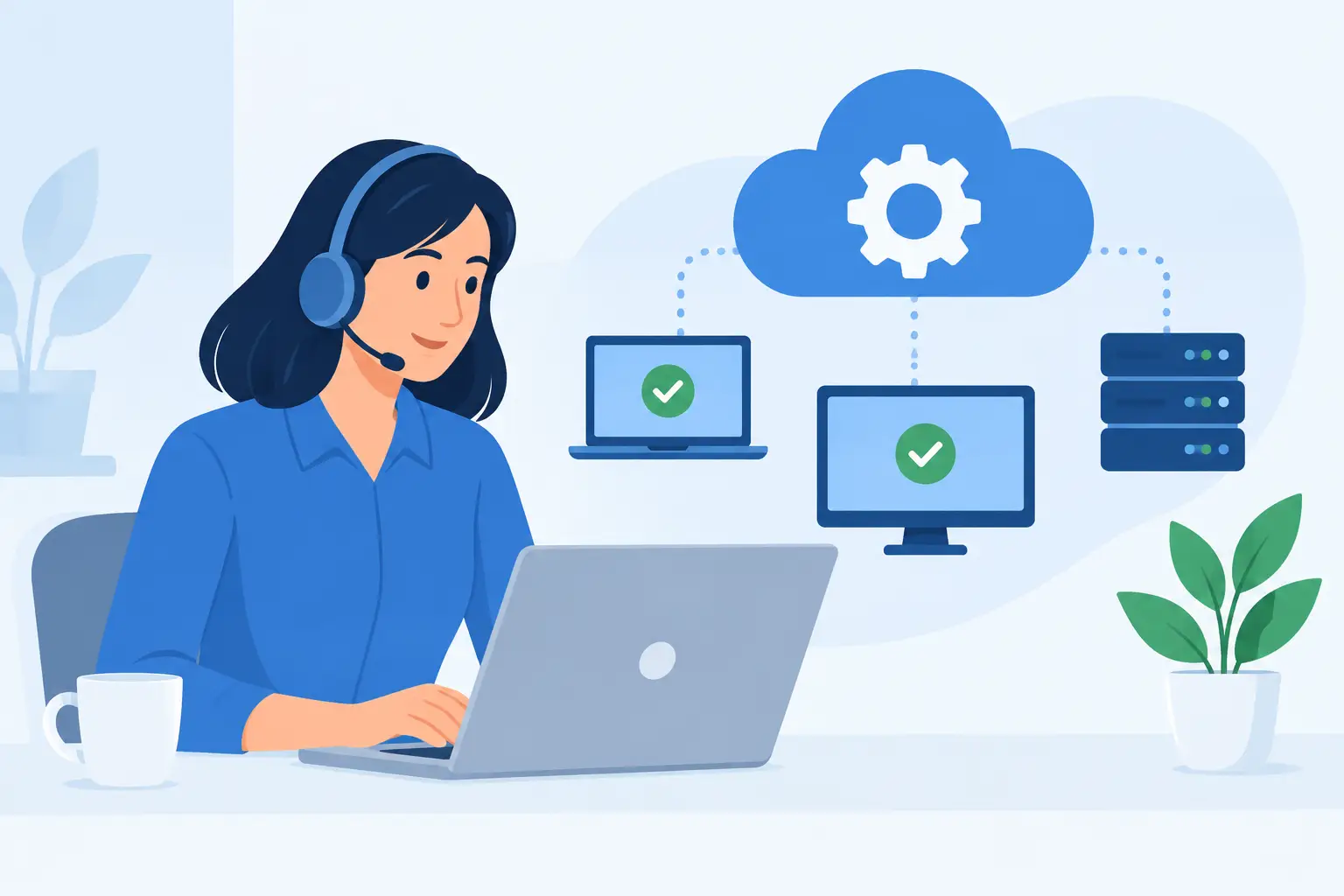
A capable support partner connects the platform to the way the organization operates. This can include account setup, configuration, permissions, data preparation, user onboarding, documentation, and post-launch assistance. The exact scope depends on the product and the organization, but the objective is consistent: make the software dependable in day-to-day use.
Self-service purchasing has made SaaS accessible, but it can also shift implementation responsibility to people who already have full workloads. An operations manager may become the default administrator. An IT lead may be asked to troubleshoot a platform they did not select. Department managers may have to train employees while still meeting their normal responsibilities.
This approach can work for a simple tool with a small user group and limited business impact. It becomes less reliable when software affects customer records, internal approvals, financial processes, compliance responsibilities, or collaboration across departments.
Common problems tend to appear gradually. Users receive inconsistent training. Settings are left at default values. Permissions expand without a clear process. Reports do not reflect the information leadership needs. Questions accumulate, and no one is certain whether the software vendor, an internal team member, or another provider owns the answer.
The cost is not always visible as a major system failure. More often, it appears as duplicated work, incomplete records, delayed decisions, frustrated employees, and a tool that only a few people know how to manage. Ongoing support reduces this risk by giving the business a defined point of accountability after the initial sale.
What Good SaaS Support Looks Like in Practice
The right level of service depends on the software, the size of the team, and the organization’s internal capabilities. A business with experienced administrators may only need help with implementation and escalation. A growing company with no dedicated software owner may need continuing administration, user support, and maintenance.
In either case, useful support follows the full customer lifecycle rather than treating launch as the finish line.
Before implementation: fit and readiness
Support begins with selecting a product that matches the business need and preparing for adoption. This means clarifying who will use the system, what information needs to move into it, which processes may change, and who will make decisions during setup.
A realistic readiness discussion prevents avoidable surprises. For instance, a platform may offer extensive integrations, but enabling every available feature on day one may create more complexity than value. A phased rollout can be the better choice when a team needs to stabilize a core workflow first.
During implementation: configuration with a purpose
Implementation should reflect how the business actually needs to work. This includes setting user roles, organizing fields and workflows, preparing data, configuring notifications, and establishing administrative practices.
There is a trade-off between customization and simplicity. Highly customized software can fit a unique process closely, but it may be harder to maintain, train, and update. Standard configuration is often easier to support over time. The best decision is not always the most sophisticated one. It is the one the organization can manage reliably.
At launch: onboarding that drives adoption
Employees do not need every feature explained at once. They need clear guidance on the tasks they are expected to perform. Training is most effective when it uses familiar scenarios: entering a new customer, submitting an approval request, locating a report, or resolving an exception.
Good onboarding also gives users a place to ask questions after training. Employees often understand a process in a demonstration but run into uncertainty when they apply it to real work. Timely answers in the first weeks of use can make the difference between lasting adoption and a return to spreadsheets, email, or informal workarounds.
After launch: maintenance and accountable assistance
Software needs attention after it goes live. User access changes as employees join, change roles, or leave. Vendors release updates. Business processes evolve. A report that worked six months ago may no longer provide the information a manager needs.
Ongoing SaaS support provides continuity through these changes. It can include troubleshooting, vendor coordination, configuration adjustments, user assistance, account maintenance, and guidance on new features. The value is not merely fixing an isolated issue. It is preserving the reliability of a business capability over time.
The Value of One Accountable Partner
When businesses buy directly from a vendor, they may receive product documentation and standard technical support. Those resources can be useful, particularly for known product issues. However, a software vendor is not always positioned to understand a customer’s internal processes, implementation choices, or user adoption challenges.
A service-focused SaaS partner fills that operational gap. Instead of asking separate parties to handle procurement, setup, training, and maintenance, the customer has one relationship that spans the software lifecycle. That simplifies communication and reduces the time spent determining where a request belongs.
This model does not replace the software vendor. It adds practical accountability around the customer’s use of the platform. If an issue requires vendor involvement, the support partner can help document the problem, provide relevant configuration context, and coordinate the next step. If the issue is a training or workflow question, it can often be addressed without a prolonged vendor ticket process.
For operational leaders, this continuity matters because technology problems rarely arrive in neat categories. A user complaint may involve access settings, incomplete onboarding, an unclear process, or a vendor-side limitation. A partner that understands the implementation can assess the issue in context.
How to Evaluate SaaS Support Services
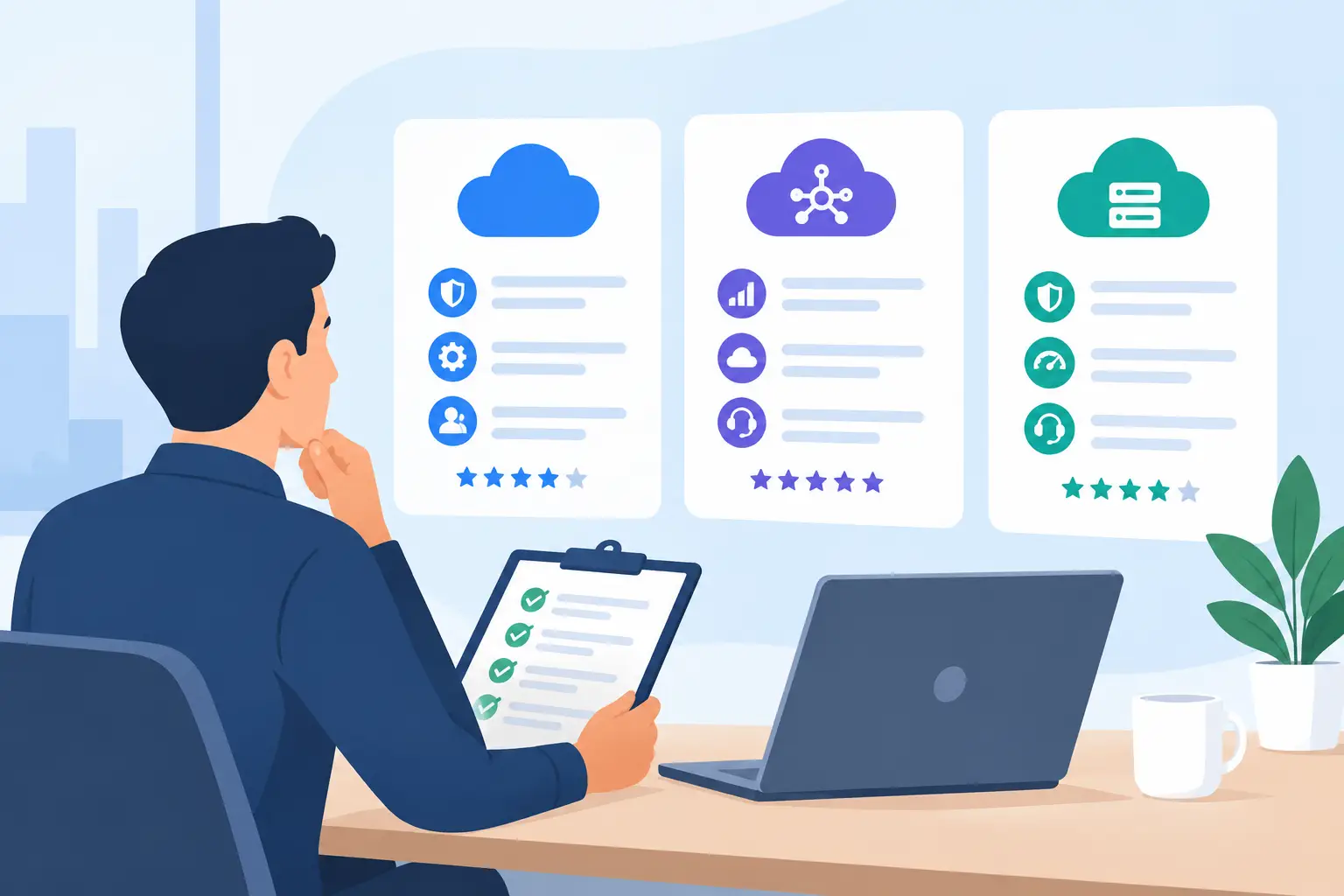
When reviewing a support provider, look beyond a general promise of assistance. Ask what happens during onboarding, who owns implementation tasks, how user questions are handled, and what maintenance is included after launch. Clear service boundaries help prevent confusion later.
It is also useful to ask how the provider handles changes. Your business may add employees, open a new location, revise an approval process, or adopt additional software. A support approach should be flexible enough to accommodate normal growth without requiring your team to rebuild knowledge from scratch.
Response expectations matter, but speed alone is not the full measure of quality. A quick answer that does not address the underlying issue can create repeat problems. Look for a provider that combines responsive communication with practical knowledge of the platform and your operating needs.
Finally, consider whether the provider can explain technical decisions in business terms. Decision-makers need to know what a configuration choice means for security, user effort, reporting, cost, and future maintenance. Clear communication is a core part of dependable support.
Make Support Part of the Software Decision
Software should be evaluated as a service experience, not just a feature list or monthly price. The right platform with incomplete setup and weak adoption can be less useful than a simpler product that is implemented well and supported consistently.
MBH Web Services helps organizations connect SaaS procurement with the practical work of onboarding, implementation, and ongoing maintenance. That approach gives teams a clearer path to using third-party software without taking on every administrative burden internally.
Before adding your next subscription, identify who will own the work after the purchase. When that answer includes knowledgeable, continuing support, your software is far more likely to remain useful when the business changes, employees need help, and the initial excitement of launch has passed.