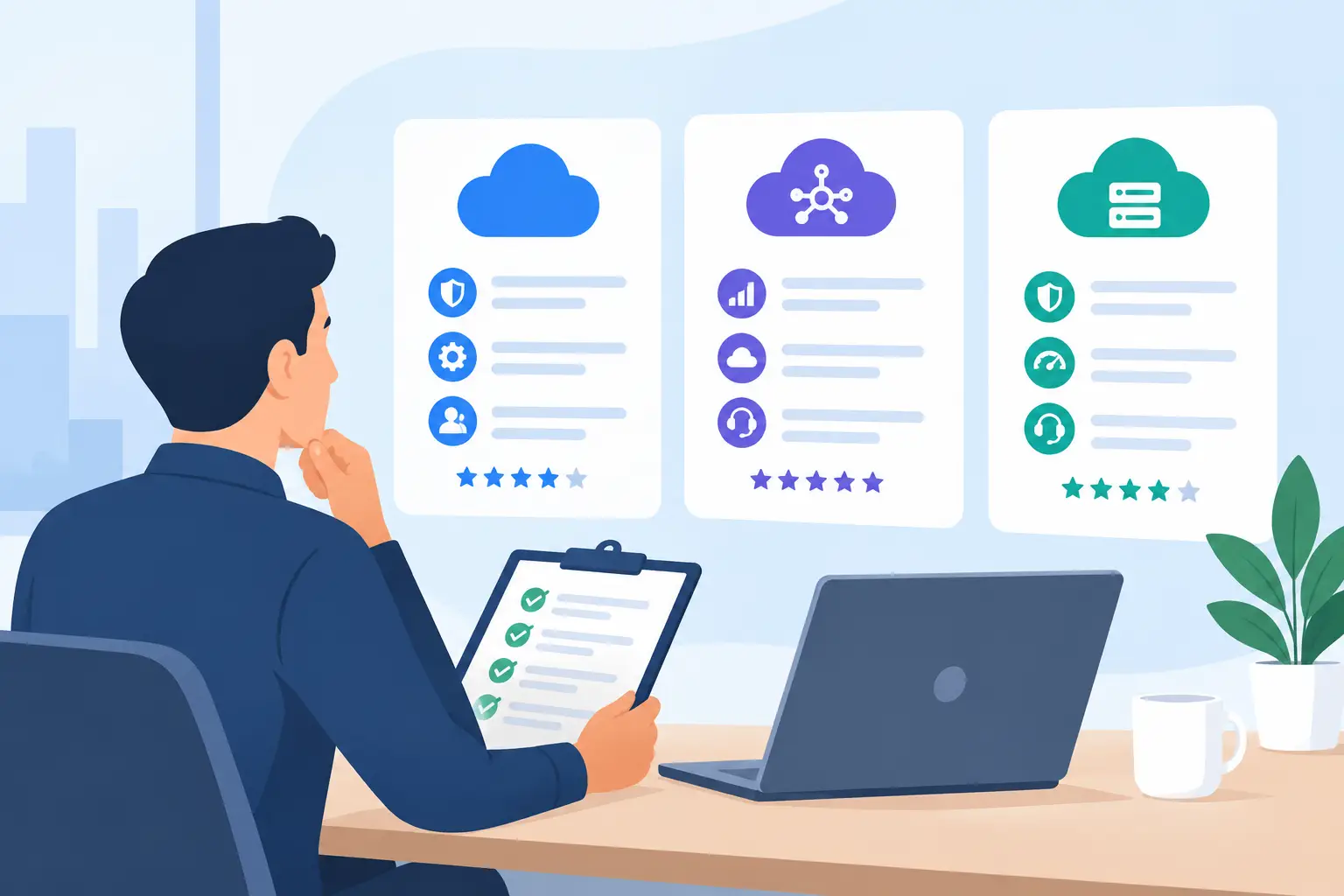
A new SaaS subscription can be approved in an afternoon, yet the work required to make it useful can stretch for months. Software vendor management services address the gap between buying a platform and operating it successfully. For growing businesses, that gap often includes account setup, security and access decisions, data preparation, employee training, vendor coordination, and the ongoing questions that arise after launch.
The goal is not to add another layer of administration. It is to give the business a responsible partner who can connect software decisions to practical outcomes: a functioning process, informed users, dependable support, and clear ownership when something needs attention.
What Software Vendor Management Services Should Cover
Vendor management is sometimes treated as a procurement task: compare products, negotiate terms, process the purchase order, and renew on time. Those responsibilities matter, but they are only one part of the SaaS lifecycle. A platform can be competitively priced and still create waste if it is configured poorly, adopted inconsistently, or left without maintenance.
Effective software vendor management services support the full period from evaluation through ongoing operation. The exact scope depends on the platform and the customer’s internal capabilities, but a service-oriented partner should be able to help with five connected areas:
- Product evaluation and fit assessment against business requirements, workflows, budget, and internal capacity.
- Purchasing, account provisioning, licensing coordination, and communication with the software vendor.
- Implementation planning, configuration, migration support, integrations, access roles, and launch readiness.
- User onboarding, documentation, training coordination, and practical support for teams using the system.
- Ongoing maintenance, vendor escalation, license review, change management, and periodic improvement planning.
This approach recognizes a simple reality: software is not a finished business capability on the day it is purchased. It becomes one through configuration, adoption, and continuing stewardship.
Why Direct SaaS Purchasing Often Creates Gaps
Self-service purchasing is useful when a tool is low risk, easy to configure, and used by a small group with clear needs. A team may be able to activate a subscription, invite users, and get value quickly without outside help. Not every application requires a formal service relationship.
The trade-off changes when software affects multiple departments, customer information, financial activity, employee workflows, or reporting. In those cases, the person who bought the tool is often expected to become its project manager, administrator, trainer, and first-line support contact. That responsibility can land on an operations leader or IT administrator who already has a full workload.
Fragmented accountability is the more common problem. The SaaS vendor may support the product itself, while an internal employee is responsible for business rules, data, adoption, and day-to-day troubleshooting. A consultant may complete initial setup but not remain available after launch. Users are then left to work around gaps, and the business may not notice declining adoption until renewal time.
A managed approach creates a clearer path. The software provider retains responsibility for its platform. The business keeps ownership of its decisions and processes. The management partner coordinates the work between them and remains focused on whether the solution is functioning for the customer.
Start With the Business Process, Not the Product List
The best platform is not necessarily the one with the longest feature list. For a small or mid-sized business, the right choice is the product that solves a defined problem without creating an unreasonable administrative burden.
Before recommending or purchasing software, establish what needs to improve. That may be faster customer follow-up, better approval controls, consistent project visibility, more reliable document handling, or fewer manual handoffs between systems. Define the people involved, the data they need, the decisions they make, and what success should look like after implementation.
This discovery work prevents a familiar mistake: buying a broad platform to solve a narrow need, then asking internal staff to maintain functions they never intend to use. It also exposes constraints early. A tool might fit the desired workflow but require an integration, data cleanup effort, or level of user training that changes the true cost of adoption.
For operationally important software, a good partner will be direct about those trade-offs. A lower subscription price may be offset by significant setup work. A powerful application may be worthwhile for a complex process but excessive for a small team. The decision should reflect the business’s current requirements and its ability to support the platform over time.
Define Ownership Before Implementation Begins
Implementation plans often focus on deadlines and technical tasks, but ownership deserves equal attention. Someone must approve configurations, provide accurate source data, test workflows, communicate internal changes, and decide how exceptions will be handled. If those responsibilities are unclear, a launch date alone will not solve the problem.
A vendor management partner can establish a practical division of responsibilities. The customer identifies business priorities and provides timely decisions. The service provider manages the implementation process, coordinates with the vendor, documents key settings, and supports users through the transition. This structure reduces confusion without taking control away from the business.
Implementation Is Where Value Is Won or Lost
A platform can be technically active while still failing operationally. Employees may not know which features apply to their role. Data may be incomplete. Permissions may be too broad or too restrictive. A workflow may reflect the vendor’s default process rather than the way the company actually operates.
Implementation should therefore be treated as a controlled change process, not an account activation event. Start with the minimum configuration needed to support the intended use case. Test it with representative users. Correct issues before wider rollout. Then provide role-based onboarding so people understand not only where to click, but why the new process exists and what is expected of them.
Documentation is especially valuable for growing organizations. It gives new employees a dependable reference, reduces repeated questions, and protects the business when the original project owner changes roles. It does not need to be overly technical. Clear instructions, ownership details, and a record of key business rules are usually more useful than a lengthy technical manual.
MBH Web Services approaches SaaS adoption as an ongoing operating responsibility, pairing access to third-party software with implementation, onboarding, and continuing support. That continuity matters because the questions that affect adoption often appear after users begin working in the system.
Ongoing Maintenance Keeps SaaS From Becoming Shelfware
The period after launch is where many businesses lose the value they expected from a subscription. Teams evolve, employees join and leave, vendors release changes, and processes that made sense six months ago may no longer fit. Without regular attention, access can become disorganized, reporting can lose credibility, and users can return to spreadsheets or informal workarounds.
Ongoing management does not mean changing the system constantly. It means maintaining a dependable review cycle. That may include monitoring user questions, reviewing licenses and roles, coordinating vendor support requests, documenting configuration changes, and identifying opportunities to simplify a process. The right frequency depends on the platform’s importance and the pace of change in the business.
It is also useful to distinguish maintenance from expansion. Maintenance keeps the current solution healthy and supported. Expansion adds new departments, workflows, integrations, or capabilities. Combining both under one vague support arrangement can make priorities and costs difficult to manage. A clear service plan separates routine stewardship from larger improvement projects while allowing the two to inform each other.
Questions to Ask Before Choosing a Partner
A software vendor management provider should be able to explain its role in plain business terms. Ask what happens after purchase, who handles vendor communication, how implementation responsibilities are shared, and what support looks like once the system is live. The answers should be specific enough to show where accountability begins and ends.
Also ask how the provider evaluates product fit. A partner that only promotes a subscription without asking about workflows, users, integrations, and internal capacity may not be preparing the business for successful adoption. Product knowledge is valuable, but implementation discipline and ongoing responsiveness are what turn that knowledge into operational value.
Finally, look for continuity. The people responsible for selecting and configuring a platform should not disappear immediately after launch. Even if the support model changes after implementation, the customer should know where to go for routine questions, vendor escalation, maintenance needs, and future changes.
The most useful software relationship is one that leaves your team more capable, not more dependent. Choose support that gives employees a clear system to work in, gives leaders visibility into ownership and costs, and gives the business a practical next step whenever the software or the workflow needs to change.