A SaaS contract renewal can look routine right up until a renewal notice exposes a problem: more user licenses than active employees, a critical integration no one owns, unclear support terms, or an automatic price increase buried in the agreement. For small and mid-sized businesses, the risk is not just overspending. It is disrupting a tool that employees depend on to serve customers, manage work, or keep operations moving.
A better renewal process treats the contract date as an operational checkpoint, not an administrative deadline. It gives your team time to confirm whether the software is delivering value, correct adoption gaps, document ongoing responsibilities, and make a sound decision before deadlines narrow your options.
Start SaaS contract renewal planning early
The right lead time depends on the product, contract value, and the difficulty of replacing it. For a straightforward departmental tool, 60 to 90 days may be enough. For software connected to customer data, finance, security controls, or several internal systems, begin four to six months before the end date.
Early planning matters because renewal decisions often uncover work that cannot be completed in a week. You may need to clean up user accounts, test a feature that was never fully deployed, compare service tiers, review an integration, or gather input from multiple departments. If you wait for the vendor's invoice, the practical choice may become renewing as-is simply to avoid disruption.
Assign one person to coordinate the process, even if several people contribute. That owner does not need to be the most technical person in the business. They do need the authority to collect information from finance, IT, operations, and the department using the platform. A single owner prevents renewal tasks from being divided among people who assume someone else has handled them.
Confirm the software is being used as intended
License counts alone do not show whether a SaaS product is working for the business. A platform might have high log-in activity but still be poorly configured, underused, or creating manual work that it was meant to eliminate. Conversely, a specialized tool with a small user base may be essential to a revenue-producing process.
Start with the original business purpose. Ask what process the software was supposed to improve, what outcome the team expected, and whether that outcome is visible today. For example, an employee onboarding platform should shorten setup tasks and make training more consistent. A customer relationship management system should improve visibility into sales activity and follow-up. If the expected result is not clear, a renewal conversation is a useful time to define it.
Then compare purchased capacity with actual need. Review active users, inactive accounts, administrative roles, storage, transaction limits, and premium features. Look beyond the monthly dashboard where possible. A user who logged in once may not be a meaningful user, while a shared account can hide the true number of people relying on the system.
Talk to the people doing the work. Their feedback often identifies the issue more accurately than usage reports alone. They may need additional training, a workflow adjustment, better permissions, or help connecting the software to another system. Replacing a platform because it was never properly implemented can be more expensive than correcting the deployment.
Build a complete renewal record
Renewals become difficult when key details are scattered across email threads, vendor portals, accounting records, and former employees' files. Create one current record for each important SaaS product. It should be practical enough that another team member can understand the commitment and act on it if the usual contact is unavailable.
For operationally important software, the record should include:
- Contract start and end dates, notice periods, and automatic renewal terms
- Current plan, license quantities, usage limits, and total cost
- Vendor contacts, internal business owner, billing owner, and technical administrator
- Key integrations, data handled, and any dependencies on the platform
- Support level, response expectations, and outstanding service issues
- Implementation decisions, training materials, and configuration notes
This record is not paperwork for its own sake. It is continuity planning. When a business knows who owns a tool, how it is configured, and what depends on it, it can negotiate, renew, or transition with far less risk.
Review price, terms, and service scope together
A lower subscription price is useful only if the plan still supports the way your business operates. During a SaaS contract renewal, review commercial terms and operational requirements as one decision.
First, confirm the billing model. Per-user pricing can become costly when inactive accounts remain assigned. Usage-based pricing may rise as the company grows, especially when transactions, contacts, storage, or automated workflows are included in the calculation. Annual commitments can provide predictability, but they reduce flexibility if your staffing or process needs are changing.
Next, read the renewal mechanics carefully. Identify the required notice period for cancellation or plan changes, the renewal term, any price increase language, and conditions that limit downgrades. If a vendor has revised its service agreement or privacy terms since the last contract period, involve the appropriate internal stakeholders before accepting the new terms.
Support deserves the same attention as pricing. A basic support plan may be sufficient for a low-risk tool used by a small team. It may not be adequate for software that supports customer communications, payroll-related workflows, or daily operations. Consider how quickly your organization needs help when a configuration breaks, users lose access, or an integration stops working.
It also helps to separate vendor support from implementation support. A software vendor can answer product-specific questions, but may not understand your internal workflow, previous setup decisions, or the other systems involved. Many businesses benefit from having a partner that can coordinate account changes, user onboarding, configuration updates, and ongoing maintenance alongside the vendor relationship.
Decide whether to renew, adjust, or replace
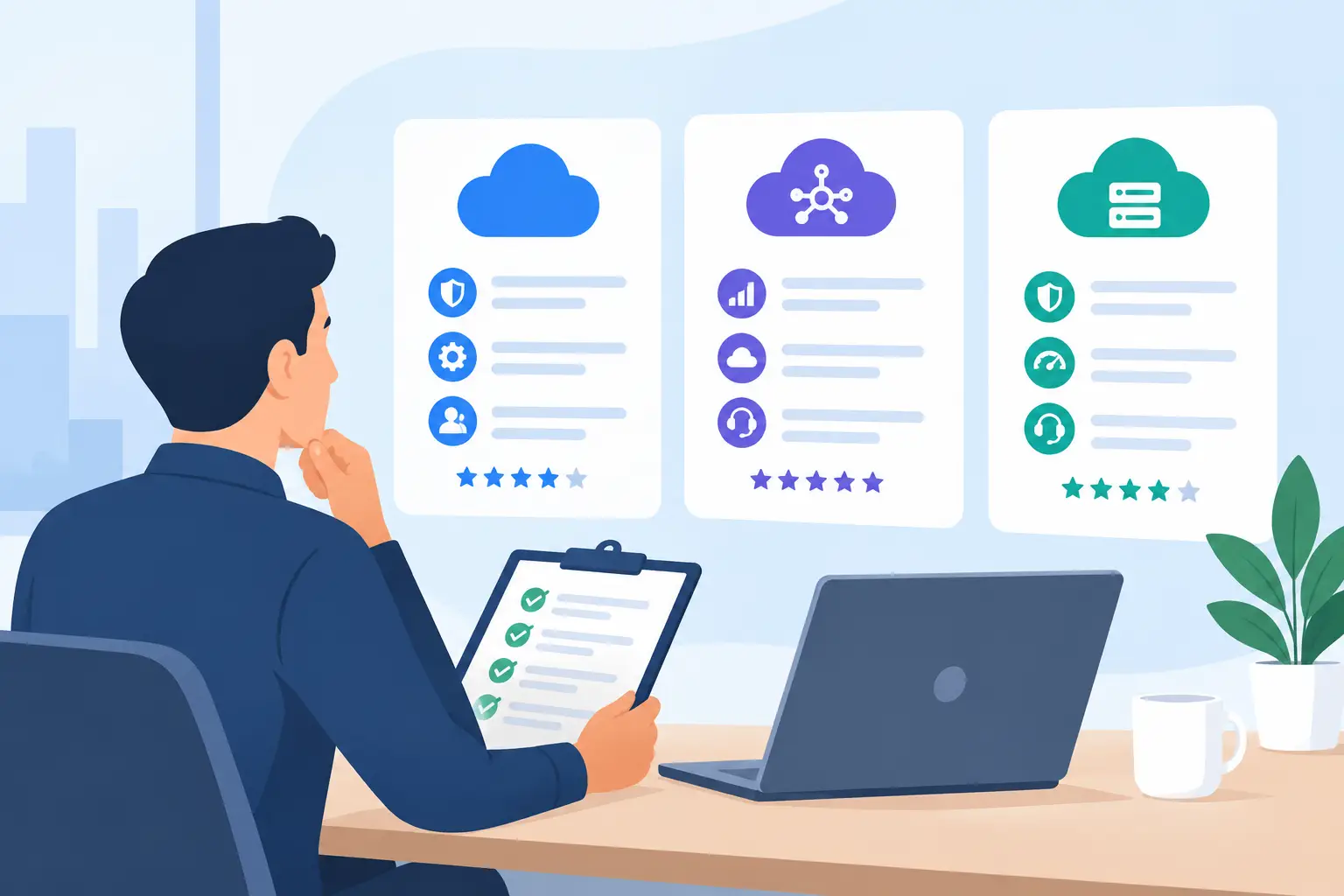
There are usually three realistic paths: renew the current agreement, renew with changes, or move to another platform. The best option depends on business fit, not on whether the current tool is familiar.
Renew as-is when the software is meeting its intended purpose, costs are reasonable, the team is using it effectively, and support is sufficient. This can be the right decision, particularly when the product is stable and deeply integrated into reliable processes.
Renew with changes when the platform remains useful but the contract no longer matches the organization. You may reduce unused licenses, add capacity for a growing team, move to a more appropriate tier, improve security settings, or add onboarding and maintenance support. This option is often overlooked because teams frame the decision as keep or replace. In practice, correcting the deployment or service model can restore value without a disruptive migration.
Consider replacement when the product cannot meet a core requirement, costs have become disproportionate to value, usability is consistently limiting adoption, or the vendor's direction no longer fits your needs. Replacement should include a realistic migration plan. Data export, access control, integrations, historical records, employee training, and parallel operations all require time and ownership. A lower-priced alternative is not automatically the lower-cost option once transition work is included.
Make renewal part of ongoing software stewardship
The strongest renewal process does not begin at the end of the contract. It is supported throughout the year by routine account maintenance and clear ownership. Review user access when employees join, change roles, or leave. Keep an eye on adoption after new features or workflow changes. Document decisions when administrators alter configurations or add integrations.
This ongoing work reduces surprises and improves negotiating leverage. When you have current information about usage, needs, and service issues, you can approach the vendor with specific requests rather than broad concerns. You can also recognize earlier when a platform needs attention before it becomes a renewal emergency.
For businesses managing several third-party tools, a centralized calendar and ownership list can make a meaningful difference. It allows finance to forecast costs, operations to plan process changes, and technical staff to schedule maintenance without scrambling around renewal dates.
MBH Web Services supports this lifecycle approach by connecting software access with onboarding, implementation, and ongoing maintenance. The goal is not simply to keep a subscription active. It is to help ensure the software continues to support the work it was purchased to improve.
A well-managed renewal leaves your organization with more than another signed term. It leaves you with cleaner access, clearer accountability, better-informed users, and a software environment that is easier to operate when priorities change.