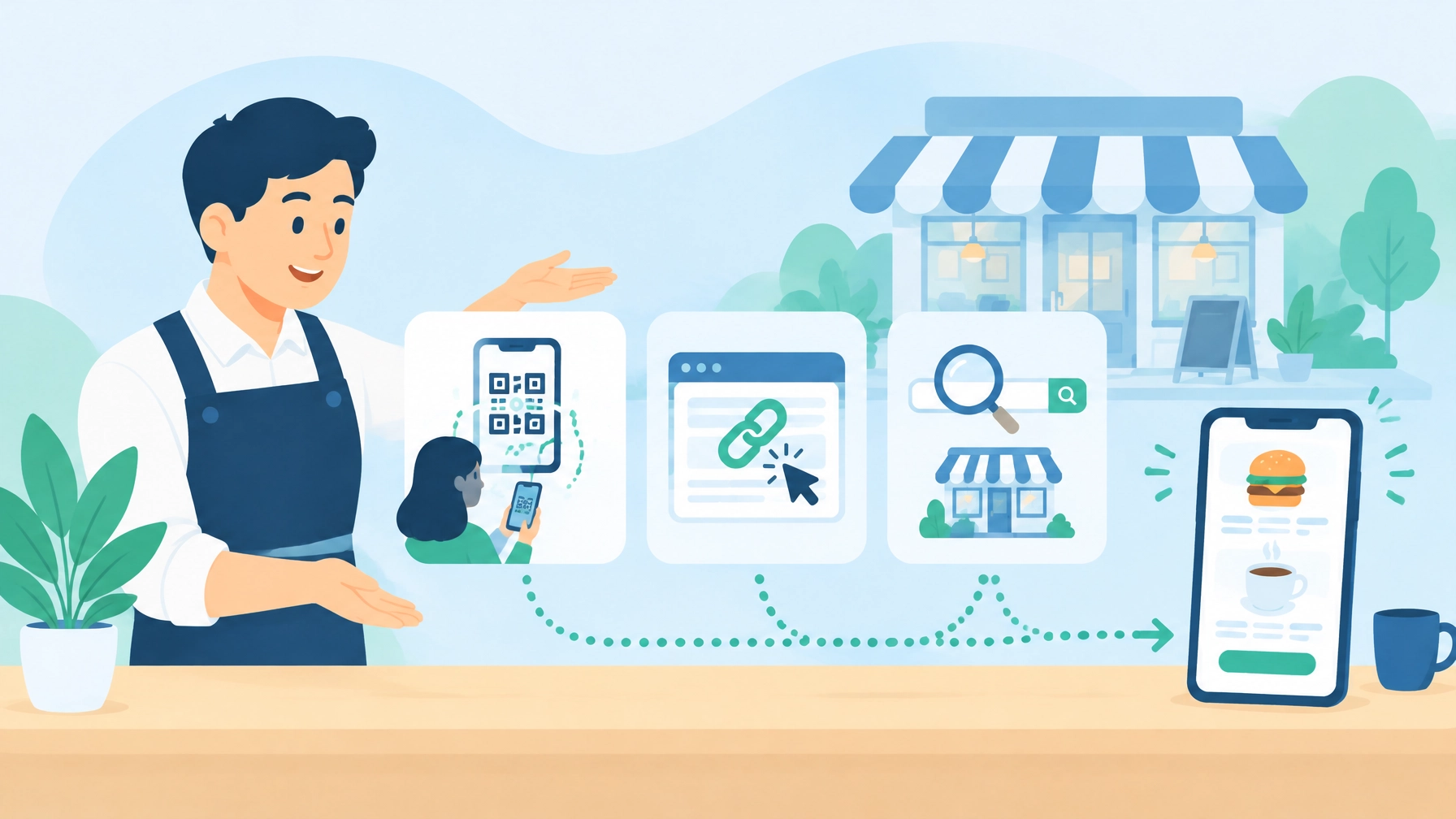
A direct-ordering channel that no customer can find is a monthly fee with a menu. The platform build gets the attention, the menu gets the care, and the entry points, the actual routes by which customers arrive at the ordering page, are often left to chance. The entry-point decision is worth making deliberately, because each route works differently, serves a different customer moment, and costs a different kind of effort.
This article is a decision guide for ordering-page entry points, using Restomas as the example platform. It complements the customer ordering journey and the break-even worksheet; those cover the experience and the economics, and this article covers the front door.
The three entry points, compared
- Serves — QR code: Customers already in the restaurant; Website link: Customers at home with your name; Search and maps: Customers who don't know you yet
- Customer moment — QR code: At the table, deciding now; Website link: Choosing tonight's order; Search and maps: Discovering options
- Effort — QR code: Printing and placement; Website link: Website integration; Search and maps: Ongoing listing maintenance
- Best use — QR code: Dine-in and pickup conversion; Website link: Regulars and repeat orders; Search and maps: New customer discovery
The three routes are not competitors; they cover the three moments in which any customer might order. The decision is not which to use but which to build first, and the answer depends on where the restaurant's orders actually come from.
The QR code: the in-house conversion machine
The QR code's job is to convert customers who are physically present, and it is the highest-leverage entry point for a restaurant with meaningful dine-in or pickup traffic. The code on the table, the counter card, and the to-go bag all serve the same moment: a customer who has already chosen this restaurant, deciding right now whether to order directly.
The placement rules are practical. The code should be visible without being an instruction, on table tents, counter signage, and to-go packaging, and it should go somewhere the phone camera finds it, flat surfaces, good light, and never behind a glare. The QR code should also lead directly to the ordering page, not to the homepage, because every tap between the code and the menu is a share of customers lost, the same funnel discipline as any customer journey.
The QR code's specific value: it converts the restaurant's own traffic, which means its economics don't depend on winning anyone new. For the break-even math, QR-driven orders are the cheapest moved orders in the model, because the customer was already here.
The website link: the regular's route
The website ordering link serves the customer who is at home, knows the restaurant, and is deciding where to order. This customer's alternative is not the QR code; it is the delivery app, which is why the link's placement on the website matters commercially.
The rule: the ordering link belongs on the website's front page, above the fold, labeled in the customer's language. "Order Online" in the header is the convention; a link buried in a dropdown or sitting on an inner page loses the exact customer who was trying to order directly, and that customer then opens the marketplace app, where the commission economics resume.
The website link's specific value: it captures the regular who would have ordered through the app by default. It also pairs with the restaurant's other owned channels, the email list, the social profiles, and the loyalty program, all of which can carry the direct link.
Search and maps: the discovery route
Search visibility is the slowest and most indirect entry point, and it deserves honest treatment: customers searching for restaurants tonight see marketplaces and maps listings as often as they see restaurant websites. The direct channel's role in search is to make sure the restaurant's own listing, its website and its maps profile, carries the direct-ordering link, so that a customer who finds the restaurant through search can reach the direct channel in one more tap.
The practical work here is listing maintenance: the website, the maps profiles, and the social pages all carrying the same current link and hours, which is the same menu-maintenance ownership discipline in a different coat. Search is not where the direct channel wins, but it is where the direct link must be present when the customer arrives.
The decision sequence
The build order follows the restaurant's traffic:
- Dine-in or pickup heavy: QR code first, website link second, listings third. The QR code's conversion of in-house traffic is the fastest path to the break-even volume.
- Delivery-heavy with a website presence: website link first, QR second. The link's job is intercepting the app-bound regular.
- New or low-visibility restaurant: the direct channel is premature as a search strategy; build the QR and website link for existing customers, and treat the channel as a service to current demand rather than a source of new demand.
Questions to answer before you print anything
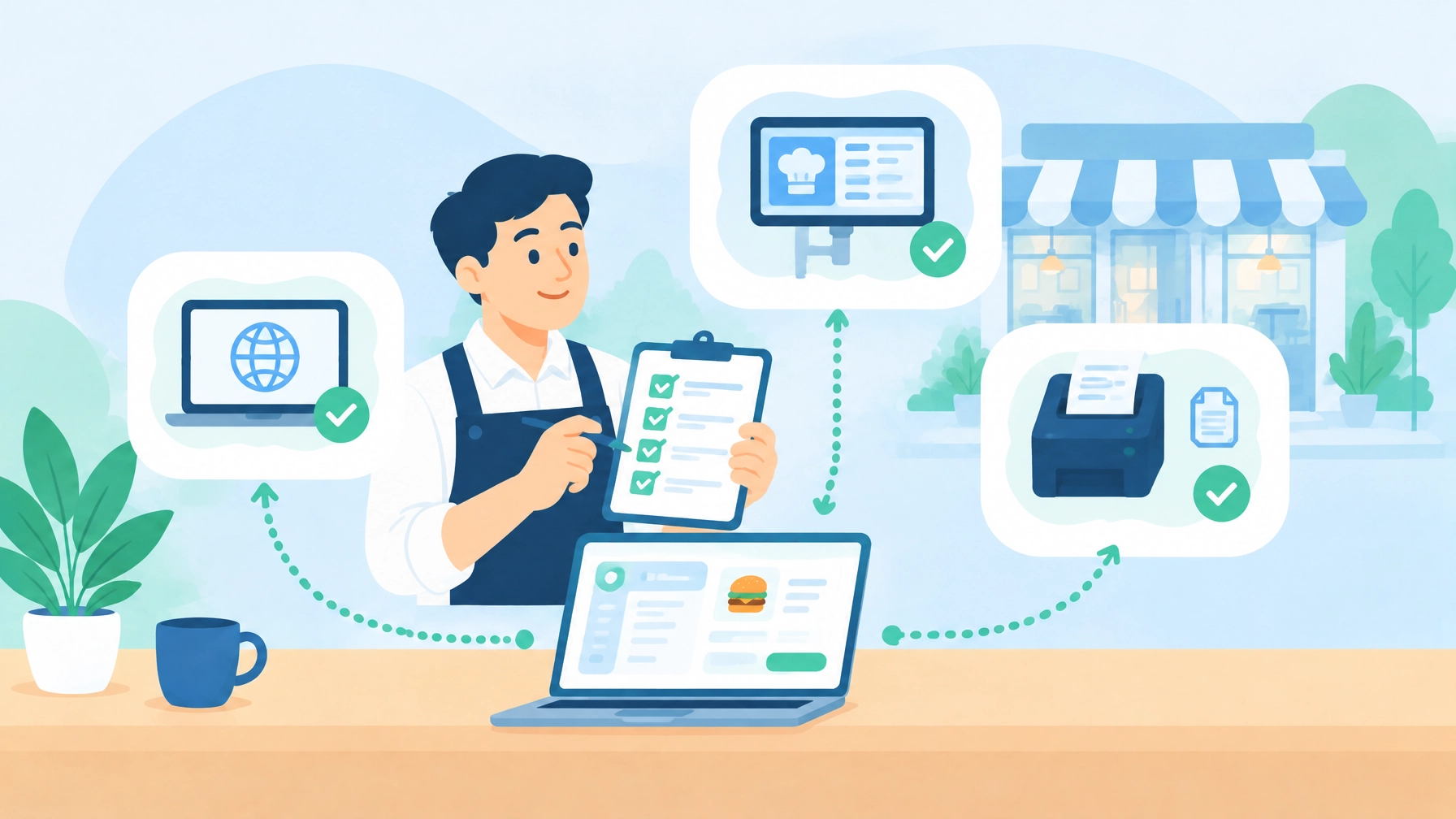
Before producing the QR codes and updating the website, write down: Where do our current orders come from, in-house, website, or app? Which entry point serves the largest share of that traffic? Where will the QR codes physically live, and who keeps them current? Is the ordering link on the website's front page in plain language? Who owns the listings' link and hours across search and social?
Five answers, and the entry points are built in the order the traffic justifies. MBH Web Services sets up direct-ordering channels with the entry-point plan built alongside the menu, because a perfect menu with no front door is the most common failure in this category. The decision guide above is fully runnable by an owner in an afternoon: trace where orders actually originate, build the entry points in that order, and make sure the Restomas ordering page is reachable the way your customers actually arrive.