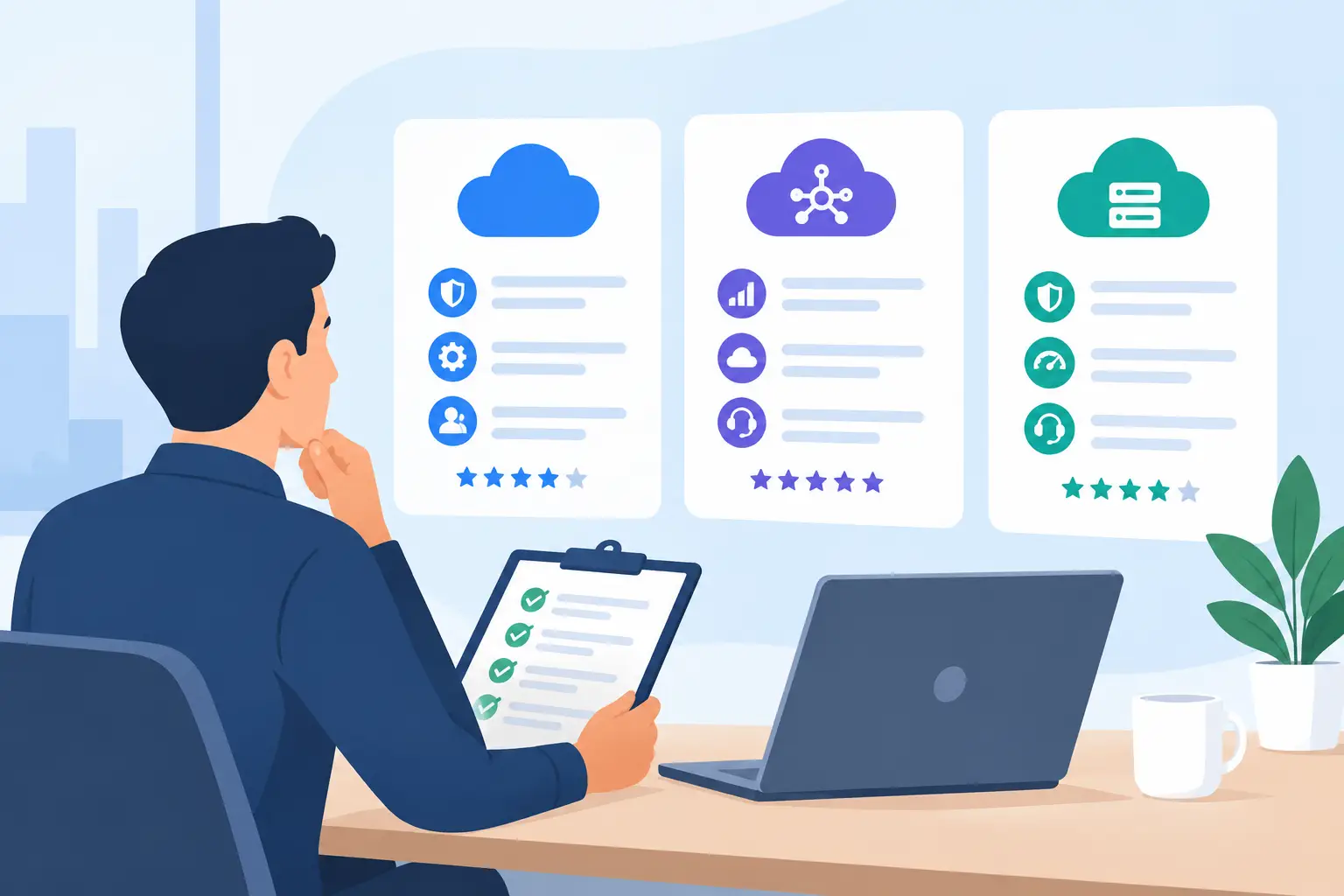
A software subscription can be purchased in minutes, but making it useful across a business takes longer. The choice between guided deployment versus self service determines who carries the work of setup, configuration, training, support, and ongoing maintenance after the purchase is complete.
For a small or mid-sized business, this is not simply a question of convenience. It affects employee adoption, internal workload, system reliability, and the speed at which the software begins improving operations. The right model depends on the product, the people using it, and how much risk the business can reasonably absorb during implementation.
What self-service SaaS actually requires
Self service is often presented as the fastest path to new software. A business selects a plan, enters payment information, creates an account, and receives access. For straightforward tools with a small user group, that approach can be perfectly appropriate.
The work does not end at account creation, however. Someone inside the business still needs to make decisions about settings, user roles, permissions, integrations, data migration, workflow design, and employee communication. That person also becomes the informal owner of troubleshooting when a feature is not behaving as expected or a new employee needs access.
Self service works best when the platform is low risk, the configuration is simple, and an internal team member has both the time and confidence to manage it. A design team adopting a basic collaboration tool may need little more than account setup and a short internal orientation. A company rolling out a customer platform, finance system, security product, or workflow automation tool faces a different level of responsibility.
The apparent savings of self service can narrow quickly when managers, IT staff, or department leads spend unplanned hours resolving setup issues. The software cost may be predictable, while the internal cost of adoption is not.
Guided deployment versus self service: the practical difference
Guided deployment pairs the software purchase with accountable implementation support. Rather than leaving the customer to translate product documentation into a working business process, a service partner helps plan and complete the steps required to put the platform into use.
That usually starts with understanding the intended outcome. Is the goal to centralize customer records, improve employee communication, automate approvals, protect company devices, or replace a manual process? The answer shapes how the platform should be configured. A guided deployment then moves from planning into account setup, user provisioning, configuration, migration or integration work where applicable, testing, and user onboarding.
The difference is not that guided deployment removes all client involvement. Business leaders and subject matter experts still need to explain current processes, approve decisions, and help set priorities. The difference is that they are not expected to become specialists in every new platform just to get it operating correctly.
With self service, the vendor provides the product and documentation. With guided deployment, the business has a partner focused on turning that product into an operational capability. The distinction matters most when several people, departments, or business-critical processes depend on a successful rollout.
The trade-off is control of time, not control of the software
Some organizations assume self service gives them more control, while guided help means handing control away. In practice, a well-managed deployment preserves business control over decisions while reducing the burden of execution.
Your team should still decide who receives access, what process is being improved, which information must be retained, and what success looks like. A deployment partner can organize those decisions, identify common configuration gaps, and carry out approved work efficiently. This approach gives internal teams more time to focus on operating the business rather than interpreting technical settings.
Guided services do carry an upfront service cost. That cost should be weighed against the hours of internal labor, the cost of delayed adoption, and the potential consequences of a poorly configured system. For a tool used by five people with no sensitive data or connected systems, self service may remain the sensible choice. For a platform that affects customer service, payroll, sales activity, compliance, or access security, more support is often warranted.
Where deployment issues tend to appear
The most visible part of implementation is creating accounts and inviting users. The problems that affect long-term value often appear later.
A team may discover that user permissions were set too broadly, reporting fields were never standardized, notifications are overwhelming staff, or employees created separate workarounds because the intended workflow was unclear. A platform can be technically active while still failing to produce consistent business results.
Data is another common pressure point. Moving contacts, files, records, or historical information requires decisions about what should be transferred, cleaned up, archived, or left behind. Rushing this step can create duplicate records, incomplete reporting, and distrust in the new system.
Training also deserves more attention than a single product demonstration. Employees need to understand how the software fits their role and which actions are expected of them. A guided approach can align onboarding with real workflows so staff are not left with generic instructions that do not match how the business operates.
Ongoing maintenance changes the comparison
Deployment is a milestone, not the end of the software lifecycle. Teams change, permissions need review, vendors release new features, business processes evolve, and integrations occasionally require attention. A company that chooses self service should be prepared to assign continuing ownership to someone internally.
That owner does not need to be a full-time administrator for every product. But the responsibility must be clear. Without it, requests accumulate, access becomes inconsistent, and the organization gradually loses the benefit of a system it is still paying for.
Guided deployment can extend into ongoing maintenance and support. This creates continuity between the people who helped configure the platform and the people available when needs change. It also gives business users a clear route for help instead of sending them between a software vendor, an internal manager, and an IT resource with limited context.
For growing organizations, that continuity can be especially valuable. A process that worked for 15 employees may need different permissions, onboarding steps, and reporting practices at 50 employees. Support that continues after launch helps the software adapt with the business.
How to choose the right model
Start with the operational impact of the platform rather than the monthly subscription price. Consider how many users will rely on it, whether it stores sensitive or business-critical data, and whether it needs to connect with other systems. Also consider the cost of a slow or inconsistent rollout.
Self service is generally a good fit when the product is simple, the stakes are low, internal ownership is clear, and the team has capacity to learn and administer it. It can be an efficient option for contained use cases where a failed configuration will not interrupt a core function.
Guided deployment is usually the stronger fit when the software changes an established workflow, supports multiple departments, requires data migration, includes complex permissions, or must be adopted quickly. It is also useful when the internal team understands the business need but does not have spare time to manage technical details.
Ask a direct question during evaluation: if a problem appears two weeks after launch, who is responsible for resolving it? If the answer is uncertain, the organization may benefit from a support model with clearer accountability.
A better way to measure SaaS value
Software value should not be measured by whether licenses were purchased or accounts were activated. It should be measured by whether people use the platform consistently, whether the intended process improves, and whether the organization can maintain that improvement over time.
MBH Web Services helps businesses approach third-party SaaS as an ongoing operational investment, connecting product access with onboarding, implementation, and continued support. That model is designed for teams that need dependable outcomes without building deep administrative expertise in every application they adopt.
The most effective choice is the one that matches support to consequence. When a platform is important enough to change how your people work, it is often important enough to give its deployment the attention, ownership, and follow-through it requires.