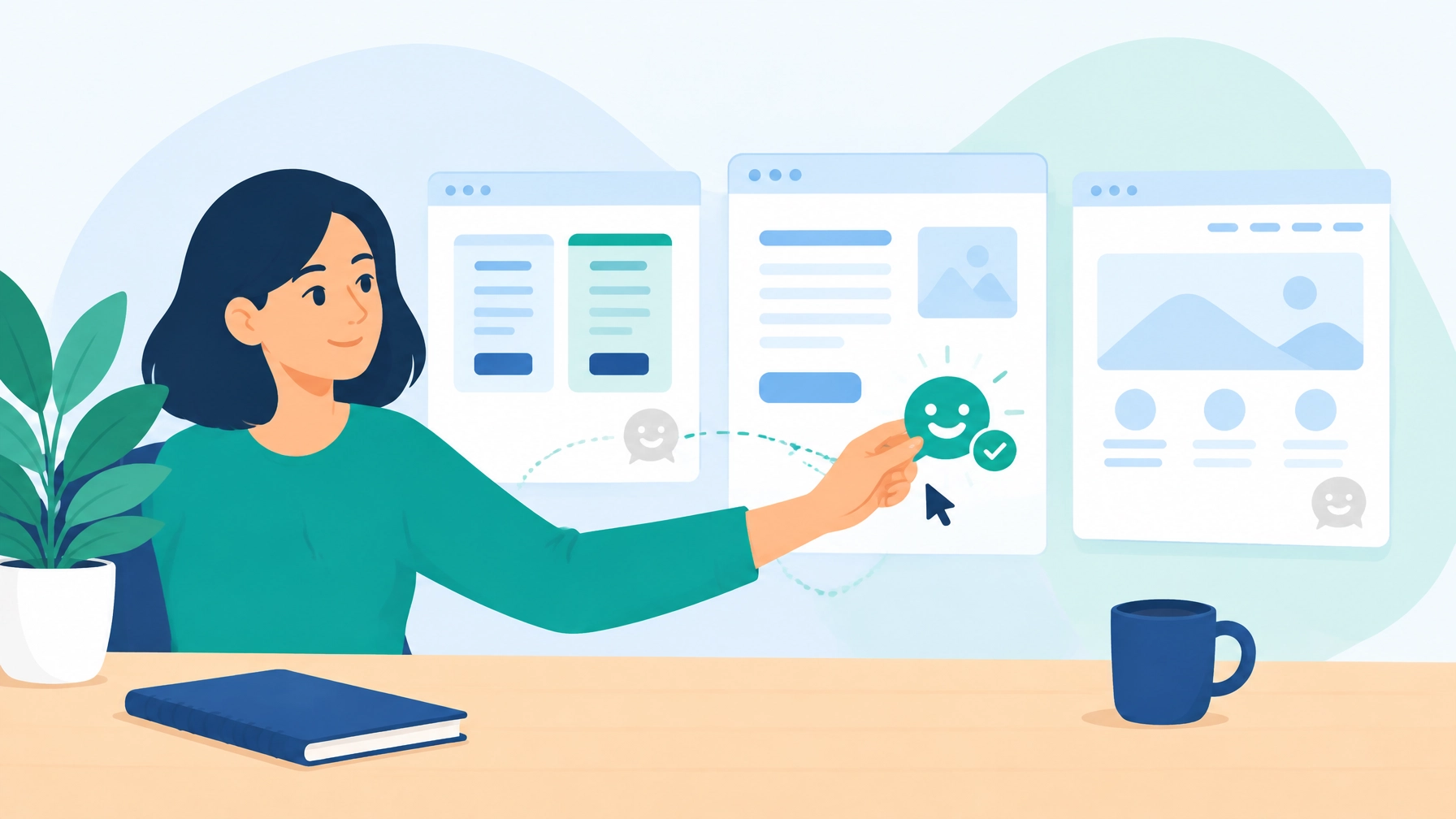
The chat widget's default placement is every page, and the default is wrong. A widget on every page treats all visitors as equally ready to talk, which they are not: the visitor on the homepage is browsing, the visitor on the pricing page is comparing, and the visitor on the booking page has a credit card in hand. The widget's invitation is a scarce resource, and its placement decides which visitors it interrupts and which question it implicitly asks.
This article is a placement guide for LiveChat widgets. It complements the sample conversation walkthrough, which covers what happens after the click; this article covers where the click is invited.
The intent ladder
Pages can be ranked by the buying intent of the visitors reading them, and the widget belongs highest on the ladder.
- Booking or checkout — Visitor intent: Ready to transact; Widget verdict: Highest priority: one question from a conversion
- Pricing — Visitor intent: Comparing options; Widget verdict: High: objections are live here
- Service or product pages — Visitor intent: Evaluating fit; Widget verdict: High: specific questions are forming
- About or team — Visitor intent: Trust-checking; Widget verdict: Optional: low volume, high quality
- Homepage — Visitor intent: Browsing; Widget verdict: Modest: a general invitation
- Blog posts — Visitor intent: Researching; Widget verdict: Lowest: the widget is an interruption
The ladder's logic: the widget's invitation converts best where the visitor's questions are purchase questions. The pricing-page visitor's hesitation is an objection a trained responder can resolve in one exchange, which is the conversation pattern that turns chats into bookings. The blog reader's hesitation is curiosity, and a chat invitation there is a door-to-door salesman knocking on an open study.
The case against everywhere
The everywhere-placement has three costs that are easy to underestimate.
First, attention cost: a widget invitation on a research page interrupts the exact activity the visitor chose, and the interruption builds a small association between the brand and being bothered. Second, staffing cost: the volume from low-intent pages must be answered by the same limited coverage window as the high-intent pages, and low-intent chats crowd out the ones that convert. Third, quality cost: a team answering "what are your hours" all morning is a team not sharpening the booking-conversation skills that matter.
The everywhere-placement is also a symptom worth noticing: when the site has no clear high-intent pages, the marketing has not built a path to purchase yet, and the widget cannot fix that.
The placement rules
The practical rules for placing the widget well.
Rule one: start at the bottom of the funnel and work up. The booking, checkout, and pricing pages get the widget first, and the decision to add pages is made from chat logs, not from ambition. If the two-week review shows visitors on the services page asking purchase questions, the widget moves there.
Rule two: the invitation text should match the page. The pricing-page invitation, "Have a question about plans?", converts better than the generic "Chat with us," because it names the visitor's actual hesitation. The booking-page invitation can be even more direct: "Need help picking a time?" The invitation is a canned response in disguise, and it deserves the same specificity as any other.
Rule three: delay beats interruption on mid-funnel pages. On pages where visitors are evaluating, a brief delay before the invitation appears respects the reading that is already happening, and a visitor who has been on the page for thirty seconds is a better chat prospect than one who arrived four seconds ago. The delay is a small setting with a real politeness dividend.
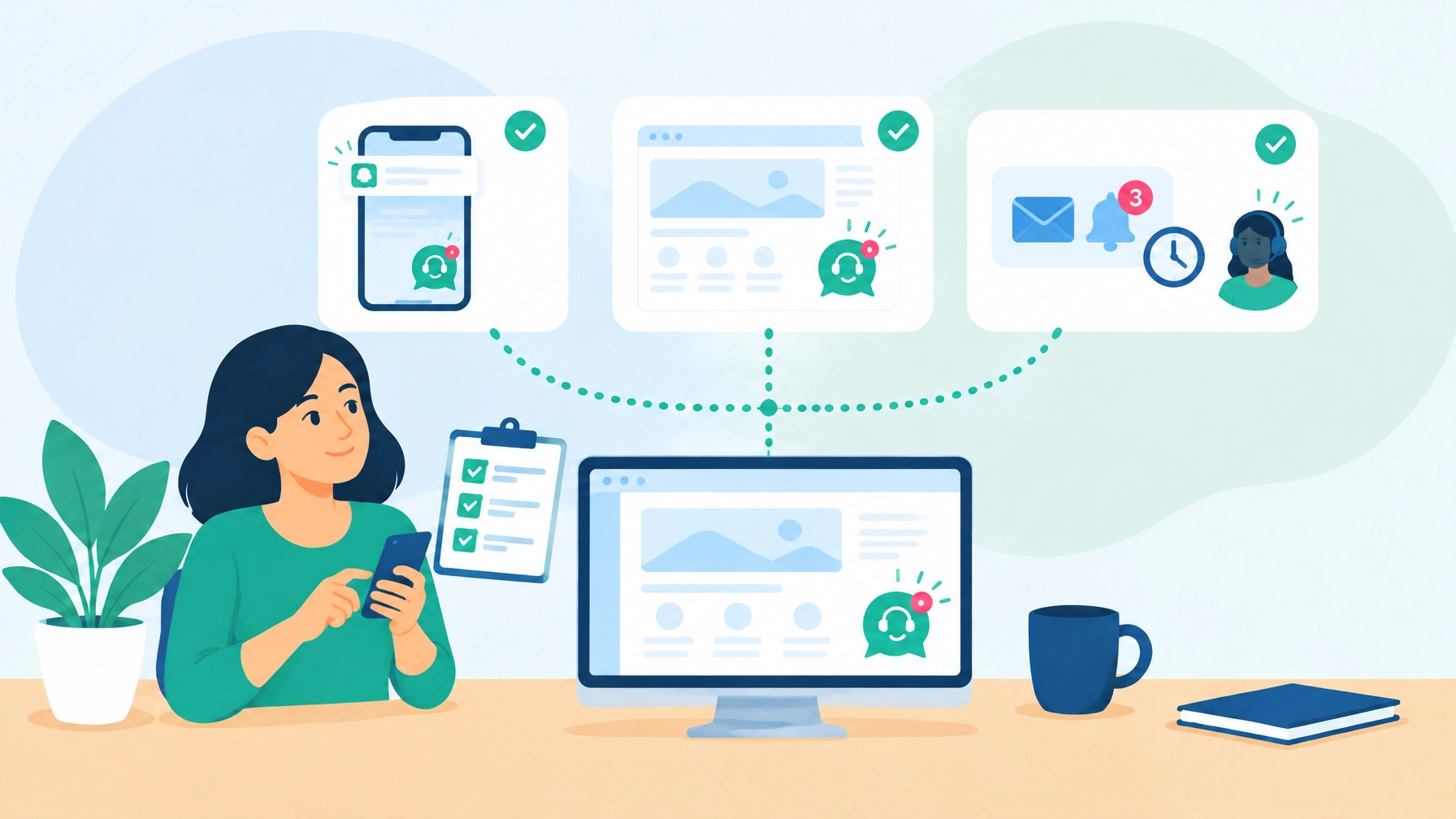
Rule four: the after-hours behavior belongs to the placement plan. Every placement decision is also a coverage decision, because a widget on a high-intent page that goes unanswered after hours is a broken promise on the site's most valuable page. The partial-coverage configurations, offline form, away mode, or AI first response, should be matched to each page's intent, and the highest-intent pages deserve the most honest after-hours treatment.
Before configuring placement, write down: Which pages do our buyers visit immediately before converting, per our analytics? What question is a pricing-page visitor most likely carrying? What is our staffing window, and which pages can honestly invite chat inside it? What does the invitation say on our booking page, and does it name that page's actual hesitation? What happens on each placed page outside the coverage window?
Five answers, and the widget's placement is a funnel decision rather than a default. MBH Web Services configures chat placement as part of the funnel review, because the widget is the site's most direct invitation to talk, and an invitation aimed at the right page converts at rates that surprise teams who have only seen it interrupt browsers. Place it by intent, match the invitation to the page, and let LiveChat do its best work where buyers are standing.