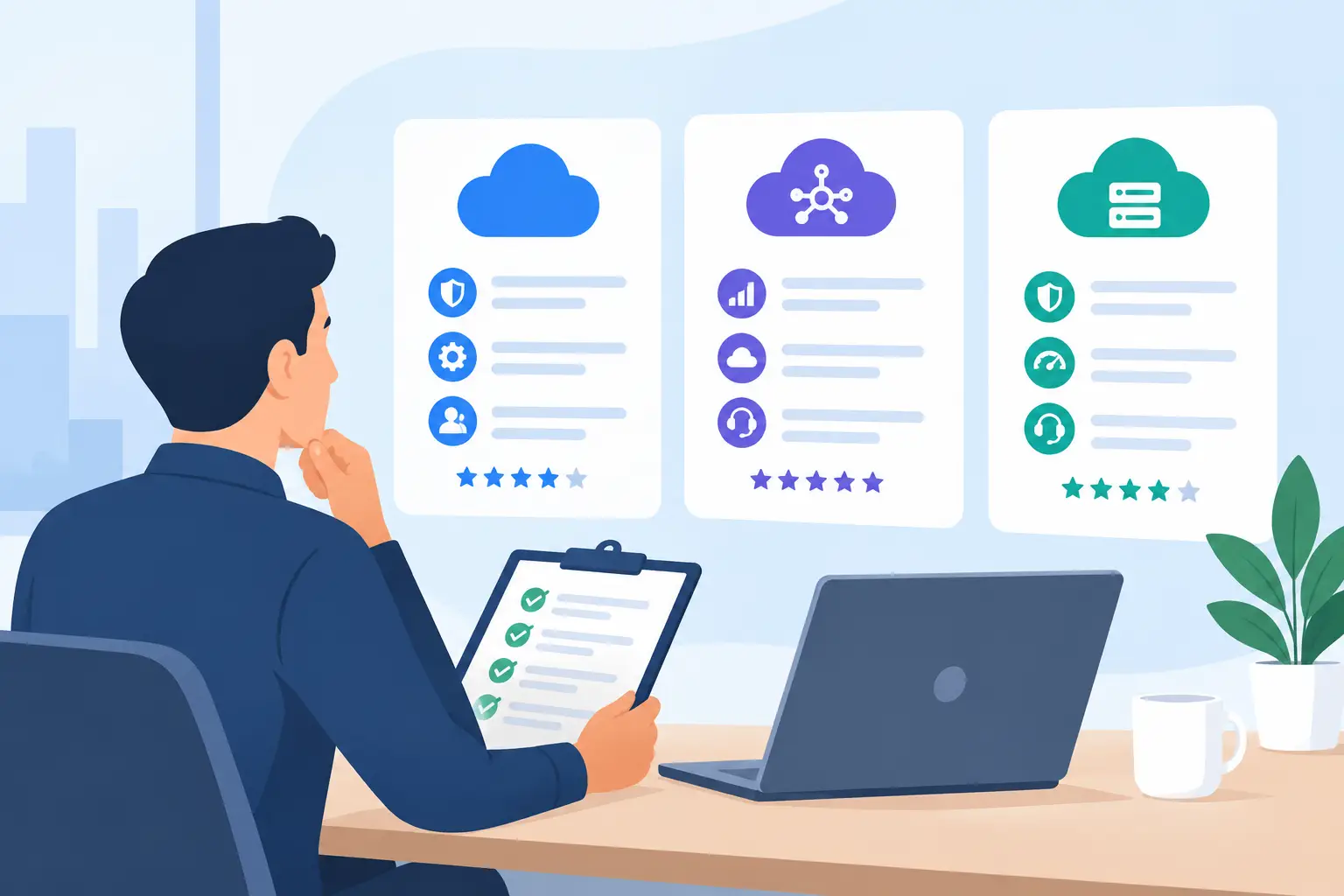
A software subscription can be approved in an afternoon and still create months of operational work. The real challenge is not finding another SaaS product. It is choosing a tool that fits the workflow, setting it up correctly, helping employees use it, and keeping it useful after launch. SaaS procurement consulting addresses that full process, giving growing businesses a more reliable path from evaluation to day-to-day operation.
For small and mid-sized organizations, this matters because software decisions rarely stay within one department. A CRM affects sales, service, and leadership reporting. A collaboration platform touches nearly every employee. A finance, HR, or project management application can change approvals, data ownership, and accountability. Buying the subscription is only the first decision. The work that follows determines whether the investment produces a real business benefit.
What SaaS Procurement Consulting Should Cover
SaaS procurement consulting is often understood as help comparing vendors or negotiating subscription terms. Those are useful services, but they are not enough on their own. A better approach connects procurement with implementation, adoption, and ongoing maintenance.
The process begins with the business problem. A company may need faster client intake, clearer project visibility, more consistent employee onboarding, or a single location for customer records. Starting with those requirements helps prevent a common mistake: selecting software because it has a long feature list rather than because it supports the work people need to complete.
A capable consulting partner then evaluates practical fit. That includes pricing structure, user roles, required integrations, security needs, reporting capabilities, vendor support boundaries, and likely administrative effort. A lower monthly price can become expensive if internal staff must spend significant time configuring the platform, answering user questions, or correcting setup decisions later.
The final part is where many software purchases lose momentum. Once a product is selected, someone must establish accounts, configure settings, migrate or organize data where needed, train users, and define who handles routine administration. SaaS procurement consulting should not leave the customer alone at that point. It should help turn a selected application into an operating business system.
Why Subscription Price Is Only One Part of Cost
Subscription fees are visible, predictable, and easy to compare. The hidden costs of SaaS adoption are less obvious. They appear in staff time, duplicate tools, incomplete training, poor data quality, and workarounds that develop when a system does not match the intended process.
Consider a team that purchases a project management platform. If project templates are never configured, managers may continue building their own spreadsheets. If permissions are unclear, employees may store information in the wrong places or lose access when they need it. If no one owns the platform after launch, stale users and outdated processes can accumulate. The business pays for the software while receiving only part of its potential value.
This does not mean every company needs an extensive consulting engagement for every subscription. The right level of support depends on the product's role, the number of users, the sensitivity of the data, and the organization's internal capacity. A simple departmental tool may require only guided setup and basic onboarding. A platform that affects customer data, financial operations, or company-wide communication usually deserves more planning and sustained oversight.
The goal is not to add process for its own sake. It is to make the total cost, administrative responsibility, and expected outcome clear before the organization commits.
A Practical Procurement Process for Growing Businesses
A structured process helps teams avoid rushed decisions without turning procurement into a lengthy enterprise exercise. The strongest approach keeps business leaders, operational owners, and technical administrators aligned from the beginning.
Start with the workflow, not the product category
Before reviewing vendors, identify the process that needs to improve. Ask where work slows down, which tasks are repeated manually, what information is difficult to find, and where handoffs fail. Define what success should look like in practical terms, such as reducing duplicate data entry, shortening approval time, or making customer status visible to the right people.
This step also reveals whether new software is actually the answer. Sometimes the issue is an unclear internal process, not a lack of technology. In other cases, a current platform may be capable of solving the problem with better configuration or training. Honest assessment protects the business from adding another subscription that creates more complexity.
Evaluate operational fit alongside features
Feature comparisons are helpful, but they should be tied to real scenarios. Instead of asking whether a platform supports automation, ask whether it can automate the specific notification, approval, or assignment your team needs. Instead of checking whether it integrates with other systems, confirm what data moves between them, who maintains the connection, and what happens when records do not match.
It is also wise to examine licensing and renewal terms early. User minimums, annual commitments, tiered feature access, storage limits, and renewal increases can change the economics of a purchase. A procurement advisor can help clarify those details and identify where a proposed plan may exceed actual needs.
Assign ownership before implementation begins
Every operational SaaS platform needs a business owner and an administrative owner. The business owner is accountable for whether the tool supports the intended process. The administrative owner manages access, routine settings, vendor communication, and the internal questions that arise after launch. In a smaller business, one person may hold both roles. What matters is that responsibility is explicit.
When internal capacity is limited, an outside service partner can provide continuity. That arrangement is especially valuable when a knowledgeable employee leaves, when IT is focused on other priorities, or when no department has the time to become an expert in a specialized application.
Implementation Is Part of the Procurement Decision
A product demonstration can make implementation look simple. Actual deployment often raises decisions that were not visible during evaluation: which fields should be required, how teams should be grouped, which notifications are useful, what permissions are appropriate, and how historical information should be handled.
Those choices shape adoption. A system configured around the way people actually work is easier to use and easier to maintain. A system launched with generic settings may force users to create workarounds, reducing data consistency and confidence in the platform.
Implementation planning should establish the intended scope, timeline, responsibilities, training approach, and support process. It should also set reasonable boundaries. Trying to recreate every old process inside a new SaaS product can delay launch and preserve inefficient habits. On the other hand, moving too quickly can overlook important controls or leave users unprepared. Good guidance helps teams decide what must be ready on day one and what can be improved in later phases.
For organizations that want one accountable partner across the lifecycle, MBH Web Services can pair third-party SaaS access with onboarding, implementation, and continuing maintenance. This model keeps the conversation focused on successful use of the software, not simply on completing a sale.
Ongoing Support Protects the Value of the Investment
SaaS platforms change over time. Vendors introduce features, adjust interfaces, revise permissions, and update pricing or plan structures. Meanwhile, the business changes too. New employees join, departments take on different responsibilities, reporting needs expand, and integrations may need attention.
Without ongoing stewardship, a once-useful application can gradually become harder to manage. Former employees may retain access. New users may receive inconsistent training. Dashboards may no longer reflect current priorities. Teams may adopt separate tools because they do not know what the existing platform can do.
Ongoing maintenance does not have to be complicated. It can include periodic user access reviews, configuration checks, support for new employees, assistance with vendor changes, and regular conversations about whether the platform still fits the business. These activities give leaders a clearer picture of what they are paying for and whether the software remains aligned with operations.
Questions to Ask Before Choosing a Consulting Partner
The right partner should be able to explain its role in plain business terms. Ask whether it supports product selection only or remains involved through onboarding and ongoing maintenance. Clarify who will configure the platform, train users, handle support requests, and communicate with the vendor when an issue needs escalation.
It is also useful to ask how the partner approaches scope. A reliable advisor should distinguish between standard setup, custom configuration, data migration, integrations, and recurring administration. Clear service boundaries reduce surprises and make it easier to plan internal involvement.
Finally, look for a partner that understands the difference between software access and software adoption. The best recommendation is not always the product with the most capabilities. It is the solution your organization can implement, support, and use consistently to improve a meaningful part of the business.
A thoughtful SaaS purchase gives your team more than another login. With the right guidance and continuing ownership, it becomes a dependable capability that supports the work your business needs to do next.