A loyalty program should make it easier for customers to come back, not give them another app to download, register for, and forget. If you are evaluating how to start a customer loyalty program with BoomerangMe without building an app, the practical answer is to use mobile wallet passes that customers can save to Apple Wallet or Google Wallet and use at the point of purchase.
That approach can reduce the cost and operational overhead of a custom mobile app while still giving your business a visible, reusable digital loyalty channel. The technology is only part of the work, though. Results depend on a clear reward structure, reliable staff processes, useful customer messaging, and ongoing review after launch.
Why a Wallet-Based Loyalty Program Can Be the Right Fit
A custom app can make sense for a business with a large customer base, frequent digital transactions, and a dedicated product team. For many small and mid-sized businesses, it creates more work than value. You must fund development, maintain compatibility with mobile operating systems, manage app-store requirements, and persuade customers to install an app for a single purpose.
BoomerangMe is designed around digital loyalty cards and mobile wallet passes. A customer can scan a QR code, add a pass to their phone's wallet, and present it during a visit. The pass can display progress toward a reward, available points, membership status, or a current offer, depending on the program you configure.
The advantage is lower friction. Customers already use their phones, and wallet passes are available from the same place as payment cards and tickets. Your business can focus resources on the loyalty experience rather than app development.
There are trade-offs. A wallet pass will not provide every feature of a full branded app, such as extensive product browsing or advanced in-app community features. It is most effective when your goal is repeat visits, repeat purchases, referrals, or targeted offers. For restaurants, salons, retailers, fitness studios, auto service shops, and local service businesses, that is often the central goal.
Define the Behavior You Want to Encourage
Do not begin with card design or software settings. Begin with the customer action that has measurable business value. A loyalty program can encourage a second purchase after a first visit, increase visit frequency, improve average order value, bring back inactive customers, or create a reason for customers to choose you over a nearby competitor.
Choose one primary objective for the first version. Trying to solve every retention challenge at once makes the offer difficult to explain and difficult for employees to administer.
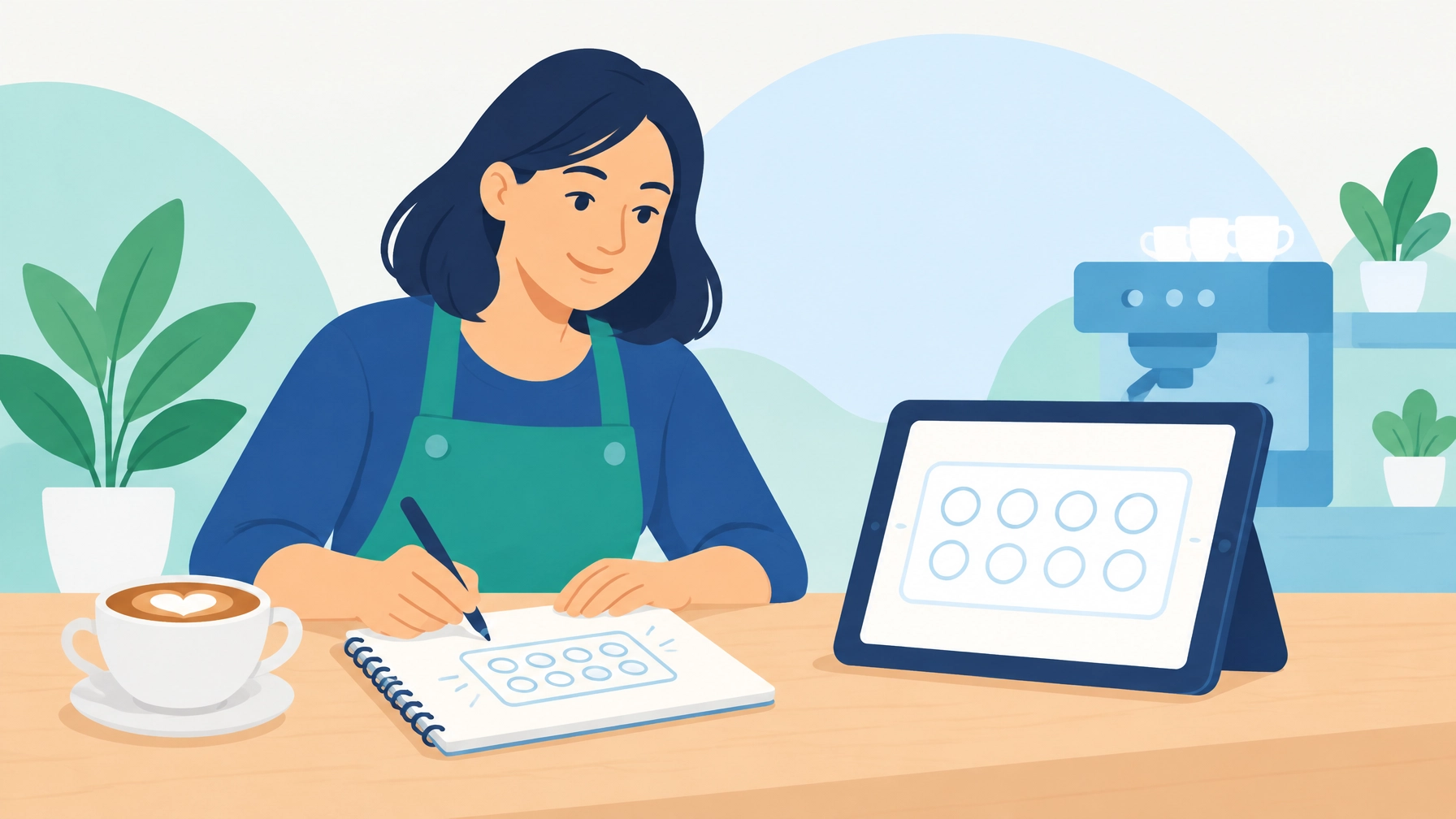
A coffee shop might use a simple visit-based model: buy nine drinks and receive the tenth free. A salon may reward clients after a certain number of appointments. A retailer may award points per dollar spent, while a service business may provide a return-visit credit after a completed job. The right model depends on how often customers buy, the margin on the reward, and whether staff can verify activity consistently.
Before launching, calculate the cost of the reward. Consider redemption rates, average transaction value, gross margin, and whether the reward may replace purchases that would have happened anyway. A generous offer may attract enrollment but erode margins. An offer that feels distant or confusing may never change customer behavior. Start with a reward customers can understand in a few seconds.
Set Up Your BoomerangMe Program Around a Simple Customer Journey
When learning how to start a customer loyalty program with BoomerangMe without building an app, map the program from the customer's perspective. The experience should have four clear moments: joining, earning, viewing progress, and redeeming.
Create the digital pass
Configure a wallet pass that matches your business identity. Use a recognizable logo, business name, and color treatment, but prioritize legibility. Include only the information customers need at a glance, such as their current stamp count, point balance, reward status, or membership tier.
Set the appropriate pass type and program rules in the platform. Depending on your offer, this may include a stamp card, points-based loyalty card, membership card, coupon, or referral promotion. Define the reward threshold, expiration terms if applicable, and any restrictions before the program is promoted publicly.
Avoid vague language such as "special rewards available." State the benefit plainly. Customers should know what they earn, when they earn it, and how to use it.
Choose a practical enrollment method
Most businesses introduce wallet-based loyalty through a QR code at checkout, on receipts, at tables, in follow-up emails, or through social media. The best placement depends on when the customer is most receptive. For a retail counter, that is often while the transaction is being completed. For appointment-based businesses, it may be after a successful service visit.
Test enrollment yourself on both iPhone and Android devices before launch. Confirm that the QR code scans easily, the landing flow is clear, and the pass saves correctly. A small barrier at this stage can reduce adoption substantially.
Decide how customers will earn and redeem
Your staff needs a dependable method for adding stamps, crediting points, or validating a reward. This may be done by scanning a code, entering an identifier, or following another workflow supported by your configuration. The method should fit the pace of the transaction.
A busy counter service business should not adopt a process that requires several screens and extended customer data entry. A higher-value service business may be able to use a more detailed process because transactions occur less frequently. Match the workflow to the real conditions employees face during the day.
A loyalty program fails quickly when customers hear different answers from different employees. Give staff a short, practical explanation of the offer, how customers enroll, how activity is recorded, and who handles exceptions.
Employees should also know how to explain the value without sounding scripted. A simple prompt works well: "Would you like to add our loyalty pass to your phone? After nine purchases, your next one is on us." The message should be accurate and easy to repeat.
Create a basic operating process for common issues. Decide what happens if a customer changes phones, cannot find their pass, believes points are missing, or attempts to redeem an expired offer. Documenting these decisions protects the customer experience and prevents staff from making inconsistent exceptions.
This is where implementation support matters. MBH Web Services can help businesses move from software access to an operational program by supporting setup, configuration, staff onboarding, and ongoing maintenance. The goal is not simply to turn on a platform. It is to establish a process that your team can sustain.
Launch With a Reason to Join Now
A quiet launch is useful for testing, but customers still need a reason to enroll. Consider an immediate enrollment benefit, such as a first stamp, a small introductory reward, or access to a limited-time offer. Keep the incentive proportionate to the customer lifetime value you expect to earn.
Promote the program where existing customers already interact with your business. Use point-of-sale signage, staff conversations, customer email communications, and printed QR codes. Do not rely on a single channel. The strongest enrollment driver is usually a direct invitation during a positive transaction.
For the first two weeks, watch for friction. Are customers confused about saving the pass? Are employees remembering to ask? Is the reward threshold too high? Early feedback is more useful than assumptions, especially before you commit to a larger promotion.
Use Customer Messaging Carefully
Wallet-based loyalty programs can support customer communication through pass updates and offer notifications, subject to the device, permissions, and platform capabilities. Use those messages selectively. A useful reminder about an earned reward or a timely offer can bring customers back. Frequent, generic promotions can cause customers to disengage.
Segment messages when possible. A customer who has nearly earned a reward may respond well to a progress reminder. A customer who has not visited in several weeks may need a different offer. Relevance matters more than sending the largest possible volume of messages.
Set internal ownership for these communications. Someone should approve the offer, confirm dates and terms, and verify that expired promotions are removed. Ongoing maintenance is part of running a dependable program, not an optional extra.
Measure What Changes, Then Adjust
Enrollment count is useful, but it does not prove that the program is improving retention. Track enrollment rate, active pass holders, repeat purchase rate, reward redemptions, time between visits, and revenue associated with loyalty members where your systems allow it.
Review the numbers against a baseline from before the program started. If enrollment is high but repeat visits do not improve, the reward may not be compelling or the earning process may be unclear. If redemptions are very low, customers may be losing interest before they reach the goal. If redemption costs are unexpectedly high, adjust the threshold or reward structure rather than abandoning the program without evidence.
Make one change at a time when possible. A new reward, revised message, and different enrollment incentive introduced together make it difficult to identify what worked.
A no-app loyalty program is not a shortcut around customer experience. It is a practical way to keep the experience focused: a clear offer, a pass customers can use immediately, and a process your team can operate reliably. Start with those fundamentals, listen to what happens at the counter, and let the program improve through steady operational attention.