A new software subscription can be purchased in minutes, but getting it to improve a real business process takes considerably longer. Managed SaaS services address the work between signing up for a platform and relying on it every day: selecting the right product, configuring it for the organization, preparing users, and keeping it operating as needs change.
For small and mid-sized businesses, that work often lands on an operations leader, IT administrator, or department manager who already has a full set of responsibilities. The result can be a familiar pattern: a capable platform is purchased, basic accounts are created, and adoption slows because no one owns the details that turn software into a dependable business capability.
What Managed SaaS Services Include
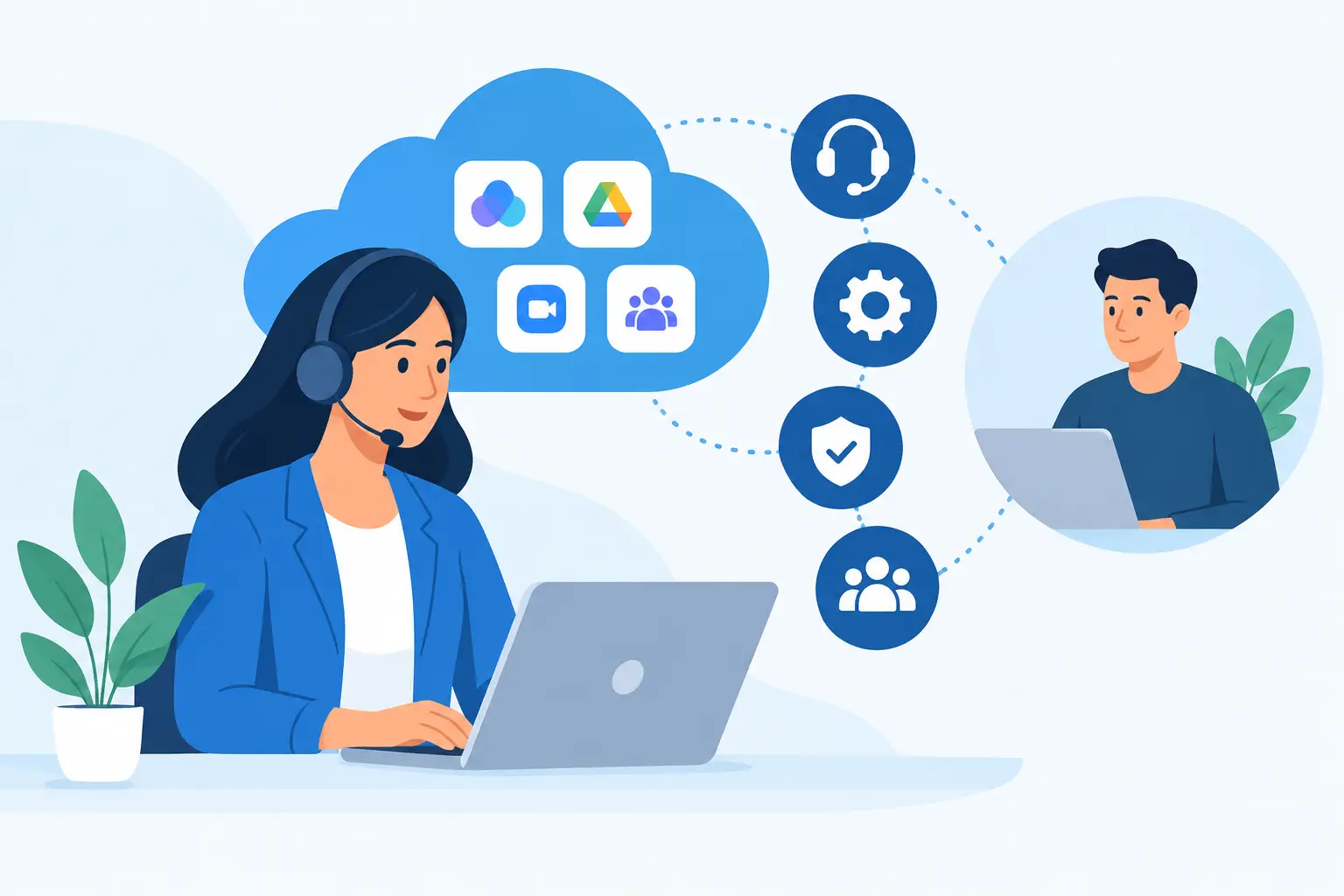
Managed SaaS services combine access to third-party cloud software with the practical support required to deploy and sustain it. Rather than treating software procurement as the finish line, the provider remains involved through implementation, onboarding, maintenance, and support.
The exact scope depends on the product and the customer's internal capabilities. A business with an experienced IT team may only need help with setup, workflow configuration, and employee training. A leaner organization may need a partner to manage the process from product selection through ongoing administration. In either case, the objective is the same: make sure the software serves the intended operational need instead of becoming another underused subscription.
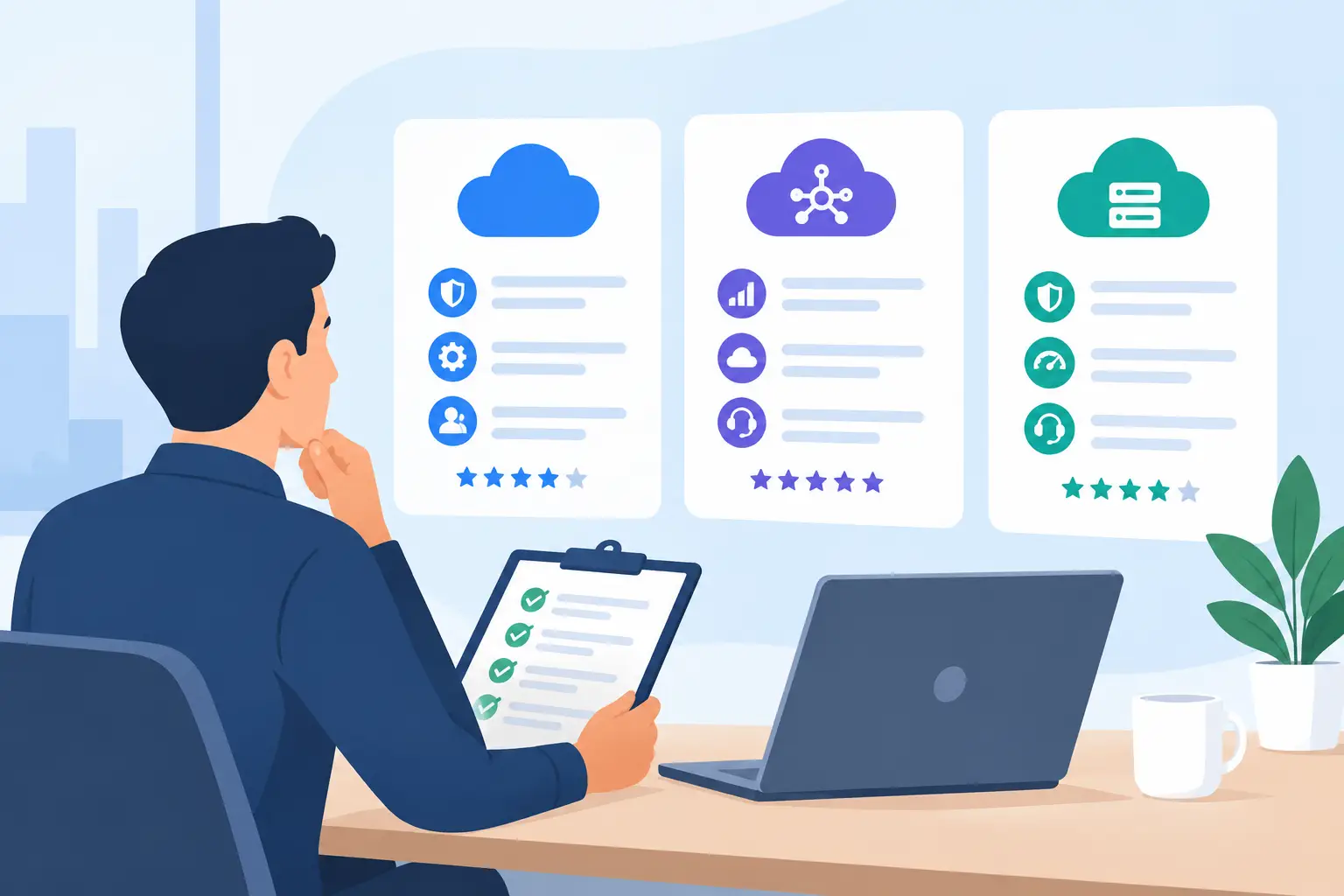
A managed approach commonly begins with understanding the business problem. A customer relationship platform, project management system, security tool, communications product, or finance application should be chosen based on how employees need to work, what information must be protected, and which existing processes it needs to support. Features matter, but fit matters more.
Implementation follows. This can include creating accounts, establishing permissions, setting configuration standards, organizing data, connecting approved systems, and testing the setup before broader use. User onboarding then gives employees clear direction on how the platform applies to their responsibilities. Ongoing support covers the practical questions that continue after launch, including user changes, configuration updates, issue resolution, and platform maintenance.
Why Software Purchase Alone Often Falls Short
Self-service SaaS purchasing is useful when a tool is simple, low-risk, and used by a small group with clear needs. It becomes less effective when software affects customer data, cross-department workflows, compliance requirements, or essential daily work.
The first challenge is unclear ownership. Procurement may approve the subscription, a department may request it, and IT may be expected to support it, but no one may be accountable for translating the platform into a working process. Without a defined implementation owner, tasks such as permissions, data preparation, documentation, and training are delayed or handled inconsistently.
The second challenge is partial adoption. Employees do not resist new systems simply because they prefer old habits. They often lack role-specific guidance, do not understand why a workflow changed, or encounter a setup that does not match the way work actually happens. If teams keep separate spreadsheets, personal workarounds, or old tools, the company may be paying for software without receiving its full value.
Support fragmentation creates another problem. The software vendor may handle platform-level technical issues, while a reseller may handle billing and an internal employee answers usage questions when time permits. That arrangement can work, but it can also leave customers unsure who should address a configuration issue, a training gap, or a process change. A managed service provider gives the customer a consistent point of accountability for the operational side of the platform.
The Business Value Is Continuity
The main value of managed SaaS services is not that a provider creates an account faster than an internal team could. It is continuity. Business systems change after launch. Employees join and leave. Departments revise workflows. Permissions need review. New features appear. A process that was appropriate for 10 users may not work for 50.
Without ongoing stewardship, small configuration issues can compound. Access may be granted too broadly, essential fields may be completed inconsistently, and reporting may become unreliable. These are not always dramatic failures, but they reduce confidence in the system and encourage employees to return to informal processes.
A continuing support relationship helps maintain standards over time. It gives the business a resource that understands both the selected SaaS product and the original operating goals behind its deployment. That context is especially valuable when internal staff changes or when a company does not employ a specialist for every software platform it uses.
For organizations that want cloud software to remain useful rather than merely available, maintenance should be considered part of the cost of adoption. The right service model creates a predictable way to handle routine platform needs before they disrupt operations.
A Practical Implementation Process
A successful deployment does not need to be complicated, but it does need to be deliberate. The process should begin with a focused assessment of the problem the business expects the software to solve. That means identifying the users, the workflows involved, the data that will be used, and the outcome leadership wants to measure.
Next comes configuration and preparation. This stage should establish the account structure, roles, access levels, naming conventions, required information, and any necessary data migration or integration work. Trying to copy every legacy process into a new platform is rarely the best choice. A better approach is to preserve what is necessary while simplifying steps that no longer add value.
Before company-wide rollout, a limited group of users can validate the setup. Their feedback reveals whether terminology is clear, permissions are appropriate, and the process works under everyday conditions. This step may add time upfront, but it often prevents a broader launch from creating confusion across several departments.
Training should be practical rather than generic. Employees need to know what they are expected to do in the system, when they should do it, and where to get help. A sales manager, service coordinator, and finance administrator may use the same platform in very different ways. Role-based onboarding supports faster adoption than a one-size-fits-all demonstration.
After launch, regular review keeps the platform aligned with the business. The review can be simple: examine unresolved user issues, assess adoption patterns, confirm access needs, and identify changes in workflow. The frequency depends on how critical the system is. A tool that manages sensitive information or essential customer activity deserves closer oversight than a low-impact utility.
Choosing the Right Service Partner
Not every SaaS provider or support firm offers the same level of involvement. Some primarily resell subscriptions. Others focus on technical implementation but do not provide continuing assistance. Businesses should choose a partner based on the level of operational support they actually need.
Start by asking who will own the deployment plan, who will configure the platform, and who will support users after launch. Clarify what is included in onboarding, how change requests are handled, and whether ongoing maintenance is available. It is also useful to understand the boundary between vendor support and service-provider support. Clear responsibilities prevent delays when an issue arises.
Experience with a platform matters, but the partner should also understand business operations. The best configuration is not necessarily the most elaborate one. It is the one employees can follow consistently, managers can oversee, and the business can maintain without unnecessary complexity.
MBH Web Services approaches third-party SaaS adoption as an ongoing service relationship. By pairing software access with onboarding, implementation, maintenance, and customer support, the focus remains on practical use long after the initial purchase.
When a Managed Model Makes the Most Sense
Managed SaaS support is especially useful when a platform is operationally important but the organization does not need, or cannot justify, a full-time specialist. It can also make sense during periods of growth, when internal teams are adding users, standardizing processes, or introducing multiple systems at once.
The model is not necessary for every application. A simple tool used by a few technically confident employees may only require basic vendor support. The decision should reflect the platform's business impact, the complexity of its setup, the consequences of poor adoption, and the capacity of the internal team.
For critical systems, the question is not simply whether the subscription price fits the budget. It is whether the organization has a reliable plan for making the software work, keeping it current, and helping employees use it well. A capable partner can provide that plan and remain available as the business moves forward.