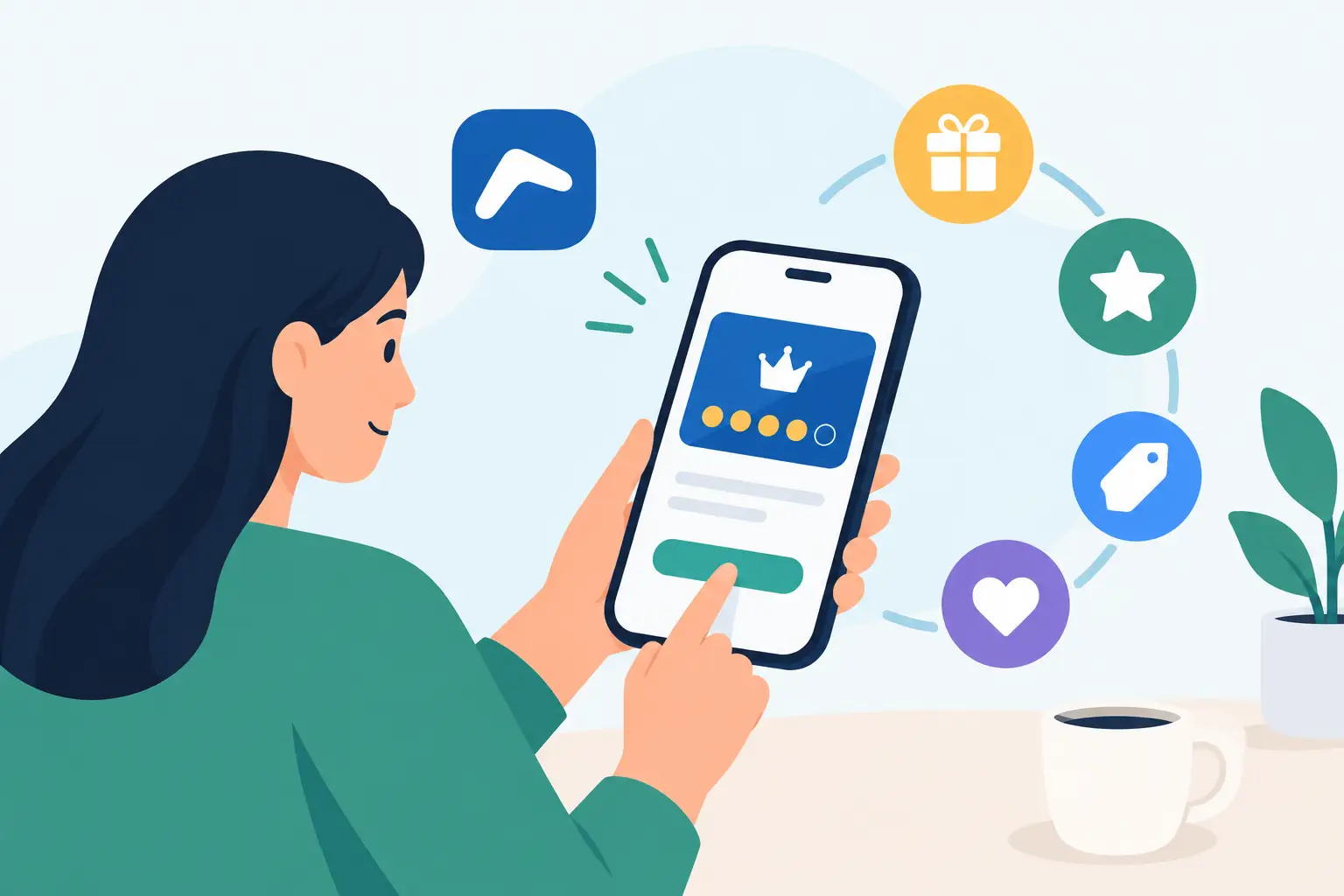
A loyalty card only works when customers remember it, staff can explain it, and the reward feels worth earning. Paper punch cards often fail on the first point: they stay in a wallet, get lost, or never make it back to the store. If you are evaluating how to create a digital loyalty card for your small business with BoomerangMe, focus first on the operating plan behind the card, not just its design.
BoomerangMe can help a local business issue digital loyalty cards that customers keep in their mobile wallet. The technology is straightforward, but the results depend on decisions about your offer, customer enrollment process, staff workflow, and follow-up communications. A well-configured program gives repeat customers a clear reason to return without adding a complicated process to daily operations.
Start with the business result you want
Before opening the card builder, decide what loyalty should improve for your business. A coffee shop may want to increase weekly return visits. A salon may want to encourage customers to rebook before they leave. A retailer may want more customer contact information for promotions. These are related goals, but they call for different reward structures.
For many small businesses, a simple visit-based incentive is the easiest place to start: buy a set number of qualifying items or services and receive a reward. It is familiar to customers and simple for staff to manage. A points-based program can work better when purchase values vary widely, such as in a boutique, restaurant, or service business with multiple price tiers. The trade-off is added training and more opportunities for confusion at checkout.
Set a financial boundary before you publish anything. Estimate the cost of each reward, the expected redemption rate, and the additional purchase activity needed to make the program worthwhile. A reward that is too small will not change behavior. One that is too generous can reduce margin without producing meaningful repeat business.
How to create a digital loyalty card with BoomerangMe
Begin by setting up your business profile in BoomerangMe. Use the business name customers recognize, an accurate logo, and brand colors that remain readable on a phone screen. The card is a customer-facing touchpoint, so clarity matters more than decoration. Include the essential information: your offer, how progress is earned, how customers redeem, and a direct way to contact or visit the business.
Next, select the loyalty card format that matches your program. For a stamp-style offer, define the number of stamps required and the reward received. For a points program, determine how points are awarded and what they can be exchanged for. Avoid vague language such as “great rewards” or “earn points faster.” State the exact terms customers and employees need to follow.
For example, “Buy 8 eligible drinks, get the 9th free” is easier to administer than “Earn rewards on select purchases.” If exclusions apply, such as alcoholic beverages, discounted items, gratuities, or third-party delivery orders, identify them early. You do not need to crowd the card with legal text, but your staff should have a consistent policy for common questions.
A digital card should include a clear reward name, expiration approach, and redemption rules. Expiration dates can create urgency, but they can also frustrate regular customers if the window is too short. For a new program, a longer validity period is often safer until you understand how frequently customers return.
Use the platform’s available fields and messaging features to make the card useful beyond the reward counter. You may include store hours, locations, a phone number, and operational announcements. Keep notifications purposeful. A message about a limited-time offer, a new service, or an approaching reward can prompt a visit. Too many messages can lead customers to disable notifications or ignore them altogether.
Test the card on several phones before making it public. Confirm that the logo displays correctly, the text is legible, the reward conditions are accurate, and the enrollment process is easy to complete. This step is especially valuable if more than one person configured the program or if the offer changed during setup.
Build an enrollment process customers will actually use
The strongest loyalty offer will underperform if customers do not know it exists. Put a QR code at every point where a customer has a few seconds to act: the register, checkout counter, table tent, appointment desk, receipt, packaging insert, or service invoice. The message beside it should explain the benefit in one sentence.
A customer should be able to scan, save the card, and understand the first action required without a lengthy conversation. If signup requires staff to explain multiple exceptions, collect too much information, or switch between several systems, participation will lag.
Staff introduction is usually the deciding factor. Give employees a short, consistent script such as: “Would you like to save our free loyalty card? You earn one visit today, and your eighth qualifying purchase earns a reward.” The wording should match your actual terms, but the principle is the same: state the value, state the immediate benefit, and make joining optional.
Do not assume that employees will promote the program simply because it has been announced. Explain why it matters, show them how to issue or validate stamps or points, and provide a named person who can resolve questions. Inconsistent staff handling can undermine customer trust faster than a minor design issue.
Define the operating workflow for staff
Digital loyalty programs still require a repeatable process at the counter or during checkout. Decide who adds progress to the card, when it happens, and how a reward redemption is verified. In a small business, this may be every front-line employee. In a larger location, it may be a manager or designated cashier.
Write a short internal procedure that covers customer enrollment, qualifying purchases, rewards, corrections, and exceptions. Keep it practical. Employees need to know what to do when a customer changes phones, forgets to present the card, disputes a missing stamp, or asks whether a purchase qualifies.
There is no single right approach to missed-credit requests. Some businesses choose to honor them generously to protect the customer relationship. Others require proof of purchase to control misuse. The right policy depends on transaction volume, average ticket size, and the risk of abuse. What matters is applying the policy consistently and documenting it for the team.
Assign ownership after launch. Someone should review activity, update seasonal offers, monitor customer feedback, and make sure the card information remains current. Software adoption often loses momentum when it is treated as a one-time setup task rather than an operating capability that needs attention.
Your existing customers are the best place to start. Mention the card in routine customer interactions and include it in the communications channels you already manage. If you use email, receipts, social posts, or in-store signage, keep the message consistent: what customers receive, how they join, and when they can start earning.
Avoid launching with too many promotions at once. A simple opening incentive, such as a first stamp upon signup or a limited bonus during the first month, can encourage adoption. However, stacking multiple discounts, referral offers, and reward rules may make the program feel less credible or hard to understand.
For appointment-based businesses, loyalty works best when it supports the natural service cycle. A spa can reward a fifth treatment. A repair shop can recognize repeat maintenance visits. A professional service firm may find that a loyalty card is less suitable than a referral or membership benefit. The platform should serve the customer relationship you already have, not force a retail-style program where it does not fit.
Measure behavior, then adjust carefully
After launch, review more than the number of cards issued. A large signup count can look successful while producing little repeat business. Track how many customers earn progress, how many rewards are redeemed, how long it takes to reach redemption, and whether returning customers spend differently from nonmembers.
Give the initial offer enough time to produce a pattern. Changing rules every week makes staff training difficult and confuses customers. After a reasonable test period, use the results to refine one variable at a time. You might adjust the reward threshold, clarify exclusions, improve signage, or train staff to mention the program more consistently.
If adoption is low, investigate the workflow before increasing the reward value. The problem may be that employees are not asking, the QR code is poorly placed, or customers do not understand why they should save another digital card. If redemptions are high but profitability is weak, revisit qualification rules or the reward itself rather than ending the program abruptly.
A digital loyalty card is most effective when it becomes part of a dependable customer process: a clear offer, simple enrollment, confident staff handling, and regular maintenance. For businesses that need help turning a SaaS tool into an operating workflow, MBH Web Services can provide the implementation support and ongoing attention that keep adoption from fading after launch. Start small, train the people who serve customers every day, and let actual customer behavior guide the next improvement.