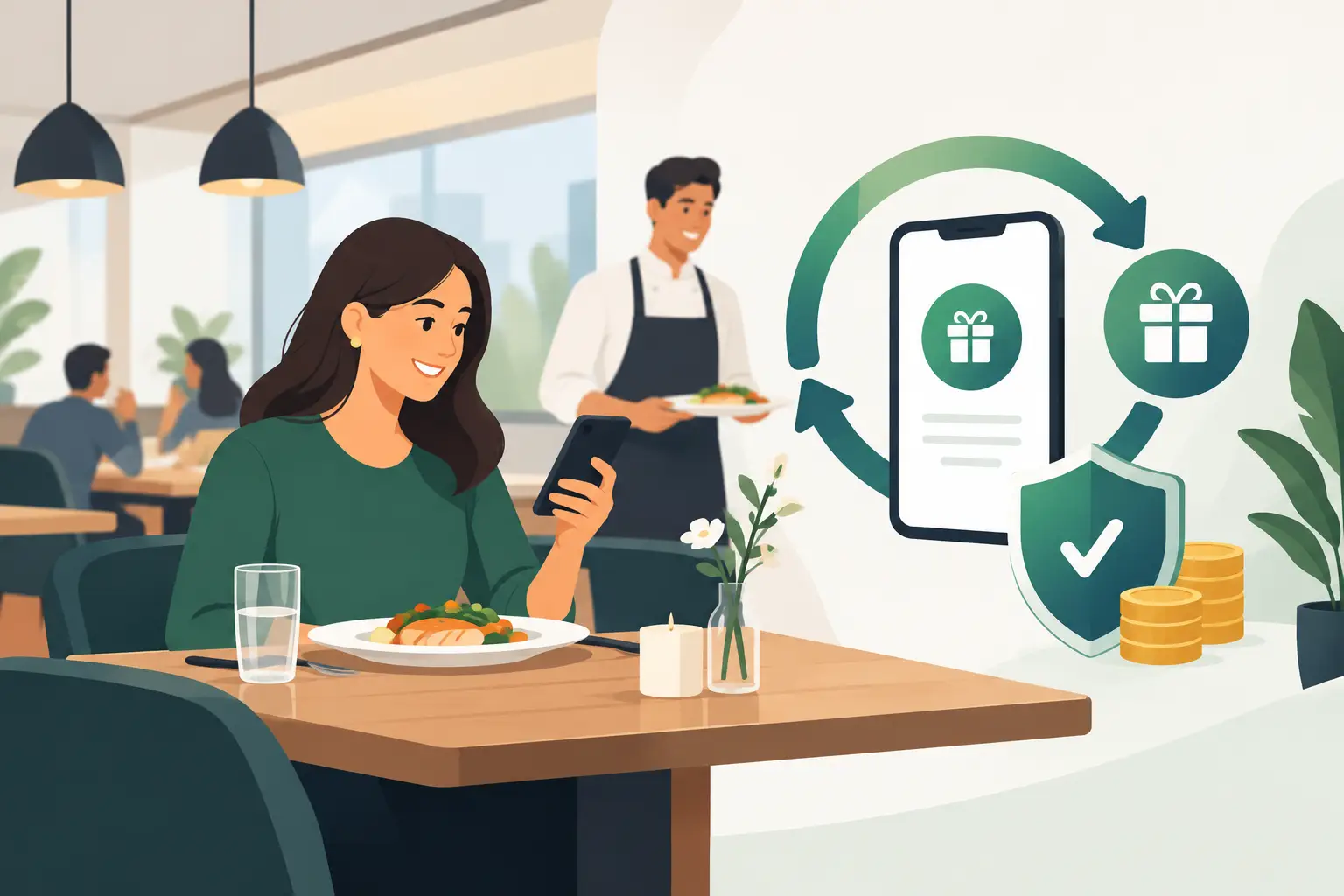
A free appetizer can fill slow tables. A poorly designed free entrée can erase the profit from several good visits. That is the practical issue behind BoomerangMe for restaurants: how to choose loyalty rewards that protect your margins. A loyalty program should give guests a credible reason to return without training them to wait for discounts or adding confusion at the register.
For restaurant owners and operators, the right reward is not necessarily the most generous one. It is the one that changes customer behavior in a profitable direction: more repeat visits, higher average checks, better use of quieter dayparts, or more direct relationships with regulars. BoomerangMe can support that effort with a digital loyalty experience, but the business rules behind the program matter more than the card itself.
Start With the Margin, Not the Reward
Many restaurants begin loyalty planning by asking what guests would find exciting. That is a useful question, but it comes second. First, identify which menu items and customer behaviors can absorb an incentive.
A reward has a real cost beyond its menu price. Include food and beverage cost, labor required to prepare it, packaging for takeout, payment processing where relevant, and any displacement of a full-price purchase. If a guest earns a free item they would have bought anyway, the reward may reduce revenue without generating an additional visit.
A simple starting calculation is:
Reward cost ÷ expected revenue from the qualifying visits = effective loyalty cost
For example, assume a guest earns a $6 dessert after five qualifying visits. If the dessert has a $1.80 food cost and the guest typically spends $28 per visit, the direct cost is modest relative to the $140 in sales associated with those visits. That does not guarantee success, because some of those visits may have happened anyway. Still, it gives the operator a baseline for evaluating the offer.
The better question is whether the reward creates incremental profit. A complimentary dessert that brings a customer back one additional time, along with a paid entrée and beverage, may be highly profitable. A blanket 15% discount applied to an already busy Saturday dinner service may not be.
Choose Rewards With Low Cost and High Perceived Value
The strongest restaurant loyalty rewards often cost less than guests assume. This is where menu knowledge becomes an operational advantage.
A dessert, side dish, fountain drink, upgrade, or limited appetizer may have an attractive perceived value while carrying a manageable incremental cost. Add-ons can work particularly well because they complement, rather than replace, a guest's primary purchase. A free premium topping with the purchase of an entrée is usually safer than a discount off the entire check.
That said, the best choice depends on the restaurant model. A quick-service restaurant may benefit from a free side or beverage that encourages a full meal purchase. A casual dining location may see better results from a birthday offer, a dining credit with a minimum spend, or an appetizer reward for a future visit. For a coffee shop, a free drink after a clear number of purchases can be easy for staff and customers to understand.
Avoid rewards that are operationally expensive even when ingredient cost is low. A made-to-order item that slows the kitchen during a rush may create a service problem larger than its food cost. Keep redemption simple enough that employees can honor it consistently during the busiest shift.
Protect the Check Average
A reward should ideally preserve or increase the average check. Minimum-spend thresholds are one practical control. Rather than offering $10 off any transaction, offer $10 off a purchase of $40 or more. The threshold needs to be realistic for the customer group, however. If typical checks are $18, a $40 requirement may feel unattainable and reduce participation.
Another approach is to exclude the item being rewarded from the minimum purchase requirement. For instance, a guest may receive a complimentary appetizer with the purchase of two entrées. This keeps the offer connected to a profitable order pattern rather than turning it into a stand-alone giveaway.
Build Earning Rules Around the Behavior You Need
Digital loyalty programs should not simply reward every transaction in the same way. The structure should reflect the operational outcome the restaurant is trying to improve.
If repeat frequency is the priority, a visit-based model may be easiest. Guests earn a stamp for each qualifying purchase and receive a reward after a defined number of visits. This format is familiar, visible, and effective for businesses with regular purchase cycles, such as cafés, lunch counters, bakeries, and fast-casual restaurants.
If average spend varies widely, points based on dollars spent may be more appropriate. A customer spending $60 on a family order may reasonably earn more than someone buying one coffee. The trade-off is that points programs can become harder to explain if the conversion rate and reward thresholds are not clear.
For restaurants managing slow periods, targeted offers can be more valuable than a permanent discount. A weekday lunch reward, an early-week bonus, or a return offer valid during quieter hours can help shift demand without sacrificing revenue when capacity is already constrained. Do not make every reward available at every time. A full dining room does not need help giving away margin.
Set Rules That Staff Can Apply Reliably
A loyalty program fails quickly when a guest believes they earned a benefit and the staff cannot find, explain, or honor it. The offer design should be clear before the platform is configured.
Define what counts as a qualifying purchase, whether taxes and tips apply, whether rewards can be combined with other promotions, and whether there are exclusions. Also decide how long earned rewards remain valid. Short expiration windows can create urgency, but they can also frustrate guests. A reasonable timeframe is often more useful than an aggressive one, particularly for restaurants with less frequent visit patterns.
Keep the customer-facing language plain. “Buy nine qualifying drinks, get the tenth free” is easier to understand than a multi-tier points formula with several exceptions. If the program requires a long explanation at checkout, it is too complicated.
Staff training matters just as much as reward design. Employees should know how guests enroll, how they earn, what happens at redemption, and who can resolve an exception. A short written procedure, a register-side reference, and one accountable manager can prevent inconsistent handling. This is where guided setup and ongoing maintenance can be valuable: the program needs to work in real service conditions, not only in a dashboard.
Test Before You Commit to a Costly Offer
Treat the initial loyalty configuration as a controlled business decision, not a permanent promise. Start with one primary reward and run it long enough to observe repeat behavior. Depending on transaction volume, that may be several weeks or a few months.
Track enrollment, active members, redemption rate, visits per member, average check at redemption, and sales by daypart. Redemption rate alone is not a measure of success. A low rate may mean the reward is too difficult to reach or poorly communicated. A very high rate may indicate that the offer is overly generous or that customers can earn it too quickly.
Compare loyalty-member behavior with a reasonable baseline. Are members returning more often than before enrollment? Do they spend more per visit? Are they visiting during the periods the restaurant wanted to improve? If the answer is no, changing the reward, threshold, or earning pace may be more appropriate than increasing the discount.
MBH Web Services can help businesses approach this as an implementation process: establish the rules, configure the program around real operating needs, train the people using it, and review results after launch. That continuity matters because restaurant conditions, menu costs, and customer patterns do not stand still.
When Generosity Is Worth It
There are times when a higher-cost reward is justified. A new location may need to establish regular traffic. A restaurant with a high-margin beverage program may use a more appealing food reward to encourage attachment. A premium dining concept may prioritize recognition and hospitality over frequent discounting.
The key is to make the trade-off deliberate. If the objective is retention among top customers, a more generous reward reserved for a smaller group can make sense. If the objective is broad acquisition, control the offer with minimum purchase requirements, limited redemption windows, or specific menu exclusions.
A loyalty program should feel generous to the guest and disciplined to the operator. When each reward is tied to a measurable behavior, understood by staff, and reviewed against actual margin data, it becomes a repeat-business tool rather than another standing discount. Start with a reward your team can confidently deliver, then let the results guide the next adjustment.