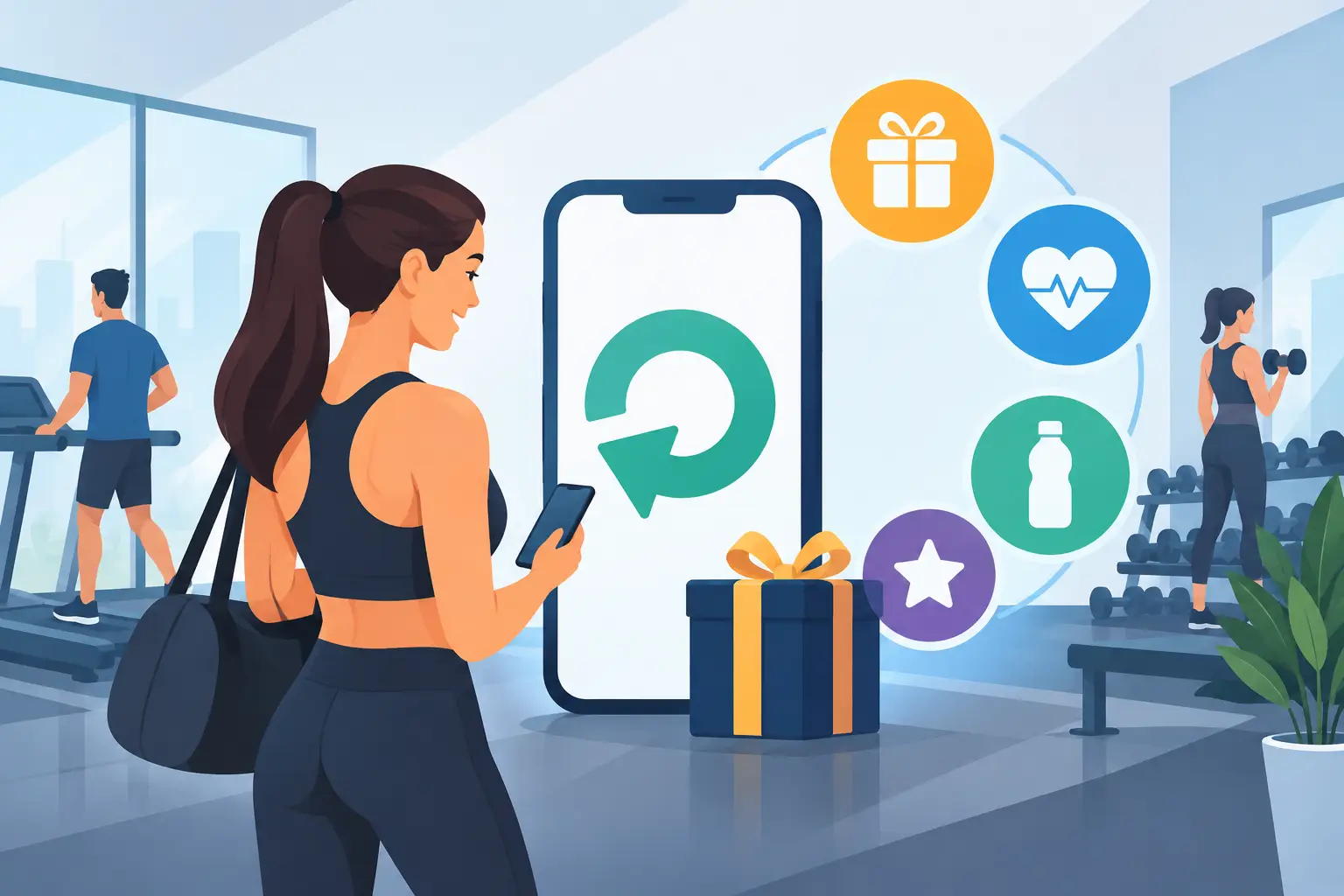
A member who receives 10% off a renewal may appreciate it, but that discount rarely changes what they do on a Tuesday afternoon. BoomerangMe for gyms: loyalty reward ideas beyond membership discounts should focus on the behaviors that build a healthier membership base - consistent attendance, class participation, referrals, and connections to the gym community.
For gym operators, a loyalty program is not simply a promotional layer. It is an operating tool. When the program is configured around clear member actions and rewards staff can deliver reliably, it can reinforce retention without training members to wait for the next price reduction.
Why membership discounts are a limited loyalty strategy
Membership discounts are simple to explain and easy to apply, which is why they are common. They can also be useful in specific situations, such as a win-back offer for a canceled member or a short-term incentive during a slow enrollment period. But using discounts as the primary loyalty reward has costs.
First, it can reduce revenue from members who may have stayed anyway. Second, it shifts the relationship toward price instead of progress. A member who feels recognized for completing a training milestone, bringing in a friend, or reaching a visit streak has a more personal reason to return than a member who receives another percentage off next month.
The right approach depends on the gym model. A high-volume facility may prioritize repeat check-ins and referrals. A boutique studio may place more value on class consistency, community events, and premium experiences. In either case, the reward program should support the business goals the team can actually measure and fulfill.
BoomerangMe for gyms: loyalty reward ideas that encourage action
A digital loyalty program can give gyms a practical way to recognize the smaller actions that lead to longer member relationships. The strongest rewards are relevant, attainable, and operationally manageable. They should feel valuable to members without creating unnecessary administrative work for the front desk.
Reward attendance streaks, not just transactions
Attendance is one of the clearest signals of retention. A member who establishes a routine is less likely to view the membership as an unused expense. Consider awarding points or digital stamps after a set number of check-ins, such as eight visits in a month or three visits per week for four consecutive weeks.
The reward does not have to be a discount. It could be guest-pass credits, priority booking for a popular class, a branded water bottle, a recovery-room session, or entry into a monthly member drawing. The key is to set attainable milestones for newer members while still recognizing the consistency of long-term regulars.
Avoid creating a program that rewards only the most frequent users. Someone rebuilding a fitness habit may see three weekly visits as a meaningful success. Segmenting challenges by member goal, fitness level, or class type can make the program more inclusive when the gym has the operational capacity to manage those variations.
Create rewards around onboarding milestones
The first 30 to 90 days often determine whether a new member becomes a regular. A loyalty program can support onboarding by rewarding actions that help members learn how to use the facility and receive appropriate support.
For example, members could earn recognition for completing a fitness assessment, attending an orientation, trying a first group class, downloading the gym app, or meeting with a trainer. These are useful actions because they reduce uncertainty and help the member form a connection with the gym.
This works best when front-desk staff, trainers, and membership teams agree on the process. If employees are unclear about which activity earns a reward or how it is recorded, the program will feel inconsistent. Technology setup and staff onboarding should be treated as part of the loyalty initiative, not an afterthought.
Make referrals more personal than a sign-up bonus
Referral programs often default to a cash credit or membership discount. Those options can work, but experiential rewards can make referrals feel less transactional. A member who refers a friend might receive a private training add-on, a guest pass for a family member, a workshop reservation, or access to a member appreciation event.
The reward should be issued after a defined outcome, such as the referred guest completing a trial visit or converting to a paid membership. That protects the gym from rewarding low-quality referrals while giving staff a clear process to follow.
For referral campaigns, establish the rules before launch. Decide whether both people receive a reward, when the reward becomes available, whether it expires, and how employees will resolve duplicate referrals. A small amount of up-front configuration prevents disputes later.
Use partner rewards that reinforce a wellness lifestyle
Local partnerships can expand the perceived value of a gym loyalty program without requiring the gym to fund every reward. Depending on the local market, members may value offers from a smoothie shop, physical therapy practice, massage provider, athletic apparel retailer, healthy meal service, or sports recovery business.
The trade-off is coordination. Partner rewards need clear redemption terms, a defined contact person, and a review process to confirm the offer remains available. A reward that is expired or difficult to redeem damages trust quickly. Start with one or two dependable partners rather than building a large network that no one maintains.
A gym is often one of the few places where adults can build routine social connections. Rewards for community behaviors can strengthen that advantage. Members might earn points for attending a challenge kickoff, participating in a charity workout, joining a nutrition workshop, posting a verified event check-in, or celebrating a membership anniversary.
These rewards should not pressure members to be publicly visible. Some members prefer a quiet, independent experience. Offer multiple ways to participate so the program supports both social members and those who simply want a reliable place to train.
Build a program the gym can sustain
A loyalty platform is only useful when the program behind it is clear. Before configuring BoomerangMe, gym leadership should identify two or three business outcomes that matter most. This may be increasing second-month attendance, improving referral conversion, driving trial-class participation, or reducing cancellations among newer members.
Then map each outcome to a member action, a reward, and an owner. If the goal is stronger onboarding, the action may be completing an orientation, the reward may be a guest pass, and the owner may be the membership manager. This simple structure keeps the program connected to actual operations.
Reward inventory also needs attention. Physical merchandise requires storage and replenishment. Service-based rewards require staff time and scheduling capacity. Digital rewards may be easier to administer, but they still need expiration rules, redemption tracking, and clear member communication. A smaller reward catalog that works consistently is better than an ambitious catalog that is frequently unavailable.
Measure behavior, not just enrollments
A loyalty program can look successful because many members sign up, while producing little change in retention or engagement. Enrollment is a starting metric, not the final measure. Track whether participating members check in more often, complete onboarding actions sooner, refer qualified prospects, or maintain membership longer than comparable nonparticipants.
Review redemption patterns as well. If a popular reward is rarely redeemed, members may not understand it, the threshold may be too high, or the redemption process may be inconvenient. If one reward is consumed immediately by nearly every member, it may be too costly for the behavior it drives.
Operational feedback matters alongside the numbers. Ask front-desk staff where members get confused and ask trainers which milestones create more productive conversations. Those observations often reveal configuration changes that a dashboard alone will not show.
For gyms that do not have internal capacity to configure, maintain, and evaluate the program, outside implementation support can reduce the burden. The goal is not merely to launch a digital pass. It is to establish a repeatable process that staff can run confidently as the gym grows.
A well-run loyalty program gives members more reasons to return than a lower monthly price. Start with one behavior worth encouraging, one reward members genuinely value, and one clear process your team can maintain. That foundation is more likely to produce lasting participation than a broad program built around discounts alone.