Every loyalty program that lives on a customer's phone inherits the phone's problems. Customers change phones, delete things, hand their phone to a family member, and occasionally present a card that looks suspicious. None of these are software failures, but all of them arrive at the counter, during a transaction, in front of other customers. A program is only as good as the staff's answer to these moments, and the answers deserve to be written down before the first one happens.
This article covers the operational problems of a BoomerangMe digital card program and the scripts that handle them. It complements the customer journey walkthrough, which covers the path when everything works; this article covers the four moments when it doesn't.
Problem one: the new phone
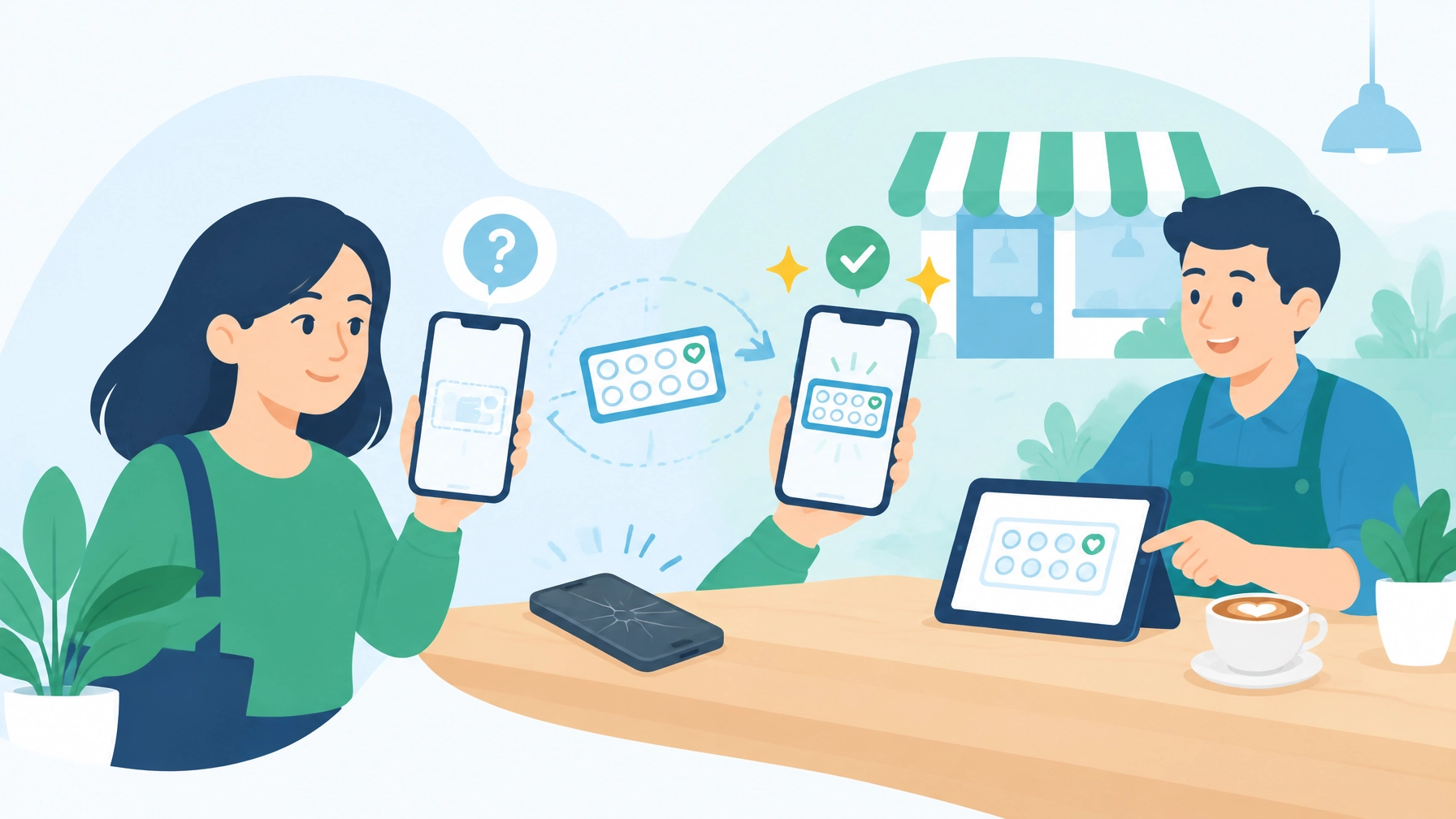
The most common support moment in any digital card program: a customer upgrades their phone, and the loyalty card did not make the trip. The customer's fear is that their progress is gone; the business's risk is turning a loyal customer's first visit on the new phone into a bad experience.
The staff script: "No problem, let me look up your card," followed by a lookup by the customer's name or phone number. The owner-side preparation is confirming how card recovery works in the platform and training every cashier on the recovery step before launch, because this moment will happen, and it will happen during a rush.
The principle: a digital card's recovery path is part of the program's customer experience, and it should be tested the way the redemption path is tested, before a real customer depends on it.
Problem two: the duplicate card
The second most common: a customer has two cards, usually from enrolling twice on different visits, and presents whichever one has more progress. The staff-side experience is mild confusion; the business-side risk is rewarding the same customer twice for one purchase pattern.
The staff script: "It looks like you have two cards, let's keep the one with your progress," followed by consolidating onto the better card. The owner-side preparation is deciding the rule in advance: one card per customer, and duplicates get merged at the register whenever noticed. The rule matters less than its consistency, because customers remember how exceptions were handled last time and expect the same treatment, which is the same consistency principle behind any customer-facing program rules.
Problem three: the shared card
A customer presents a family card with a suspicious amount of progress, or two customers alternate a single card. The digital version of the classic punch-card fraud is rarer than the paper version, because the platform tracks card activity, but it still arrives at the counter.
The staff script is the delicate one: "Just so you know, our program is one card per person, so I can keep this card going for whoever it belongs to." The owner-side decision is whether the program's terms actually say one card per person, and whether the business cares enough to enforce it. A coffee shop may reasonably let a family share a card, because the visits are real. A business with expensive rewards should not, because the program's reward budget assumes one reward per customer pattern.
The principle: decide the sharing rule before launch, write it in the program terms, and train the staff on the sentence that enforces it without accusation.
Problem four: the redemption dispute
The worst version: a customer believes they earned a reward, the system disagrees, and there is a line behind them. This is the moment where the program's entire reputation is at stake, because a dispute handled badly costs more than the reward ever would.
The staff script: "I want to make sure you get what you earned, let's sort this out," followed by either honoring the reward on the spot or taking the customer's contact information and following up the same day. The owner-side preparation is a written escalation rule: below a certain dollar value, the cashier honors the customer's claim immediately, because the reward's cost is smaller than the dispute's cost. Above that value, a manager resolves it away from the register.
This is the same economics we apply elsewhere in customer-facing tooling: a missed chat or a fumbled redemption costs more than the courtesy that prevents it, which is why the verification work happens before launch rather than after the first dispute.
The recovery playbook, condensed
- New phone — The staff script: "Let me look up your card"; The owner-side rule: Recovery tested before launch
- Duplicate card — The staff script: "Let's keep the one with your progress"; The owner-side rule: One card per customer, merge on sight
- Shared card — The staff script: "Our program is one card per person"; The owner-side rule: Sharing rule written in the terms
- Redemption dispute — The staff script: "I want to make sure you get what you earned"; The owner-side rule: Below a threshold, honor it immediately
Four scripts, four rules, and a training session before launch. The playbook's purpose is not fraud prevention, which is a minor cost. It is protecting the program's core asset, which is the customer's belief that the program is fair.
Questions to answer before launch
Before the program goes live, write down: How does card recovery work when a customer changes phones, and has every cashier practiced it? What is the duplicate-card rule, and who merges them? Is card sharing allowed, and what sentence enforces the answer? What is the dispute threshold below which staff honor a claim immediately, and who follows up on the ones above it?
Four answers, and the program's worst moments become procedures instead of improvisations. MBH Web Services builds loyalty programs with the failure playbook included, because the recovery moments are where customer trust is actually decided, but the playbook above is fully buildable by an owner in an hour. Write the scripts, train the staff, and let the BoomerangMe program's rare bad moments end as loyalty rather than disputes.