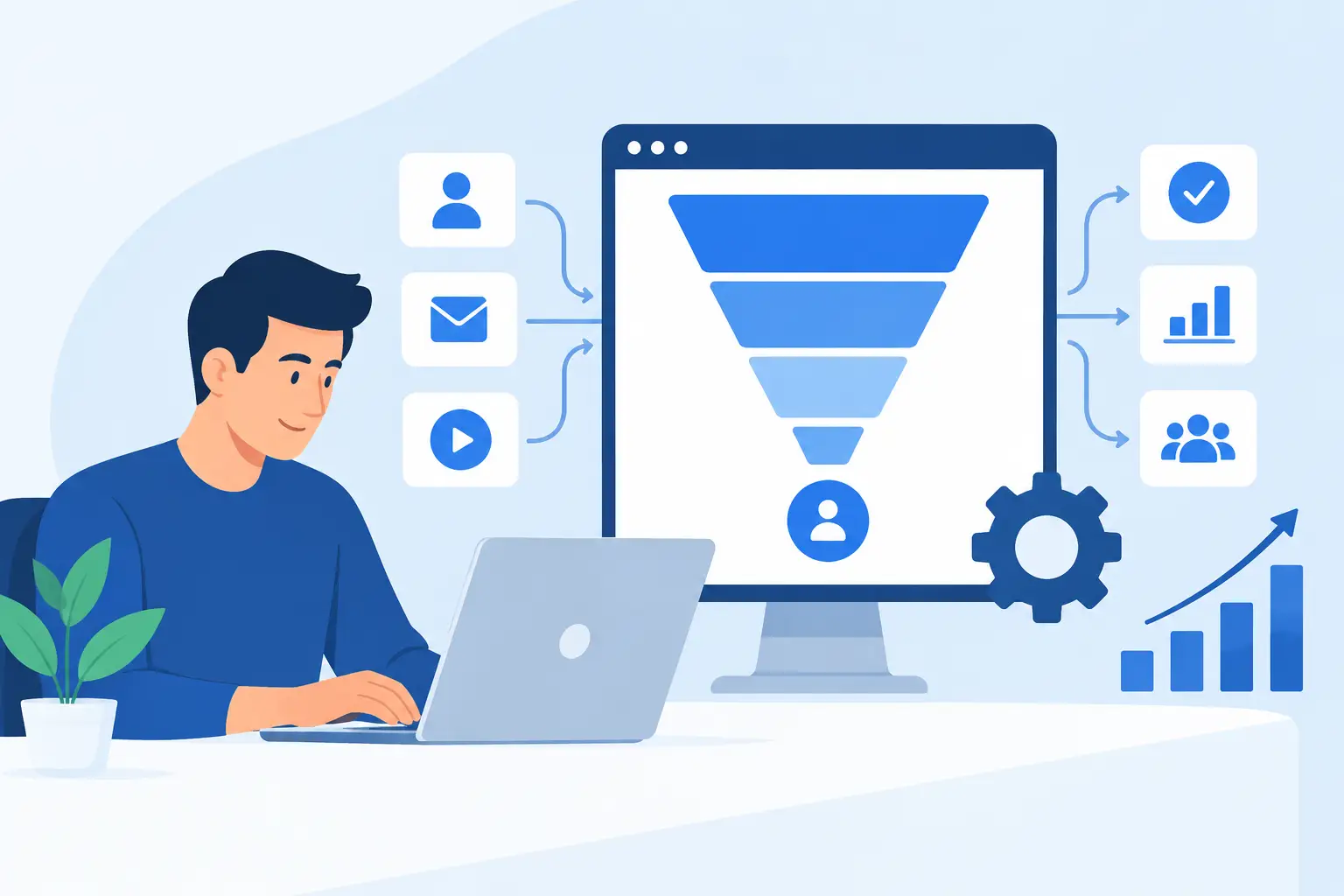
A funnel that looks finished but sends the wrong follow-up, loses form submissions, or cannot be updated by your team is not a business asset. It is another system someone has to troubleshoot. Systeme.io setup services: what to expect when MBH builds your funnel and email automation comes down to a practical goal: configuring the platform around the way your business attracts, qualifies, and follows up with customers.
For a growing business, Systeme.io can bring landing pages, forms, email campaigns, automations, and basic sales processes into one operating environment. That does not mean every account should be configured the same way. A dependable implementation begins with your offer, customer journey, internal responsibilities, and existing tools. MBH Web Services approaches setup as an operational project, not simply a collection of pages and email templates.
Start with the process, not the page builder
Before building a funnel, the first question is what the funnel needs to accomplish. A local service company requesting estimates has a different process than a consultant booking discovery calls or a training business delivering a digital resource. The right funnel structure depends on what a prospect needs to understand before taking action and what your team needs to know before following up.
During planning, MBH clarifies the offer, intended audience, conversion action, required information, and handoff process. That may mean mapping a simple path from advertisement or referral source to landing page, form submission, confirmation message, and sales follow-up. It may also include a longer path with a lead magnet, a nurture sequence, appointment scheduling, and offer-specific communications.
This step prevents a common setup problem: building pages first and defining the business rules later. When the workflow is clear in advance, page copy, forms, automation triggers, and staff responsibilities can support the same outcome.
Setting realistic scope
Not every implementation needs a complex multi-step campaign. In many cases, a focused landing page, a well-designed intake form, and a short follow-up sequence will serve the business better than an elaborate funnel with too many decision points. Complexity should match the sales cycle and the capacity of the team responsible for responding.
MBH helps distinguish between what is necessary for launch and what can be added later. This is especially valuable when a business is replacing scattered email tools or moving from a manual process. A stable first version creates a foundation for improvement without delaying the operational benefits of the platform.
What MBH builds in a Systeme.io funnel setup
Once the customer journey is defined, the implementation moves into configuration. The work typically includes building the funnel steps that support the agreed conversion path, such as a landing page, lead capture form, thank-you page, offer page, or appointment confirmation page. Each component is set up to provide a clear next action rather than leaving prospects uncertain about what happens after they submit information.
Form configuration is particularly important. MBH can align fields with the information your sales or service team actually needs, while avoiding unnecessary questions that may reduce completion rates. Submitted contacts can be organized through appropriate tags or segments so the business can identify where leads came from and which follow-up process applies.
The implementation also accounts for the customer-facing details that are easy to overlook during self-service setup. These include confirmation messaging, sender information, basic brand consistency, and notification workflows for the team. A prospect should receive a useful response promptly, while the responsible employee should have enough context to act without searching across multiple systems.
Where needed, MBH can configure the account structure and settings that support the funnel's daily use. The exact scope depends on your Systeme.io plan, the approved campaign design, available content, and any outside tools your workflow requires. Clear scope matters because software configuration is most reliable when expectations are documented before changes begin.
Email automation should support real follow-up
Automation is valuable when it reduces missed follow-up and gives prospects useful, timely information. It is less useful when it produces generic messages that do not reflect the buyer's stage or your team's capacity. MBH builds email automation around defined triggers and actions, so contacts receive communication based on a specific behavior, form submission, or funnel stage.
For example, someone who requests a guide may receive the resource immediately, followed by a short sequence that addresses common questions and offers an appropriate next step. Someone who requests a consultation may receive confirmation details and relevant preparation information, while the internal team receives a notification to review the request. These are separate workflows because the intent behind each action is different.
Email sequence setup includes organizing messages in the intended order, setting timing between emails, assigning tags or segments when applicable, and testing the logic before launch. MBH also helps establish clear ownership for content approval and ongoing updates. Automation can distribute communication consistently, but it cannot compensate for unclear offers, slow human response, or outdated sales messaging.
Testing protects the customer experience
A funnel should not go live based only on how it appears in the editor. MBH tests the intended path from form completion through the email sequence and internal notifications. Testing can identify issues such as missing tags, incorrect recipient addresses, broken confirmation steps, or emails that arrive in an unexpected order.
This quality check is especially useful when multiple employees are involved. A marketing manager may focus on the page and campaign language, while an operations lead needs confidence that inquiries reach the correct person. Testing gives both teams an opportunity to confirm the workflow before it becomes part of normal customer communication.
What your team should provide
A productive implementation is a shared effort. MBH provides the configuration expertise and project guidance, while your organization supplies the business decisions and approved materials that make the funnel accurate. Early access to your Systeme.io account, brand assets, offer details, approved copy, and team contacts keeps the work moving.
You should also identify who can approve pages and emails, who owns follow-up after a lead arrives, and who will request future changes. These decisions do not need to create a large internal project. They simply prevent delays and ensure the system reflects an accountable operating process.
If content is still being developed, MBH can help organize the build around available materials and prioritize the components needed for launch. However, a platform setup service is most effective when the business has a clear offer and can review customer-facing messaging promptly. Configuration and content strategy are connected, but they are not identical responsibilities.
Ongoing maintenance is part of reliable adoption
Funnel and automation work does not end at launch. Offers change, employees change, response processes change, and small edits can affect automation behavior. A business that treats the platform as a one-time project may eventually be left with outdated pages, inactive sequences, or workflows that no longer match internal practice.
MBH Web Services can remain a practical point of support after implementation, helping clients manage updates, troubleshoot issues, and maintain the systems they depend on. Ongoing support is particularly useful for teams that do not have an in-house Systeme.io specialist but still need changes handled carefully and consistently.
The level of maintenance should fit the importance and frequency of the funnel. A single campaign used occasionally may need periodic review. A central lead-generation process may warrant more regular oversight, particularly if several team members depend on accurate notifications and timely customer communication.
How to judge whether the setup is working
A successful build is not measured only by whether pages are published or emails are scheduled. It should make the next steps clearer for both prospects and employees. Leads should receive the appropriate information, your team should know when action is required, and routine follow-up should happen without someone manually rebuilding the process each time.
Over time, the business can review form completion, lead quality, response timing, and the points where prospects stop progressing. Those observations can guide refinements to messaging, page structure, or automation timing. Not every low conversion issue is technical, and not every technical change will improve lead quality. The value comes from having a dependable system that makes those decisions easier to evaluate.
The best Systeme.io setup is one your team can rely on without becoming platform specialists. When the funnel reflects a defined customer process and the automation has clear ownership, your software becomes a maintained business capability rather than another unattended account.