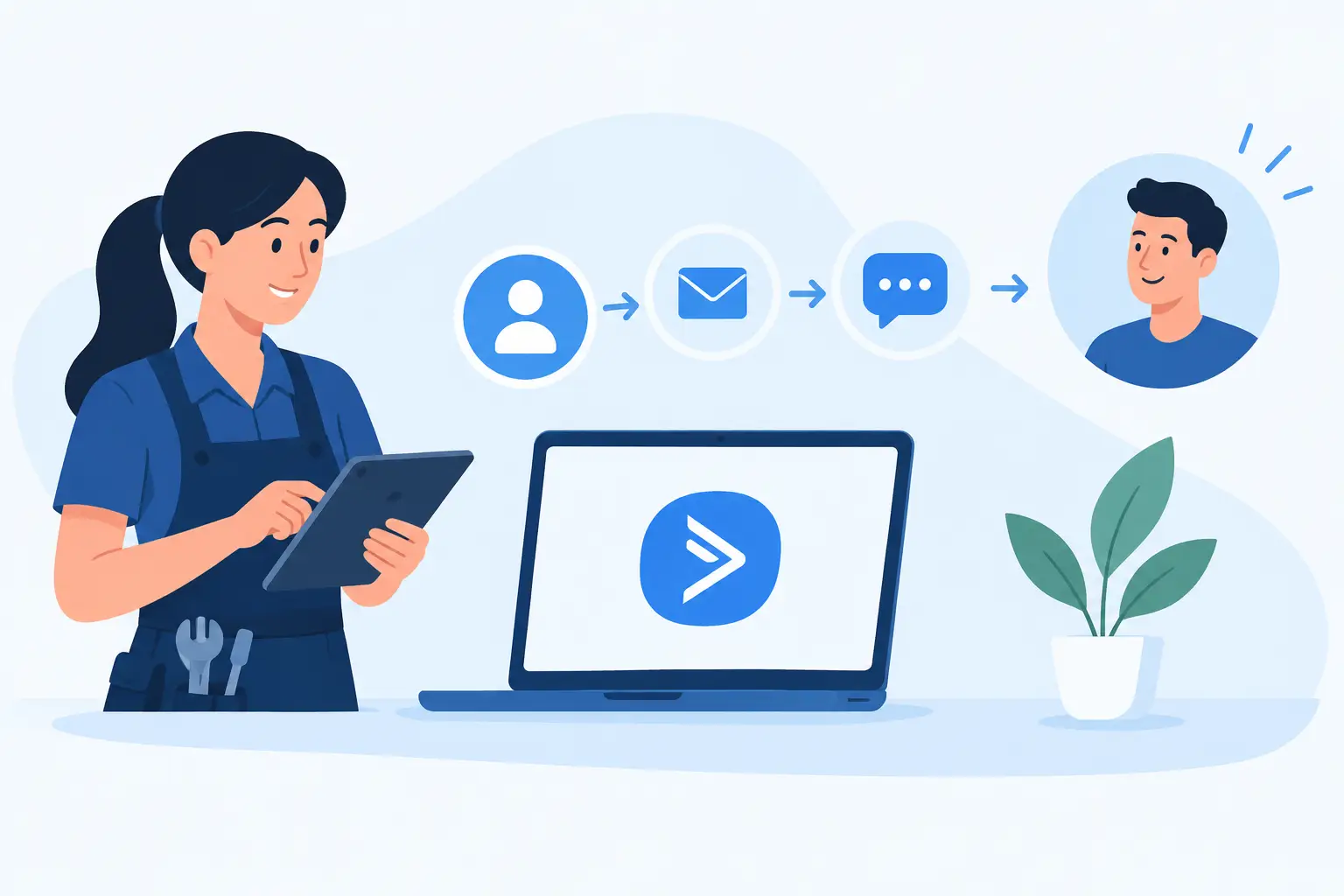
A service inquiry is rarely lost because a prospect could not find a form. It is lost because the next step was unclear, the response arrived too late, or the handoff between marketing and the person delivering the service broke down. Systeme.io for service businesses: how to connect landing pages, email, and follow-up is fundamentally about preventing those gaps with a process your team can operate consistently.
For a consultant, agency, managed service provider, implementation partner, or local professional firm, the objective is not simply to collect more leads. It is to identify fit, set appropriate expectations, and move qualified prospects toward a booked conversation without forcing staff to manually remember every touchpoint. Systeme.io can support that workflow when the pages, automation rules, and follow-up responsibilities are designed together.
Start with the service journey, not the page builder
A landing page should reflect a specific business problem and a specific next action. A generic page that asks visitors to "contact us" may create inquiries, but it does little to help an operations team distinguish a ready buyer from someone who is only gathering information.
Start by defining the path a prospect should take. For example, a business seeking help with software onboarding may arrive from an email campaign or paid search ad, read a page describing the onboarding service, complete a short qualification form, and receive an email that explains what happens next. If the inquiry meets your criteria, a team member follows up personally or the prospect is invited to book a consultation.
That path determines what the landing page needs to do. A strong service page usually answers three practical questions: what outcome the service supports, who it is designed for, and what information is needed to determine fit. It should also set realistic expectations. If implementation begins with an assessment, say so. If pricing depends on the number of users, integrations, or locations, explain that early rather than allowing an automated sequence to imply an immediate fixed quote.
Keep forms short enough to complete but detailed enough to support a useful response. Name, work email, company, and primary need may be sufficient for an initial consultation. A more complex service may also require company size, current software, target timeline, or the operational issue the prospect wants to solve. Every extra field has a cost, so ask only for information your team will use.
Connect landing pages to the right contact records
In Systeme.io, a form submission should do more than add a name to a general list. It should create a contact record with enough context to guide automation and human follow-up. Tags are useful here because they can identify the service of interest, source campaign, business segment, or stage of the inquiry.
For instance, someone who submits a request from a page about SaaS implementation can receive an implementation-inquiry tag. A separate page for ongoing platform support might apply a managed-support-inquiry tag. The email sequence and internal process can then reflect the service the person actually requested.
Avoid building too many tags at the outset. A system with dozens of inconsistent labels becomes difficult to maintain, especially when multiple staff members create campaigns. Begin with a short naming standard that separates service interest, lead source, and lifecycle stage. Document who can add or change tags and review the structure when services or campaigns change.
A practical setup may use lifecycle stages such as new inquiry, contacted, consultation scheduled, proposal sent, client, and inactive. Systeme.io can automate early communication, but the stage should also help your team see where ownership changes. If your sales or support process uses another customer relationship management system, decide which platform is the operational record for each stage before automating anything. Duplicate records and conflicting statuses create avoidable follow-up errors.
Build an email response that earns the next conversation
The first email should arrive quickly, but speed alone is not the goal. It should confirm receipt, acknowledge the prospect's stated need, and explain the next step in plain language. For many service businesses, this message should come from a recognizable person or team rather than a faceless marketing address.
A useful first response might confirm that the request is being reviewed, state the expected response window, and provide one relevant resource or preparation step. A company asking for help adopting new software could be asked to consider its current tools, number of users, and desired go-live date before the consultation. This helps the prospect prepare and gives your team a more productive first conversation.
The rest of the sequence should match the length and complexity of the buying cycle. A straightforward, lower-cost service may need a confirmation email, a reminder, and one follow-up message. A more involved implementation engagement may benefit from several emails that clarify the process, address common concerns, and show what a successful deployment requires from both sides.
Do not confuse automated nurturing with repeated sales pressure. If someone has requested a consultation and a staff member is actively working the opportunity, continuing to send generic promotional emails can feel disconnected. Use automation rules to remove or pause contacts from broad sequences when they reach a meaningful sales stage. This is especially important for businesses selling support-intensive services where trust and responsiveness matter as much as marketing frequency.
Use automation rules for predictable handoffs
A simple workflow can be effective: form submission applies a tag, triggers the confirmation email, and creates a task or notification for the responsible team member. If the prospect schedules a meeting, move them into a consultation sequence. If they do not schedule within a defined period, send a helpful reminder and notify the owner for review.
The best timing depends on your service. For urgent operational support, a same-day human response may be required. For strategic consulting, a one- or two-business-day review period may be acceptable if it is communicated clearly. Automation should reinforce your service commitment, not create a promise your team cannot reliably meet.
Make ownership explicit. A notification without a named owner often becomes a shared assumption that no one acts on. Assign leads by service line, territory, account type, or workload. Then establish an escalation rule for inquiries that remain untouched. Even a well-designed sequence cannot replace accountability for the prospect's next interaction.
Treat follow-up as an operational process
Systeme.io can centralize landing pages and email activity, but service businesses still need a human follow-up standard. Define what happens after each signal: a completed form, a booked call, a missed appointment, a proposal request, or an unanswered email. Staff should know not only which message goes out, but what they are expected to do and when.
Consider the missed-appointment case. An automated reminder before the meeting can reduce no-shows. After a missed meeting, an email can offer an easy way to reschedule. But a high-value prospect may also warrant a personal note that references the specific problem they described. The automation creates consistency; the team applies judgment.
This distinction matters when prospects are evaluating implementation, onboarding, or ongoing maintenance services. They are often assessing whether a provider will be dependable after the sale. A timely, informed follow-up process is evidence of how the relationship may work once their software environment becomes more complex.
Landing page conversion rate is useful, but it is only the first measurement. A page that produces many low-fit inquiries can consume more staff time than it creates value. Review the path from page visit to form completion, response, scheduled consultation, qualified opportunity, and closed engagement.
Look for friction at each handoff. If many contacts submit a form but do not schedule, the confirmation email or call to action may be unclear. If consultations are booked but few become qualified opportunities, the page may not explain the service scope well enough. If prospects go cold after a proposal, the issue may be service packaging, pricing clarity, or a delayed response rather than the email sequence itself.
Test one meaningful change at a time. You might revise the landing page message for a particular industry, reduce form fields, adjust the first email, or shorten the time before a personal call. Record the change and compare results over a sufficient period. Small, documented improvements are more reliable than rebuilding the entire funnel every month.
Keep the system maintainable as services change
The trade-off with an all-in-one platform is that it can be tempting to add pages, sequences, and automations without governance. Over time, teams may inherit outdated offers, duplicate forms, and messages that no longer match current service delivery. Assign someone to review active funnels, email copy, tags, sender details, and follow-up rules on a regular schedule.
For organizations that resell and support third-party software, this review is particularly valuable. Vendor capabilities, onboarding steps, service levels, and target customer profiles can change. Your landing pages and automated messages should stay aligned with what your operations team can deliver.
MBH Web Services approaches SaaS adoption as an ongoing responsibility, not a one-time software transaction. That same mindset should shape your Systeme.io workflow. Build the automation to make the right next step easier for prospects and staff, then keep it current as your service operation evolves.
The most useful funnel is not the one with the most emails or the most elaborate automation. It is the one that ensures a prospective customer receives a clear response, reaches the right person, and experiences the same dependable process you intend to provide after they become a client.