A website visitor who asks a question is not necessarily ready to buy, but they have done something more valuable than submit a passive form: they have started a conversation. LiveChat for lead generation from first message to follow-up gives small and mid-sized businesses a practical way to recognize that moment, respond with context, and continue the sales process without leaving the prospect to figure out the next step alone.
For businesses evaluating or implementing SaaS tools, the opportunity is clear. A prospective customer may arrive with a question about pricing, integrations, user access, deployment time, or ongoing support. A well-run live chat process can turn that question into a qualified opportunity. A poorly managed one can create another fragmented customer experience, with unanswered messages, incomplete records, and no clear ownership after the chat ends.
The difference is not simply the chat software. It is the process behind it.
Start With the Questions Buyers Actually Ask
Live chat works best when it is positioned as a helpful entry point, not a pop-up that interrupts every visitor. The opening message should reflect where the visitor is on the site and what they may need next. Someone reading an implementation page may need reassurance about timelines and responsibilities. Someone comparing plans may need help identifying the right fit.
A simple greeting such as, “Questions about setup, pricing, or ongoing support? Our team can help,” establishes a useful purpose. It gives the visitor clear options without pretending the business already knows their needs.
The first live response should aim to understand the request before moving into a pitch. For example, an operations manager evaluating a new platform may be more concerned with employee adoption than feature depth. An IT administrator may need to know whether the product can fit existing security and user-management requirements. Those are different conversations, even when both visitors are looking at the same software.
Agents should be prepared to clarify three practical areas in the early exchange: what the visitor is trying to accomplish, what is not working in their current process, and who will be involved in the decision or rollout. These questions create useful context while showing the visitor that the business is prepared to support more than a software purchase.
LiveChat for Lead Generation Needs Intentional Routing
Not every chat should follow the same path. General support questions, existing customer requests, billing questions, and new sales inquiries need different owners and response standards. When all messages go to one shared queue without clear routing, sales opportunities can be delayed while urgent customer issues receive inconsistent attention.
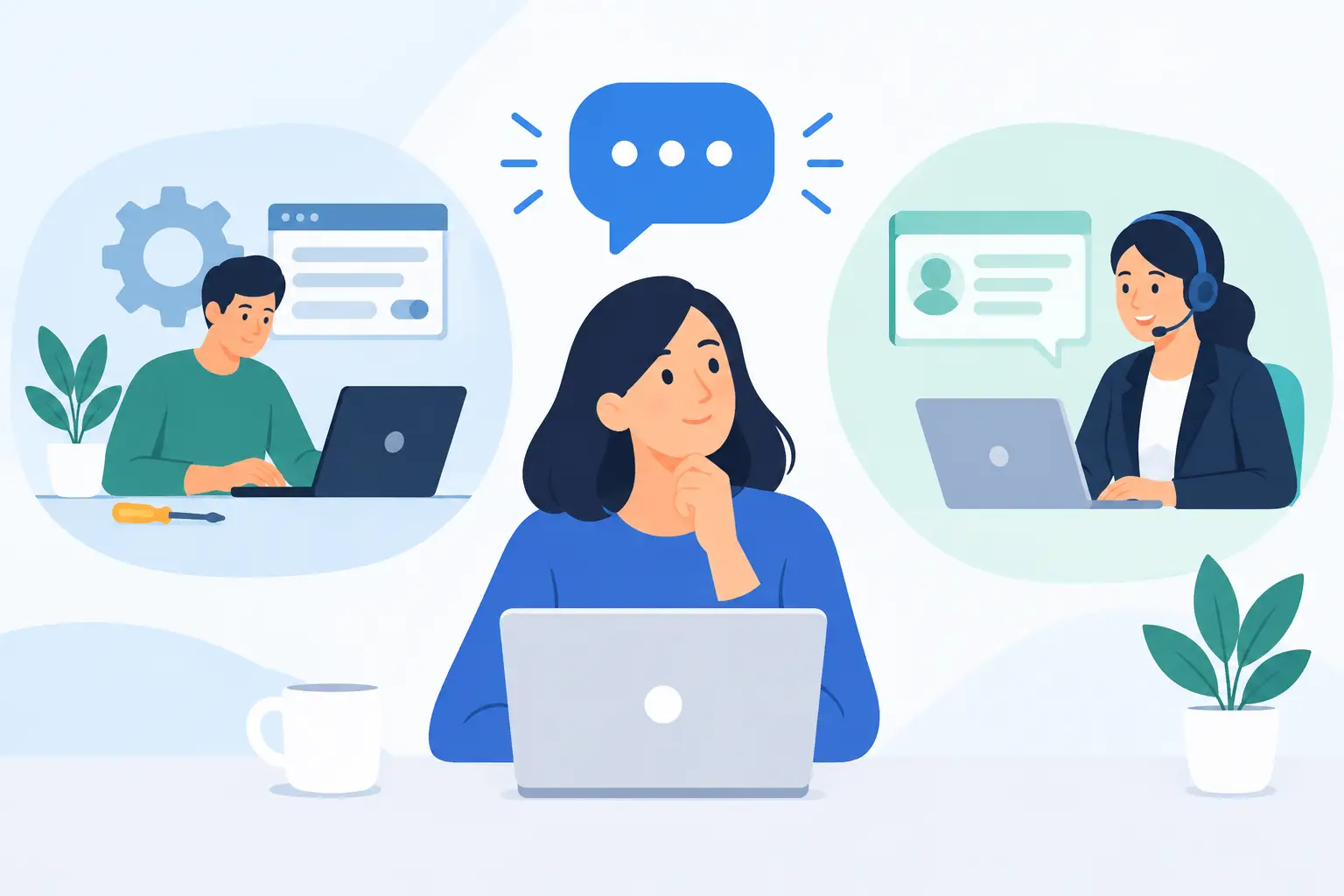
Set up routing rules around page location, business hours, known customer status, and chat topic. A visitor on a product comparison or pricing page can be routed to a sales-trained representative. A logged-in customer reporting a configuration issue should reach the support process. If the right person is not available, the chat should capture enough information to make the handoff useful.
The trade-off is worth acknowledging. Highly detailed routing can become difficult to maintain, especially for a smaller team or a business with several SaaS products. Begin with a few meaningful categories rather than trying to automate every scenario. The goal is not a complicated decision tree. It is dependable ownership.
A useful handoff record includes the visitor’s name, company, contact information, product or service of interest, stated need, timeline, and a concise transcript or summary of the conversation. The next person should not need to ask the prospect to repeat everything they already shared.
Use Automation to Support, Not Replace, Conversation
Automated greetings and chatbots can help cover after-hours traffic, ask basic qualifying questions, and direct routine inquiries. They are especially useful when a visitor wants an immediate answer to a common question, such as whether onboarding assistance is available.
However, automation should not become a barrier between a serious buyer and a knowledgeable person. If a prospect asks a detailed question about implementation, integrations, or ongoing administration, provide an easy path to a human response. Businesses purchase software through confidence as much as functionality. A rigid bot experience can weaken that confidence at the exact point it needs to grow.
Qualify Without Turning Chat Into an Interrogation
The best qualification happens naturally. A visitor who says, “We need to get our 60-person team onto a new system by next quarter,” has already provided useful information about company size, urgency, and likely implementation needs. The agent can build on that statement rather than launching into a long checklist.
A short conversation can establish whether the lead has a defined business need, a realistic timeframe, an appropriate contact role, and a need that matches the available solution and services. For more complex purchases, chat should lead toward a scheduled consultation rather than attempting to complete discovery in one sitting.
This is also where service scope matters. Some buyers may only need access to a SaaS product. Others need account setup, configuration, migration planning, employee onboarding, and ongoing maintenance. Clear language prevents mismatched expectations. It is better to identify early that a prospect needs a level of hands-on support your team can provide than to treat implementation as an afterthought after the sale.
Make the Next Step Specific
A chat should rarely end with “Let us know if you have any other questions.” That response is polite, but it places the full burden of action back on the prospect.
Instead, offer a next step that matches the conversation. For a straightforward request, that may be a tailored product recommendation sent by email. For a higher-value or more involved opportunity, it may be a 20-minute discovery call with an implementation specialist. If the visitor is still researching, offer to send a concise overview of the setup process and what ongoing support includes.
Be specific about timing. “I will send the details today” is more useful than “Someone will follow up soon.” If a meeting is scheduled, confirm the purpose of the meeting, who should attend, and what information will help make the discussion productive.
A next step is only credible when it has an owner. Whether the chat agent, sales representative, or onboarding lead is responsible, the prospect should have a clear expectation of who will contact them and when.
Build a Follow-Up Process That Preserves Context
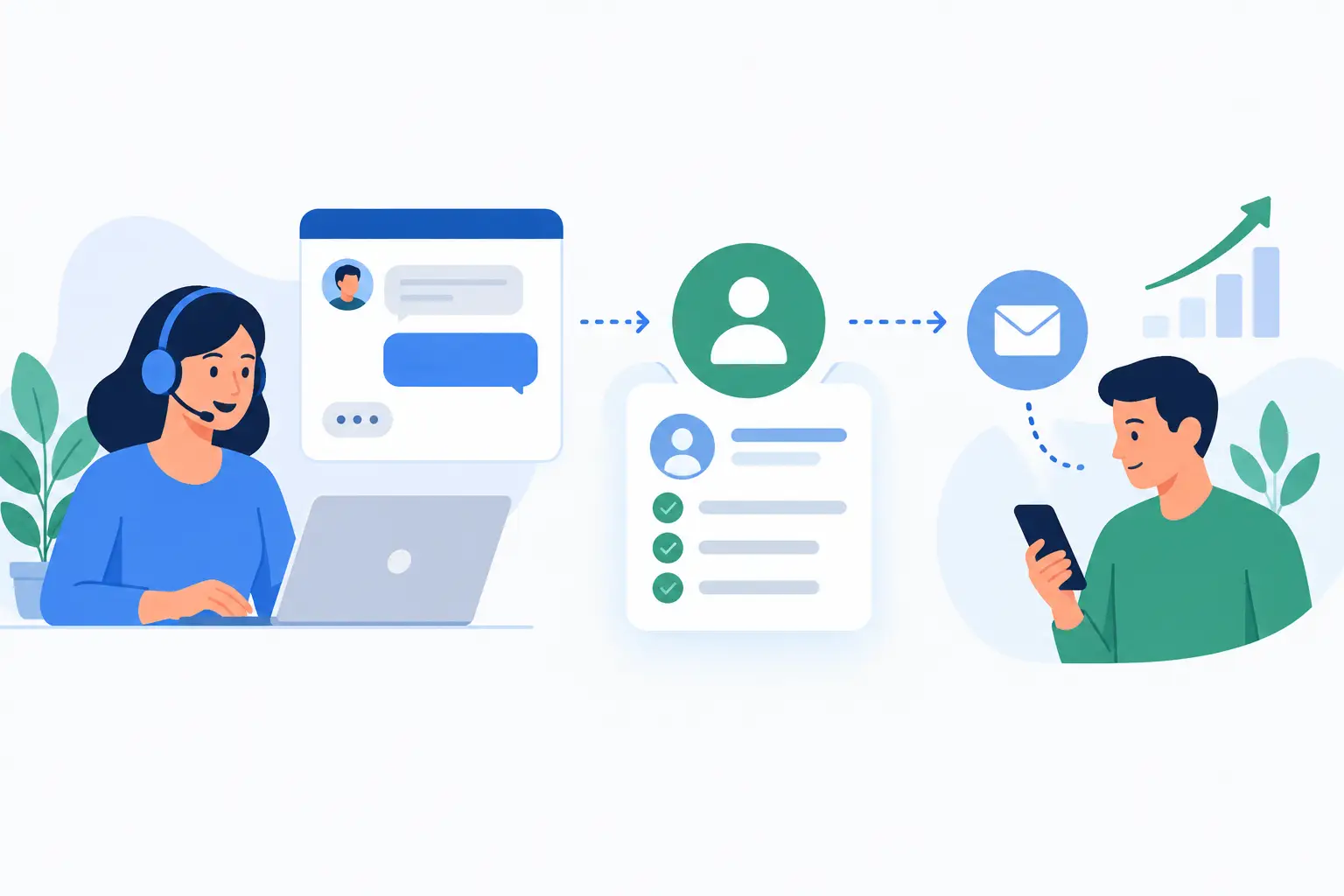
Follow-up is where many otherwise promising chats lose momentum. The initial conversation may be strong, but a generic email sent two days later can make the interaction feel disconnected. Effective follow-up refers to the prospect’s stated priorities and continues the conversation from where it stopped.
If an operations leader asked about deployment support, the follow-up should address deployment support. If an IT administrator raised questions about configuration or user management, acknowledge those concerns directly. The message does not need to be lengthy. It needs to demonstrate that the team listened.
Speed matters, but relevance matters more. A high-intent lead who requests a demo or pricing discussion should receive prompt outreach, ideally within the response window your team has defined. A visitor who is gathering early research may benefit from a less aggressive follow-up sequence centered on useful information and an invitation to reconnect when the project advances.
Keep all chat transcripts, notes, scheduled activities, and follow-up outcomes in the same customer record whenever possible. Separate systems create a familiar operational problem: sales sees part of the story, support sees another part, and the customer is left to fill the gaps. A connected process helps teams provide continuity from the first website question through implementation and maintenance.
Measure More Than Chat Volume
Chat volume alone does not show whether live chat is contributing to revenue or customer quality. Review how many conversations become qualified leads, scheduled meetings, proposals, closed business, and successful implementations. Also track first-response time, abandoned chats, follow-up completion, and the common questions that appear before a buyer commits.
Those questions can improve more than chat scripts. Repeated uncertainty about onboarding may signal that the website needs clearer implementation information. Frequent questions about support may indicate that your service model needs to be more visible during evaluation. Chat data is a direct view into where buyers encounter friction.
It also helps to review conversations for quality, not just outcomes. Did the agent identify the real need? Was the handoff complete? Did the follow-up arrive as promised? A smaller number of well-managed chats can create more value than a large volume of brief, unowned exchanges.
For MBH Web Services and similar service-led SaaS partners, live chat should support the full customer lifecycle. The first message is an opportunity to show that there is a capable team behind the software, ready to help with selection, implementation, and continued operation. When each conversation has a clear owner and a practical next step, chat becomes less of a website feature and more of a dependable part of how customers begin a working relationship.