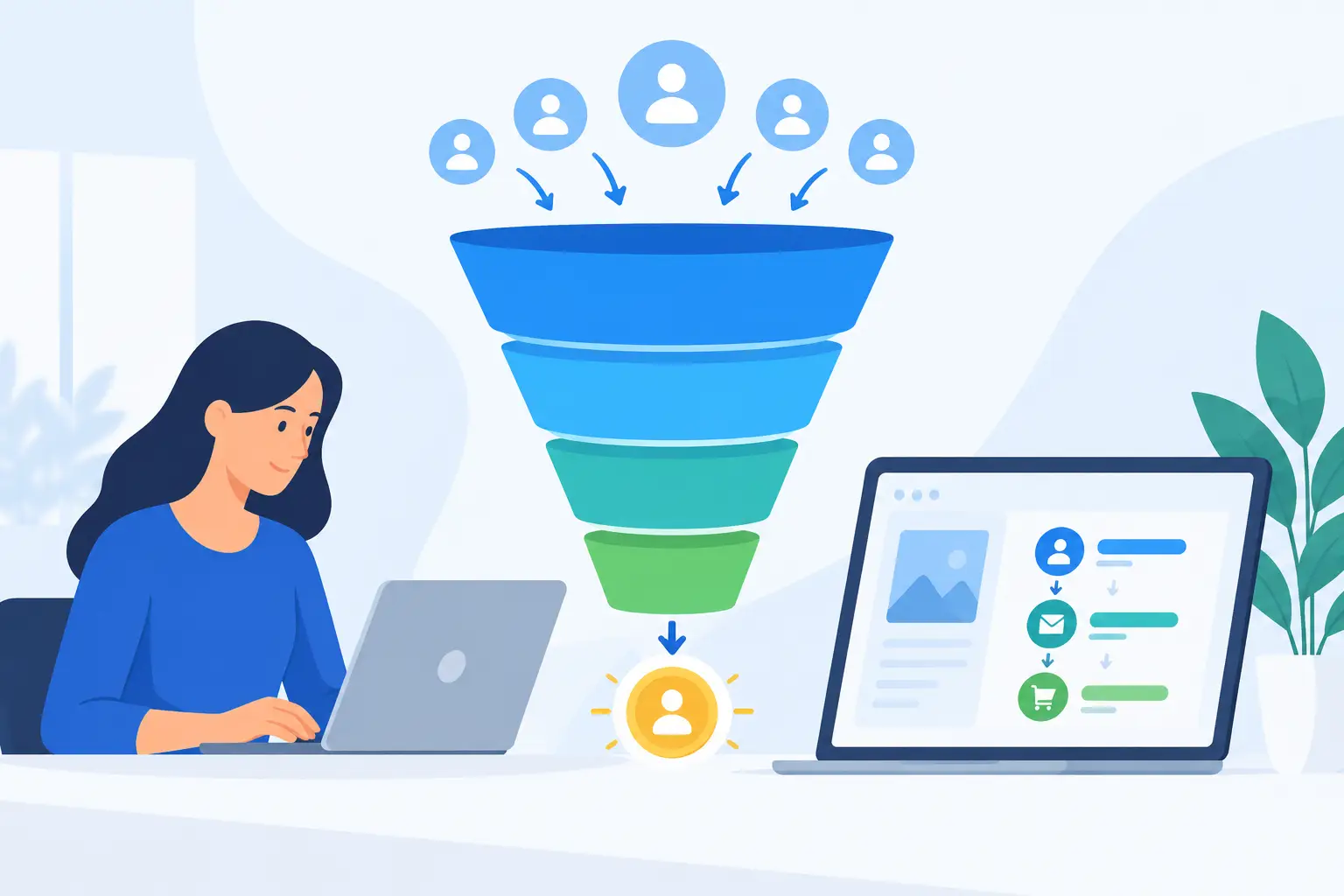
A sales funnel should not begin with a landing page. It should begin with a clear operational question: what action do you want a prospect to take, and what needs to happen after they take it? When learning how to build your first sales funnel with Systeme.io, small businesses often focus on page design first and discover later that the offer, follow-up, or handoff process is unclear.
Systeme.io can bring pages, forms, email automation, and checkout steps into one workspace. That can reduce the number of tools your team must manage, but the platform does not replace a sound customer journey. The strongest first funnel is usually simple, tied to one offer, and supported by a process your sales or service team can sustain.
Start with one business outcome
Before opening the funnel builder, define the job of the funnel. A first funnel might collect consultation requests, generate webinar registrations, sell a straightforward service package, or capture leads in exchange for a useful guide. Trying to serve all of those goals in one funnel makes the path harder to measure and harder for prospects to understand.
For many service-based SMBs, a lead-generation funnel is the most practical starting point. The visitor sees a specific problem they recognize, receives a useful resource or offer, and then enters a follow-up sequence that leads toward a conversation. If you sell a product with a clear price and low buying friction, a direct checkout funnel may be appropriate instead.
Write down four decisions before you build:
- The audience segment you want to reach
- The single offer or next step they will receive
- The action that counts as a conversion
- The person or team responsible for responding after conversion
That last point matters. A form submission has limited value if leads sit unassigned or if a buyer receives no onboarding communication after payment. Software setup and follow-up ownership should be planned together.
Map the smallest viable customer journey
Your first funnel does not need a long chain of pages. In fact, more steps create more opportunities for confusion, broken tracking, and abandoned sessions. A common first setup is a landing page, a thank-you page, and a short email sequence. Add a checkout page only when the objective is an immediate sale.
The landing page makes the promise. It should explain who the offer is for, the operational issue it helps solve, what the prospect receives, and what they should do next. Keep the call to action consistent. If the button says “Request a consultation,” the form and next page should reinforce that same action.
The thank-you page confirms completion and sets expectations. Tell the prospect what will happen next, whether that is an email delivery, a scheduling step, or a response from your team within a stated timeframe. This page is also a good place to offer a logical secondary action, but avoid distracting a new lead with several unrelated offers.
Email automation continues the conversation while interest is fresh. For a consultation funnel, the first email can confirm the request and describe the next step. A second email can address a common concern or share a relevant example. A third can invite the prospect to schedule if they have not already done so. The right number depends on the length and complexity of your sales cycle, but three useful messages are better than ten generic ones.
How to build your first sales funnel with Systeme.io
In Systeme.io, begin by creating a new funnel and selecting the goal that most closely matches your intended outcome. The available templates can help you move quickly, but treat them as a starting structure, not finished copy. Replace generic claims with language that reflects the customer problem and the result your business can reasonably deliver.
Build the landing page around one primary message. A practical page usually includes a clear headline, a short explanation of the offer, a description of who benefits, and a form or button. Add proof only when it is specific and approved for use, such as a client outcome, testimonial, credential, or process detail. Broad statements about being the best or easiest choice rarely build trust with operational decision-makers.
Next, configure the form fields. Ask only for information your team will use. Name and email are often enough for an initial resource download. A consultation request may justify a company name, phone number, and a short question about the prospect’s needs. Every additional field can lower completion rates, so balance lead quality with form friction.
Set the form action to add the contact to the appropriate list, tag, or campaign within your account. Consistent naming is worth the effort from the beginning. For example, use labels that identify the offer, source, and date range rather than vague labels such as “new leads.” Clear organization makes reporting, future segmentation, and handoffs easier.
Create the thank-you page and confirm that it matches the promised next step. Then build the email sequence. Use a professional sender name and email address that recipients can recognize. Write subject lines that describe the message rather than relying on urgency or vague promotional language. If your business uses a separate CRM, help desk, or scheduling system, determine how new leads will be transferred before going live. Manual exports may be acceptable for a small volume at launch, but they become a maintenance risk as inquiries grow.
If you are selling directly, add the checkout step only after confirming your payment setup, offer terms, refund process, and customer support path. A paid conversion creates an immediate service obligation. The buyer should know how they receive access, who to contact for help, and what happens if payment or delivery fails.
Test the funnel as a customer and as an operator
A funnel that looks correct in the editor can still fail in practice. Test it on desktop and mobile, submit the form with a test email, and follow every step as if you were a customer. Check that the confirmation page loads, emails arrive, personalization fields display correctly, and notification messages reach the right internal person.
Also test the operational side. Can your team see the new lead? Is there a documented response expectation? Does the sales representative know what the prospect downloaded or requested? For a paid offer, can a support team member identify the customer and resolve a basic access issue?
This is where many businesses find the difference between purchasing software and adopting it successfully. The funnel is not finished when pages are published. It is finished when the customer experience and internal process work reliably together.
Measure behavior before redesigning everything
Once the funnel receives traffic, track a limited set of metrics: landing page visits, form completions or purchases, email opens and clicks, scheduled conversations, and qualified opportunities. These measurements show where the process is losing momentum.
Low landing-page conversion may indicate a weak offer, unclear message, poor traffic fit, or excessive form fields. Low email engagement may point to a mismatch between the offer and the follow-up content. A high number of leads but few qualified conversations may mean the funnel attracts an audience that is too broad. Do not assume the page design is the problem without looking at the full path.
Change one meaningful element at a time when possible. Revise the headline, shorten the form, improve the call to action, or adjust the first follow-up email. If you change every part of the funnel at once, you will not know which decision improved or reduced performance.
Plan for ownership and ongoing maintenance
A first sales funnel needs an owner after launch. Someone should review lead flow, respond to delivery or email issues, update offers when services change, and confirm that integrations continue to work. This is especially relevant for growing businesses where a marketing task may initially sit with an owner, operations manager, or sales lead.
Document the essentials: login ownership, list and tag definitions, the purpose of each page, email approval responsibilities, lead-response expectations, and any connected systems. Documentation does not need to be elaborate. It needs to be clear enough that another responsible team member can support the process without rebuilding it from scratch.
For organizations adopting several SaaS tools at once, this level of structure can prevent a simple funnel from becoming another disconnected system. MBH Web Services approaches implementation with that continuity in mind: a tool should support a dependable business process, not create a new maintenance burden.
Build the first version, monitor how real prospects move through it, and improve the step that creates the most friction. A modest funnel that your team can operate consistently will produce more value than a complex one that no one has time to maintain.