A loyalty program can look simple from the customer side: earn a reward, receive an offer, come back again. Behind that experience, however, are decisions about enrollment, staff workflows, customer data, integrations, and ongoing support. When leaders ask, “digital loyalty cards like BoomerangMe vs. a custom app: what does your business actually need?”, they are usually trying to avoid paying for more technology than the program requires.
For many small and mid-sized businesses, a digital loyalty card platform is the practical starting point. It can get a program in front of customers quickly without asking the business to fund a separate mobile product, manage app store approvals, or maintain another software environment. A custom app can be the right long-term investment, but only when loyalty is part of a broader customer experience that cannot be delivered effectively through an existing platform.
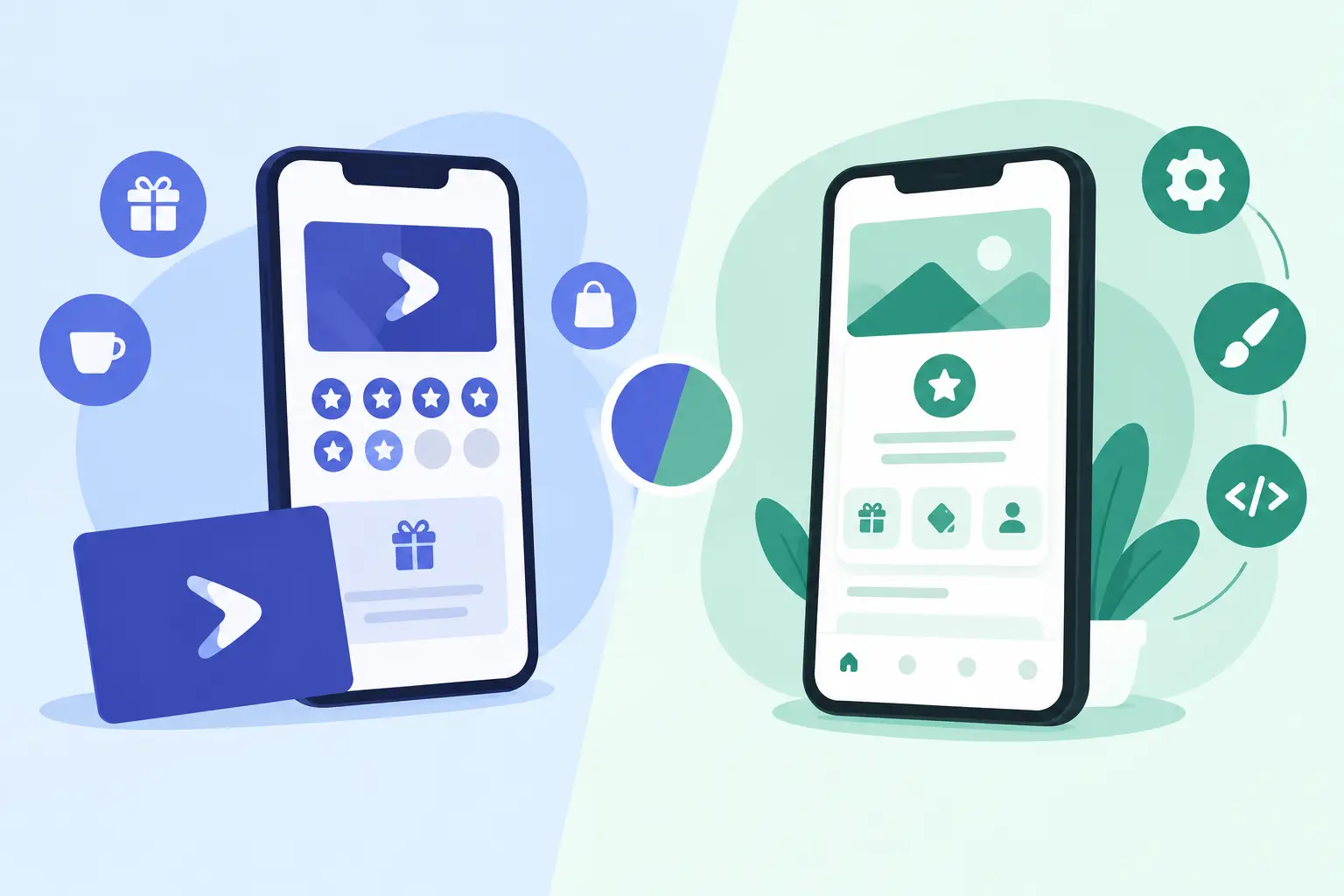
Digital Loyalty Cards Like BoomerangMe vs. a Custom App
The first decision is not about which option has more features. It is about the job the technology must do for your business.
Digital loyalty card platforms such as BoomerangMe are built around a focused use case: helping customers save a pass to a mobile wallet, collect stamps or points, receive offers, and return more often. The experience lives where customers already keep payment cards, tickets, and boarding passes. That matters because asking someone to download and keep another app is a higher commitment than asking them to add a card to their phone wallet.
A custom app is broader by design. It can combine loyalty with online ordering, appointment scheduling, account management, product browsing, location services, customer support, content, and personalized communications. It gives a business more control over the customer journey, but that control comes with a larger implementation and maintenance responsibility.
Neither option is automatically better. The better fit depends on your customer behavior, operating model, and ability to support the program after launch.
A digital loyalty card platform is often the right choice when the goal is straightforward repeat business. Restaurants, cafes, salons, fitness studios, local retailers, service businesses, and multi-location operators can use it to replace paper punch cards and reduce the friction of a basic rewards program.
The strongest advantage is speed. Instead of defining an entire app experience, the business can focus on the loyalty rules that matter: what a visit or purchase earns, when a reward becomes available, which promotions are sent, and how staff validate redemption. That shorter path can be valuable when a business needs to test a program, promote a seasonal offer, or standardize loyalty across locations.
Customer adoption is another practical consideration. A customer may agree to scan a QR code at checkout and add a pass to their mobile wallet. The same customer may not be willing to install an app for occasional purchases. For businesses with infrequent or low-consideration transactions, wallet-based loyalty can produce more signups because the initial commitment is lower.
Cost is usually easier to forecast as well. A third-party platform typically has subscription pricing and a defined set of capabilities. You still need to account for configuration, staff training, promotion design, and customer communications, but you avoid many of the development expenses associated with a custom application.
This does not mean implementation is automatic. A loyalty program can still fail if employees do not know how to enroll customers, if redemption rules are unclear, or if the offer is not meaningful enough to change customer behavior. The platform is only one part of the operating process.
The trade-off: less control over the experience
Using an established platform means working within its available templates, workflows, integrations, and reporting structure. Your loyalty card can reflect your brand, but it will not behave like a fully proprietary application. If your business needs unusual earning rules, highly specific account permissions, or a deeply customized customer interface, a standard platform may eventually become limiting.
That limitation is not always a problem. In fact, it can protect a business from building unnecessary complexity. A focused program that staff can explain in ten seconds is often more valuable than a highly customized one that customers and employees struggle to use.
When a Custom App Is Worth the Investment
A custom app becomes more compelling when loyalty is only one element of a larger digital service model. Consider a business that needs customers to place recurring orders, manage memberships, book services, communicate with support, view personalized recommendations, and earn rewards in one place. In that case, separate tools may create a fragmented experience for both customers and internal teams.
A custom app can also be appropriate when your business has a large, engaged customer base that already uses digital channels frequently. If customers return often and have a clear reason to open the app beyond checking loyalty status, adoption becomes more realistic. Ordering ahead, managing a subscription, accessing exclusive content, or coordinating appointments can provide that reason.
The value of a custom app is control. You can define the customer journey, connect loyalty data with your own systems, and build features around how your organization actually operates. You can also decide how the app evolves as your services, locations, and customer expectations change.
The cost is not limited to initial development. A custom app requires product planning, design, testing, security oversight, operating system updates, bug fixes, analytics, customer support, and a process for prioritizing future enhancements. If the app handles payments, personal information, or sensitive account data, the operational requirements increase further.
For many organizations, the ongoing commitment is the deciding factor. An app that launches successfully but receives limited maintenance can become a customer-service issue rather than a loyalty asset. Before approving development, determine who will own the roadmap, respond to user issues, maintain integrations, and fund regular updates.
Compare the Full Cost of Ownership, Not the Launch Price
A digital loyalty card platform may appear less expensive because it does not require custom development. A custom app may appear justified because it can support multiple functions at once. Both observations can be true, but neither provides the full financial picture.
With a loyalty platform, evaluate subscription fees, setup, branding and configuration, integrations with point-of-sale or customer systems, employee training, and the internal time required to manage campaigns. Ask what happens if you add locations, need additional user access, or want more advanced reporting.
With a custom app, account for discovery, design, development, quality assurance, app store management, hosting, integrations, security work, ongoing support, and future releases. Also consider the opportunity cost of asking internal teams to make product decisions and test new workflows. The app is not a one-time capital purchase. It is an operating capability.
A useful question is: what result must the program produce to pay for itself? That might be more repeat visits, higher average order value, reactivated customers, increased membership retention, or better visibility into customer behavior. If the expected result does not justify the total cost and operational effort, start smaller.
Adoption and Operations Should Drive the Decision
Technology choices often fail because the organization plans for launch but not for routine use. Your front-line employees need a clear script for enrolling customers and redeeming rewards. Managers need to know how to address exceptions. Marketing teams need a campaign calendar. Operations and IT teams need defined ownership for data, user access, integrations, and vendor support.
Before selecting either approach, answer four practical questions:
- Will customers see enough value to join without downloading an app?
- Does the program need to connect to point-of-sale, ecommerce, booking, or CRM systems?
- Who will monitor performance and adjust offers after the first month?
- Who is accountable when an employee or customer has a problem using the program?
These questions may point to a digital loyalty card platform even if a custom app sounds more ambitious. They may also reveal that an app is justified because disconnected tools are already creating workarounds and inconsistent customer experiences.
Start With the Smallest System That Supports Your Strategy
A practical approach is to separate immediate loyalty needs from future product ambitions. If the immediate need is to reward repeat visits and communicate offers, begin with a digital loyalty card program that can be configured, measured, and supported reliably. Use the results to learn which rewards customers use, which locations drive enrollment, and what staff need to operate the program consistently.
If your business later proves that customers want broader digital services, those lessons can shape a custom app with clearer requirements. You will be building from demonstrated behavior rather than assumptions about what customers might download.
MBH Web Services approaches SaaS decisions as an ongoing operational commitment, not just a software purchase. Whether you choose a loyalty platform or pursue a custom application, the lasting value comes from thoughtful setup, employee adoption, dependable support, and regular review of how the program performs.
The right first move is the one your team can operate well next week while still giving your business room to grow when customer demand makes a larger investment worthwhile.