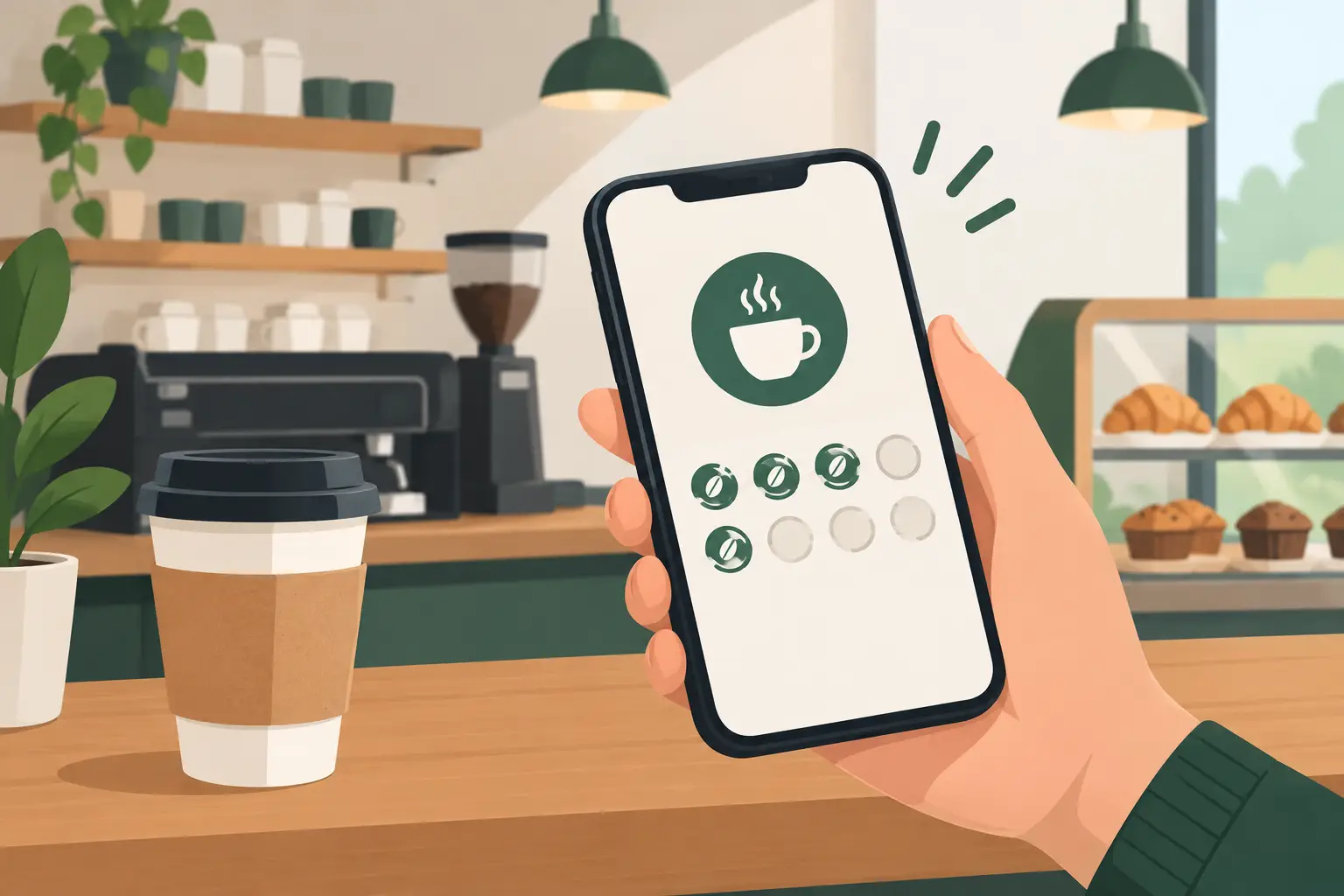
A loyalty program succeeds or fails during the morning rush. If a barista has to search for a customer, explain a confusing offer, or call a manager to resolve a reward, the line slows down and the program becomes an afterthought. A digital card should make the repeat visit feel recognized without adding another operational burden at the register.
BoomerangMe for coffee shops: how to set up a digital stamp card is less about creating a card design and more about building a loyalty process your team can run consistently. The right setup gives customers a simple reason to come back, gives staff clear rules to follow, and gives management a program that can be reviewed and adjusted over time.
Start with the business goal, not the number of stamps
Before configuring the card, decide what behavior you want to encourage. Most independent coffee shops want more repeat visits, but the specific objective may differ. A neighborhood cafe may want to turn occasional visitors into weekly regulars. A shop near offices may want to increase weekday afternoon traffic. A multi-location operator may want a consistent loyalty experience across stores.
The reward structure should support that goal without creating margin problems. For example, a traditional offer of one free standard drink after 10 qualifying purchases is familiar and easy to explain. However, it may not be the best choice if customers primarily purchase lower-priced items to earn a reward they later use for premium custom drinks.
Set the qualifying purchase and redemption rules before staff training begins. Decide whether every beverage earns a stamp, whether food and retail items qualify, whether stamps require a minimum order value, and what the free reward includes. Simpler programs tend to earn better adoption. Complexity may be justified for a larger operation with specific promotional goals, but only if the point-of-sale team can explain the rules in a sentence or two.
Once the offer is defined, create the card in BoomerangMe using the shop's approved name, logo, colors, and current contact details. The visual design matters because the card appears in a customer's mobile wallet, but clarity matters more. Customers should be able to identify the business, see their progress, and understand the reward without reading fine print.
Set the total number of stamps and the reward description in plain language. A statement such as “Buy 9 qualifying drinks, get 1 regular drink free” is more useful than a broad message such as “Earn exclusive benefits.” If there are exclusions, keep them limited and state them clearly. A loyalty offer that feels misleading can cost more in customer trust than it generates in return visits.
Next, establish how stamps will be issued. Your operating model should match the equipment and staffing available at each location. Some coffee shops use a QR code that staff scan or present at the counter. Others rely on a customer-facing process that can be completed quickly from a phone. Whichever method is selected, test it at the actual register during a busy period, not only from an office computer.
The setup should also include a controlled method for reward redemption. Staff need to know when a reward has been used and whether the system prevents duplicate redemption. If managers will handle exceptions, define them in advance. A customer who loses access to a phone, receives an incorrect stamp, or has a redemption issue should not depend on individual employee judgment every time.
Before launch, document these four operating rules for the team:
- Which purchases receive a stamp and which do not.
- How staff add a stamp during a normal transaction.
- How a customer redeems a completed reward.
- Who resolves account, device, or transaction exceptions.
This short procedure should be available at the register and included in new-hire training. The customer experience is only as dependable as the employee process behind it.
Make enrollment easy at the counter
A digital stamp card cannot improve retention if customers never join. The enrollment invitation should happen naturally at checkout, especially in the first weeks after launch. Staff do not need a lengthy script. A practical prompt is enough: “Would you like to start earning stamps toward a free drink?”
Place a clear sign near the point of sale with the benefit and the enrollment action. Avoid filling the sign with conditions, technical instructions, or marketing language. The customer should understand the value in a few seconds while waiting to order or pay.
Consider how the invitation fits your service style. In a high-volume commuter location, staff may ask only when there is no line or when a customer appears to be a repeat visitor. In a slower neighborhood cafe, the team may have more time to explain the card and encourage wallet installation. Consistency matters, but the process should not interfere with hospitality or transaction speed.
A launch promotion can improve initial adoption, such as offering the first stamp at enrollment. This can be effective when the business has enough regular traffic to build momentum quickly. The trade-off is cost: giving away too much value at launch can reduce the economics of the program. Establish a start and end date for any introductory incentive rather than allowing it to become an unplanned permanent discount.
Train for accuracy and customer confidence
Staff training should cover more than the technical steps. Employees need to understand why the shop is offering the program and how it benefits repeat customers. When the team sees the stamp card as a tool for recognizing regulars, rather than another register task, adoption is more likely to remain consistent after the initial launch period.
Run practice transactions before going live. Have employees enroll a test customer, issue stamps, redeem a reward, and handle a basic exception. This identifies unclear instructions and helps managers estimate how much time the process adds at checkout.
Assign an owner for the program. In a single-location shop, this may be the owner or store manager. In a larger business, an operations lead may review performance and coordinate changes across locations. The owner should be responsible for keeping offer terms current, checking that staff materials are accurate, and escalating platform questions when necessary.
It is also useful to decide how to handle goodwill situations. A loyal customer may say they forgot to scan the card on a previous visit, or a new employee may issue an incorrect stamp. A reasonable exception policy protects the relationship while preventing inconsistent giveaways. For instance, managers may be authorized to make limited manual corrections after verifying the transaction when possible.
Launch, monitor, and maintain the program
The first month should be treated as an implementation period, not a finished project. Listen to employee feedback and observe where customers hesitate. If most questions concern how to enroll, improve the countertop instructions. If redemptions cause confusion, revise the staff process or reward wording.
Review participation alongside sales patterns. The most useful measures are not always the largest enrollment total. Look at how many enrolled customers return, how many earn enough stamps to redeem, how often rewards are used, and whether the offer changes average visit frequency. If possible, compare results by location, daypart, or customer segment.
A low redemption rate can mean several different things. Customers may not understand the program, the reward may require too many visits, or the business may not be consistently inviting people to participate. Conversely, a very high redemption rate is not automatically a problem. It may indicate strong engagement, provided the reward cost is sustainable and customers continue purchasing beyond the free item.
Review the offer after enough customers have had time to complete a card. A coffee shop with daily regulars may have useful data within a few weeks. A destination cafe with less frequent visitors may need several months. Change one major element at a time, such as the stamp threshold or qualifying item rules, so the business can understand what caused the result.
Ongoing maintenance also includes keeping brand details, store hours, and terms accurate when operations change. If the coffee shop opens another location, changes its menu, or introduces a new point-of-sale workflow, revisit the loyalty process before the change reaches customers. Software configuration and frontline operations need to stay aligned.
A digital stamp card works best when it feels like a small, dependable part of the coffee shop experience: customers know what they are earning, employees know what to do, and management has a clear owner for keeping the program on track. That level of care turns a simple repeat-purchase offer into a loyalty practice customers will remember.