A chat platform can look inexpensive until the first month of real use. Add several agents, connect a CRM, define routing rules, train managers, and account for after-hours coverage, and the question becomes larger than a monthly per-seat rate. LiveChat Pricing Explained: Which Plan Does Your Business Need? starts with matching the plan to the service operation you need to run, not simply choosing the lowest price on the pricing page.
LiveChat is typically sold on a per-agent basis, with paid tiers designed for progressively more mature support and sales teams. Public pricing and included features can change, and annual billing is often priced differently than month-to-month billing. Before purchasing, confirm the current rate, contract terms, add-on costs, and feature availability for your account.
How LiveChat pricing is structured
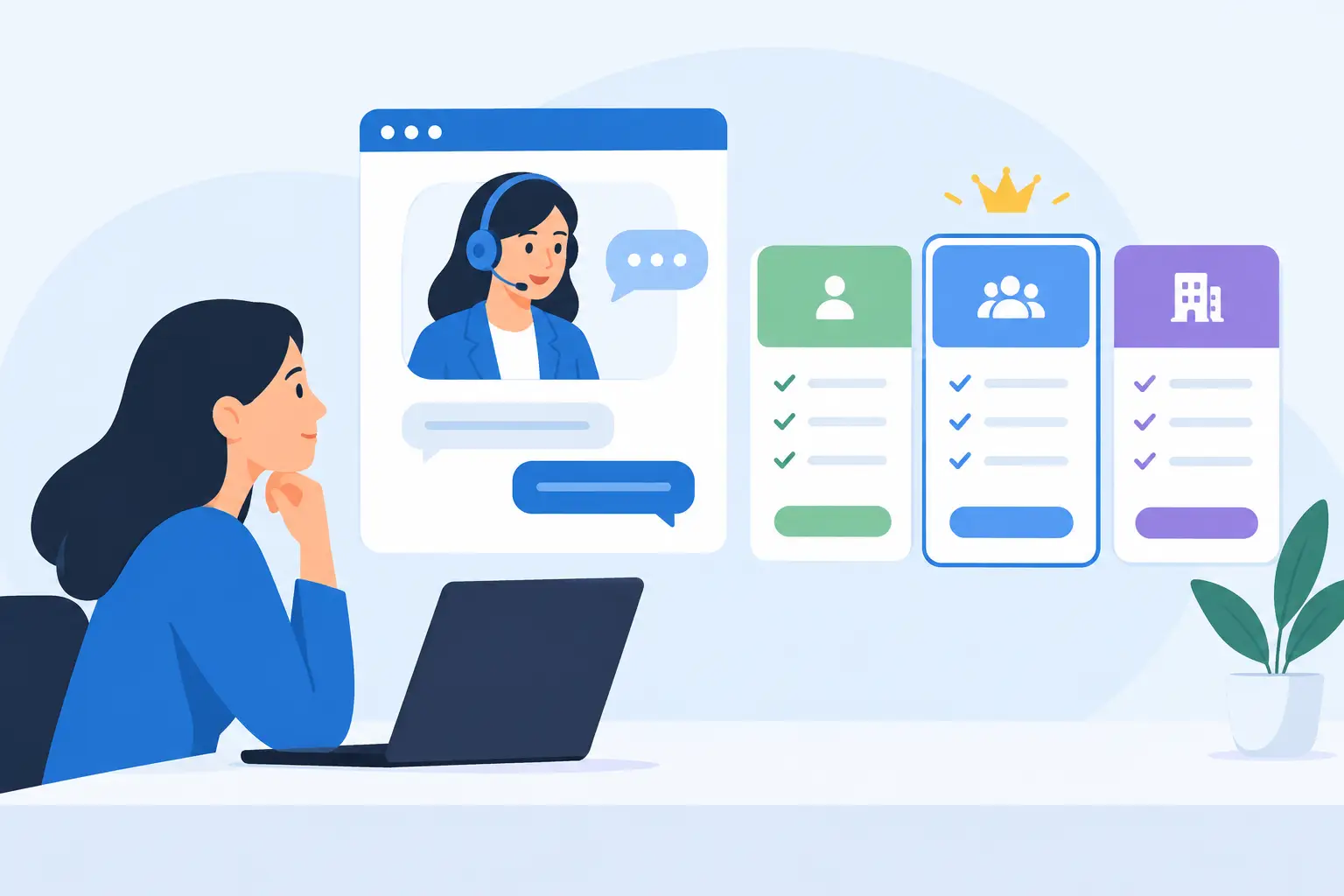
LiveChat's standard plans generally progress from Starter to Team and Business, followed by a custom Enterprise option. The meaningful differences are not only agent capacity. As teams move up, they typically gain stronger reporting, workflow controls, security options, integrations, and support arrangements.
The cost calculation is straightforward at first: multiply the per-agent price by the number of people who need a licensed operator seat. The operational calculation requires more care. A sales representative who handles chats only during business hours, a support specialist who needs full customer history, and a supervisor who needs reporting access may not all need the same access level or even the same workflow.
A smaller business may begin with a few seats and expand when chat volume proves its value. A growing company should also consider whether its projected headcount, expected traffic, and support coverage will outgrow the entry plan within the next contract period. Selecting a plan solely because it is cheaper can create a second implementation project sooner than expected.
LiveChat Pricing Explained by plan level
Starter: for basic live chat coverage
Starter is generally the appropriate entry point for a small team that wants to place chat on its website, respond to visitor questions, and establish a consistent channel for sales or customer service. It is best suited to organizations with straightforward coverage needs and a limited number of agents.
This tier can be a practical fit for a local service business, a small ecommerce operation, or a B2B company that mainly uses chat to qualify inquiries before handing them to sales. The key requirement is simplicity: a clear chat widget, basic routing, approved responses, and a process for converting or following up on conversations.
The trade-off is that starter-level plans may not provide the depth of analytics, management controls, or advanced automation needed by a busy support desk. If managers need to identify recurring issues, compare agent performance, or coordinate handoffs across several departments, moving beyond the entry tier may be justified.
Team: for growing sales and support operations
The Team plan is commonly the best middle ground for organizations that have proven the value of chat and now need it to operate as a managed process. This is where growing companies often look for more detailed reporting, stronger customization, and broader integration options.
Consider this level when chat conversations need to feed a CRM, help desk, ecommerce system, or internal collaboration workflow. It is also a better fit when multiple agents share coverage and supervisors need visibility into workload, response times, outcomes, and customer trends.
For many small and mid-sized businesses, the Team plan is the practical default. It supports an operation that is no longer experimental but does not yet require enterprise-grade controls. Its value depends on implementation. Reporting is useful only when someone owns the metrics, reviews them regularly, and adjusts staffing, training, or chat scripts based on what the data shows.
Business: for complex workflows and higher oversight
The Business plan is aimed at teams with more demanding operational requirements. Organizations at this stage often need more advanced reporting, deeper customization, higher control over how conversations are handled, and tools that support a larger or more specialized service organization.
This tier may make sense for companies with high chat volume, several teams using the platform, regulated processes, or a clear need to connect chat activity to broader customer experience reporting. It can also be appropriate when management needs more granular visibility into team performance and service quality.
Business is not automatically the right choice because a company is large. A 100-person business with simple sales questions may need less than a 20-person company operating a high-volume, multi-channel support desk. The better question is whether your process requires the features that justify the additional recurring cost.
Enterprise: for tailored requirements
Enterprise pricing is typically custom because the requirements are custom. This option is worth evaluating when security reviews, procurement requirements, service-level expectations, complex deployment needs, or dedicated account support are part of the decision.
Larger organizations may also need formal implementation planning, stakeholder training, governance, and a defined escalation process after launch. The software subscription is only one part of the investment. Internal coordination and ongoing administration can determine whether the platform actually improves customer response times and conversion performance.
Choose a plan based on operating needs, not agent count alone
Agent count matters because it drives recurring spend, but it does not tell the full story. Before choosing a LiveChat plan, define what chat is expected to accomplish. Is it a sales tool for capturing qualified leads? Is it the first line of customer support? Is it an after-hours channel with automated intake and next-day follow-up? Each use case creates different requirements.
A sales-focused deployment may prioritize visitor targeting, lead capture, CRM handoff, and reporting on conversations that become opportunities. A support-focused deployment may place greater value on routing, agent availability, transcripts, knowledge resources, issue categorization, and integration with ticketing workflows.
Also examine coverage. If five people rotate through chat but only two are active at a time, verify how licenses are assigned and whether each participating employee needs an agent seat. Do not assume that a shared inbox model translates directly to the vendor's licensing rules.
Account for implementation and ongoing ownership
LiveChat can be quick to install, but a useful implementation takes more than adding a widget to a website. The team should decide which pages display chat, set operating hours, assign ownership, write response standards, configure routing, and determine how conversations are recorded in other systems.
A well-run launch also includes training. Agents need to know when to transfer a conversation, when to collect contact details, how to handle sensitive requests, and how quickly they are expected to respond. Supervisors need a defined review process for transcripts and reports. Without those decisions, even a higher-tier subscription can become an expensive inbox.
For businesses without an internal platform owner, ongoing maintenance deserves a budget line. Changes to staffing, website pages, CRM fields, policies, and product offerings all affect chat operations. MBH Web Services helps organizations approach third-party SaaS as an operational capability, with onboarding and continued support that extend beyond the initial purchase.
A practical way to make the decision
Start with the lowest plan that supports your current workflow without forcing manual workarounds. Then test it against a 12-month view: expected agent growth, required integrations, reporting expectations, and any customer or compliance commitments. If a missing feature would cause missed leads, poor handoffs, or unreliable reporting, the less expensive plan is not necessarily the lower-cost choice.
Before signing, ask for clarity on annual versus monthly billing, additional agent costs, contract renewal terms, available support, integrations, and any limits that affect your expected volume or data retention. Document who will administer the account after launch and who can make configuration changes.
The right LiveChat plan is the one your team can operate consistently. A focused deployment with clear ownership, trained agents, and regular maintenance will usually deliver more value than a feature-rich account left without a working process.