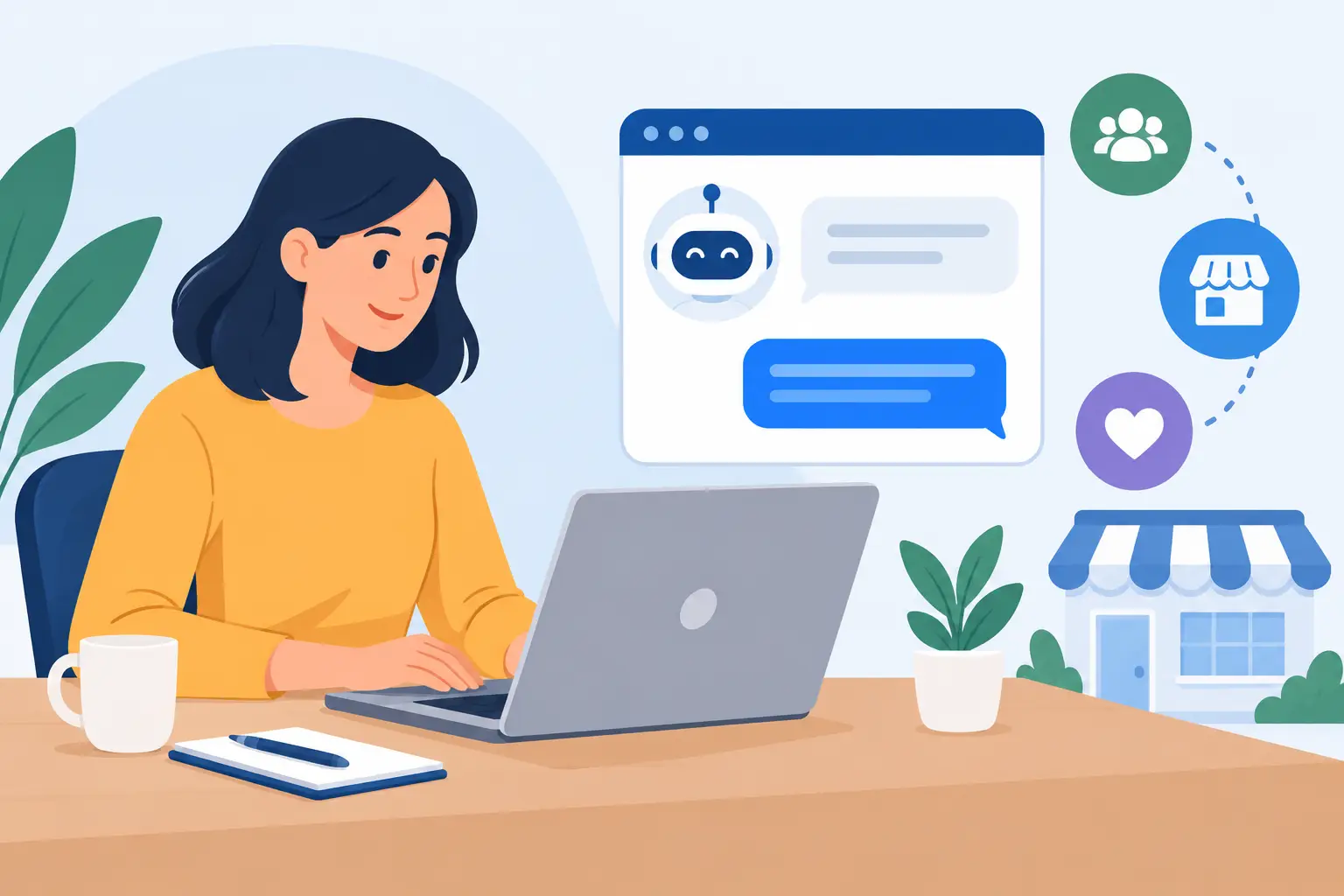
A shopper has added a product to their cart, reached the shipping step, and paused. They are not necessarily price-shopping. They may simply need to know whether an item will fit their workspace, arrive before an event, work with an existing system, or be returnable if it is not right. If the answer is hard to find, many buyers leave rather than submit a form and wait.
LiveChat for online stores, answering questions before checkout, gives businesses a practical way to handle that moment. Done well, it is not a pop-up that interrupts every visitor. It is a staffed, well-configured support channel that removes uncertainty at the point where a buyer is deciding whether to proceed.
For small and mid-sized businesses, the opportunity is meaningful, but the operational details matter. A chat tool must fit the sales process, route questions to people who can answer them, protect customer information, and remain manageable after launch. The goal is not simply to add another SaaS subscription. It is to build a dependable pre-purchase support process.
Why pre-checkout questions deserve attention
Checkout abandonment is often treated as a pricing or website-design problem. Those factors matter, but unanswered questions are another common cause. A visitor may not see their issue reflected in a product description, FAQ, or automated policy page. When the purchase has technical, financial, or delivery implications, guessing feels risky.
Live chat reduces the gap between a question and an answer. A shopper can ask whether an item is compatible, whether volume pricing applies, or how a subscription renews without leaving the checkout path. The business gains a chance to clarify expectations before payment, rather than resolving disappointment through returns, cancellations, or post-sale support tickets.
This is especially useful for stores selling products with configuration choices, service plans, business equipment, specialty goods, or recurring software-related services. The more a buyer needs to confirm before committing, the more valuable a timely human response can be.
That does not mean live chat belongs on every page for every business. A low-cost, simple product with clear delivery terms may benefit more from stronger product content than from expanded chat coverage. The right approach depends on order value, product complexity, the volume of repeat questions, and the staff available to respond reliably.
What customers ask before they buy
Most pre-checkout conversations fall into a manageable set of categories. Buyers ask about product fit, availability, shipping dates, return requirements, payment options, promotions, installation, and compatibility. For B2B-oriented stores, they may also ask about invoicing, tax documentation, account setup, licensing, procurement approvals, or support after purchase.
These questions are not merely interruptions. They are useful evidence about where the buying process needs clearer information. If agents repeatedly explain the difference between two plans, the comparison page may need revision. If delivery timing is a frequent concern, estimated arrival dates may need to appear earlier in the checkout flow.
A chat transcript can therefore improve more than conversions. It can inform product copy, operational policies, inventory communications, and onboarding materials. The key is to review patterns regularly instead of treating chat as a disconnected inbox.
Set up LiveChat for online stores around real decisions
A successful chat implementation begins with the customer journey, not the software settings. Identify the pages and moments where uncertainty is most likely to stop a purchase. Product comparison pages, cart pages, checkout pages, shipping-policy pages, and pricing pages are common places to start.
Then define the purpose of chat at each point. On a product page, the agent may help a buyer choose the right option. In the cart, the focus may be shipping, availability, or promotional eligibility. At checkout, agents should be prepared to resolve payment or account-access questions without requesting sensitive information in the chat window.
Build an answer library before launch
Agents should not have to search through policy documents while a customer waits. Create approved responses for common questions, including links or internal references to the correct policy language where needed. Keep the language direct and specific. “Most orders ship within two business days” is more useful than “Orders are processed promptly.”
The answer library should also identify questions that require escalation. An agent may be able to explain standard shipping, but a custom delivery commitment may require confirmation from operations. A clear escalation path prevents well-intentioned staff from making promises the business cannot keep.
Connect chat to the systems that support accurate answers
A chat platform is more effective when agents can see the information required to help a shopper. Depending on the store, that may include current inventory, order status, product specifications, customer account history, or a knowledge base. Integrations should be selected carefully, with attention to permissions and data access.
Not every agent needs access to every system. Give staff enough context to answer routine questions, while limiting sensitive customer, payment, and administrative data to appropriate roles. A practical implementation balances speed with control.
Decide when automation helps
Automated greetings and chatbots can handle basic routing, collect an order number, or answer straightforward questions outside business hours. They should not pretend to be a human agent or trap a customer in a long decision tree when they need help.
Use automation to make handoffs faster. For example, a visitor asking about an enterprise purchase can be routed to sales, while a customer with a delivery question can be directed to support. If no team member is available, set clear expectations for response time and provide an alternative contact path. A chat window that appears active but goes unanswered can create more frustration than no chat at all.
Staff for consistency, not constant availability
Many businesses assume live chat requires round-the-clock staffing. That is not always true. Clearly published chat hours can work well when coverage is dependable and the store provides useful self-service information outside those hours. For a business with customers across US time zones, expanded coverage may be justified, but only if the team can maintain answer quality.
Start by matching chat availability to peak traffic and high-value sales periods. Review missed-chat volume, response times, conversion patterns, and agent workload after launch. If demand supports longer coverage, expand deliberately rather than placing an unsustainable burden on a small team.
Training should cover more than product facts. Agents need to know how to clarify a vague question, recognize when a buyer needs technical support rather than sales guidance, document a handoff, and close a conversation without pressure. The best chat interactions are helpful and concise. They give the customer a reliable next step, whether that is completing a purchase, reviewing a specification, or speaking with a specialist.
Measure outcomes that reflect the customer experience
Conversion rate is useful, but it should not be the only measure. A chat program can produce value by reducing avoidable returns, improving order accuracy, shortening sales cycles, and identifying website content gaps. Track the types of questions received, first-response time, resolution rate, transfers, abandoned chats, and customer feedback alongside chat-assisted revenue.
Be careful when interpreting attribution. A customer may chat before checkout but purchase later from another device or through a sales representative. Likewise, chat may be most valuable for complex purchases that take longer to close. Look for trends over time instead of expecting every conversation to result in an immediate order.
Quality assurance matters as well. Review a sample of transcripts for accuracy, tone, policy compliance, and useful outcomes. If agents give inconsistent answers, the issue may be incomplete documentation or unclear ownership, not individual performance. That distinction helps leaders fix the process rather than simply asking staff to work faster.
Treat chat as an ongoing operating process
Live chat is often easy to purchase and harder to sustain. Initial configuration, routing rules, agent permissions, knowledge content, reporting, and staff training all need continued attention. Product lines change, policies change, and the questions customers ask will change with them.
A capable implementation partner can help businesses select the appropriate platform, configure it around existing workflows, onboard staff, and maintain the process after launch. For organizations already managing several cloud tools, that continuity can prevent live chat from becoming another isolated system with unclear ownership.
The most useful next step is simple: review the questions your team receives before a sale is completed. If the same uncertainties appear in emails, calls, abandoned-cart outreach, or sales conversations, buyers are already telling you where support is needed. Give them a clear way to get an answer while they are still ready to buy.