A cold email campaign rarely fails because the first message was poorly written. More often, it fails because the follow-up process is inconsistent, too aggressive, or disconnected from how prospects actually respond. Knowing how to build a cold email follow-up sequence in Smartlead.ai gives your team a repeatable way to stay visible without creating unnecessary risk for your sending reputation.
For small and mid-sized businesses, the goal is not to send the most emails. It is to create a managed outreach process that supports sales activity, protects deliverability, and gives staff a clear system for handling replies. Smartlead.ai can support that process well when the campaign is planned before the sequence is turned on.
Start with the outcome, not the number of follow-ups
Before opening Smartlead.ai, define what a successful reply looks like. A campaign for a managed software implementation service may ask for a 15-minute discovery call. A campaign aimed at former customers may ask whether a specific operational issue is still a priority. Those are different conversations and should not use the same follow-up language.
Your sequence should have one primary call to action. Asking a prospect to book a meeting, review a proposal, download a resource, and answer a qualification question in the same sequence makes the next step unclear. Keep the action small and relevant to the recipient's role.
It also helps to identify the audience segment before writing. Operations leaders may care about reducing manual work and improving adoption. IT administrators may care more about configuration, access controls, vendor coordination, and ongoing support. A generic sequence can reach both groups, but it is less likely to start a useful conversation.
Build the campaign foundation in Smartlead
Create a new campaign and give it a name your team can understand later. Include the audience, offer, and time period, such as “Operations Leaders - SaaS Onboarding Support - Q2.” Clear naming matters once multiple campaigns, sending accounts, and team members are involved.
Add only verified contacts with the fields needed for relevant personalization. At a minimum, that usually includes first name, company name, job title, and a meaningful segment. If your team has a specific business trigger, such as a recent expansion, new platform rollout, or hiring initiative, include that information only when it is accurate and can be referenced naturally.
Then connect the appropriate sending accounts and review the campaign's sending limits. Smartlead.ai's mailbox rotation and sending controls can help distribute activity, but they do not make a weak list or overly high volume safe. Start conservatively, particularly with newer domains or mailboxes that are still building a reliable sending history.
A practical operating rule is to separate campaign setup from campaign approval. One person can prepare contacts and drafts, while another reviews the message, timing, sender accounts, and reply handling before launch. That extra step prevents avoidable errors such as a broken personalization field or an outdated offer.
Write a sequence that earns the next message
The first email should establish relevance quickly. State why you are reaching out, connect the message to a plausible business need, and make one direct request. Avoid broad claims about transforming the recipient's business. A specific observation and a modest offer are more credible.
For example, a company offering SaaS onboarding and ongoing maintenance could lead with the challenge of managing a new platform after purchase. The message might ask whether the recipient has a process for configuration, employee adoption, and post-launch support. It should not assume the company has a problem or imply that the sender has been monitoring internal activity.
Each follow-up should introduce a different reason to respond. Repeating “just following up” adds volume without adding value. Instead, the second message can clarify the operational problem you solve, the third can address a common objection, and the final message can give the prospect a simple way to close the loop.
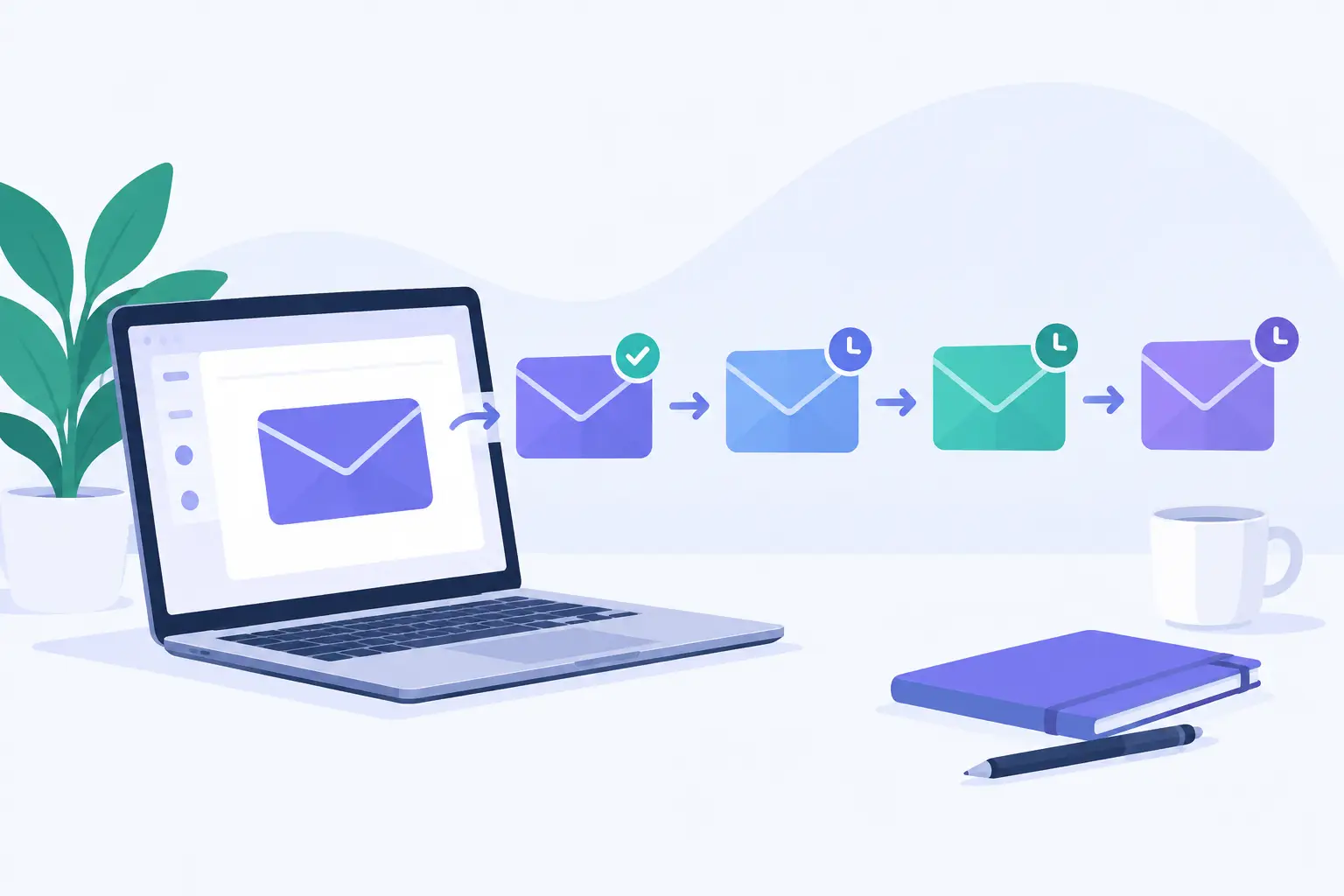
A five-message structure is often enough for a focused cold outreach campaign:
- The initial email establishes relevance and requests a short conversation.
- The first follow-up, sent two or three business days later, adds context about the business outcome.
- The next follow-up, sent three or four business days later, addresses a practical concern such as internal workload, implementation ownership, or ongoing maintenance.
- A fourth message can offer a lower-commitment next step, such as confirming whether the topic belongs with someone else.
- The final message, sent after several additional days, politely closes the outreach and gives the recipient an easy option to decline.
The exact number depends on the audience and the value of the opportunity. A high-consideration B2B service with a narrow, well-researched list may justify five or six touches. A broader campaign with less account-level relevance may be better limited to three or four. More emails are not automatically more effective.
How to build a cold email follow-up sequence in Smartlead
In the campaign sequence area, add your initial email first. Use personalization variables only where they improve clarity. “Hi {{first_name}}” is standard, but inserting a company name into every sentence can make the message feel automated rather than personal.
Add the follow-up steps beneath the initial email and set delays in business days where appropriate. Business-day scheduling helps prevent a message scheduled on Friday from being followed by another touch over the weekend. For many B2B audiences, spacing messages two to four business days apart is a sensible starting point. Give senior decision-makers more time when the request requires thought or coordination.
Use Smartlead.ai's email variations carefully. Variations can help your team test subject lines, openings, or calls to action, but changing every element at once makes results difficult to interpret. Test one meaningful variable at a time and allow enough volume to identify a pattern.
Keep follow-ups in the same thread when continuity helps the recipient understand the context. Threaded follow-ups are often appropriate for a straightforward outreach sequence. Separate emails may work better when each message has a distinct angle or when the initial subject line did not earn attention. The best choice depends on your offer, audience, and the quality of your first message.
Before activating the campaign, send test emails to internal inboxes. Check mobile formatting, personalization, signature details, grammar, and reply-to settings. Confirm that any plain-text formatting still reads cleanly. A campaign can be technically active while still creating a poor recipient experience.
Set reply rules before you send
A follow-up sequence should stop when a prospect responds. Configure Smartlead.ai's reply detection and campaign settings so positive replies, negative replies, out-of-office messages, and other relevant responses are handled appropriately. A prospect who says “not interested” should never receive the next scheduled follow-up.
Your internal process matters as much as the automation. Decide who owns replies, how quickly they should respond, and when a prospect should move into your CRM or sales workflow. If a recipient asks a technical question, make sure the person answering has access to the operational details needed to respond accurately.
Out-of-office replies deserve a separate process. They are not a positive sales response, but they may identify a return date or an alternate contact. Review these replies rather than treating every automated response the same way.
Protect deliverability and compliance
Follow-up performance is closely tied to deliverability. If too many messages land in spam or generate complaints, adding more sequence steps will only compound the problem. Use authenticated sending domains, maintain clean contact data, and avoid sudden volume increases.
Keep emails relevant, truthful, and easy to opt out of. Your outreach should comply with applicable commercial email requirements, including clear sender identification and a functioning opt-out process. For US businesses, this is an operational responsibility, not a line to add at the end of a campaign after it has been built.
Monitor campaign signals beyond open rates. Replies, positive-reply rate, bounces, unsubscribe requests, and meeting conversions are more useful indicators of campaign health. Open tracking can be affected by privacy controls and should not be treated as a precise measure of interest.
Improve the sequence through controlled review
Review results after enough contacts have moved through the full sequence. If replies are low but bounces are elevated, fix list quality before rewriting copy. If delivery is healthy but prospects do not engage, revisit your audience definition, opening relevance, and call to action.
When a message performs well, document why. It may be the audience segment, the timing, the operational problem named in the email, or the offer itself. That documentation turns one campaign into a reusable process rather than a one-time effort.
Cold outreach works best when it is treated like any other business system: planned carefully, implemented with controls, monitored consistently, and adjusted based on real results. A thoughtful Smartlead.ai sequence gives your team a reliable starting point, but the lasting value comes from maintaining the process after launch.